undefined
Posts
undefined
Followers
The “Zero-Click” Threat: How a Single Unopened Text Message Can Mirror Your Entire Phone
By Matthias Binder,
2026-05-23Most people assume they’re safe as long as they don’t tap on suspicious links. That assumption is now dangerously out of date. A new generation of cyberattacks doesn’t wait for you to make a mistake. It exploits the very moment your phone silently receives a message, before you ever see it. This shift isn’t theoretical. It’s been documented in court cases, confirmed by forensic labs, and linked to real surveillance of journalists, activists, and government officials around the world. The threat has a name: zero-click exploitation. Understanding it has become more urgent than ever.

What a Zero-Click Attack Actually Is

A zero-click exploit is a cyberattack that compromises your device without any interaction from you: no link to click, no file to open, no app to install. This is what makes these attacks uniquely dangerous. They don’t trick people; they exploit how your software trusts and processes data.
Zero-click attacks commonly target apps that provide messaging or voice calling, because these services are designed to receive and interpret data from untrusted sources. Attackers generally use specially formed data, such as a hidden text message or image file, to inject code that compromises the device.
The reduced interaction involved in zero-click attacks means fewer traces of any malicious activity. Even basic zero-click attacks leave little trace, which makes detecting them extremely difficult.
How the Attack Chain Works Under the Hood

An attacker must chain three to four separate exploits to achieve full compromise: gaining initial access through a vulnerability in an auto-processing component, escaping the device sandbox, escalating kernel privileges to gain root access, and finally establishing persistence by disabling code signing to install a rootkit.
These attacks exploit the foundation of how modern phones and apps routinely accept, parse, and act on data they receive. A zero-click exploit crafts input for devices in a way that causes memory corruption or logic bypass. It’s nefarious code that runs before a user even sees anything.
The sophistication and scale of zero-click attacks represents a paradigm shift where convenience has become vulnerability, and the invisible features designed for seamless user experiences have transformed into silent gateways for advanced persistent threats.
The Scale of the Problem in 2024 and 2025

In 2025 alone, at least 14 significant zero-click vulnerabilities were recorded as affecting billions of devices worldwide, exposing a brutal reality: the attack surface has expanded beyond human error into the automated processes we trust implicitly.
Google’s Threat Intelligence Group documented 75 zero-day vulnerabilities actively exploited in 2024, with the trend accelerating into 2025 as attackers pivoted toward enterprise infrastructure. That volume isn’t slowing down.
More alarmingly, the “time to exploit” window collapsed to an average of just five days in 2024, down from 32 days in previous years, rendering traditional monthly patch cycles dangerously obsolete.
iMessage: The Door That Opens Itself
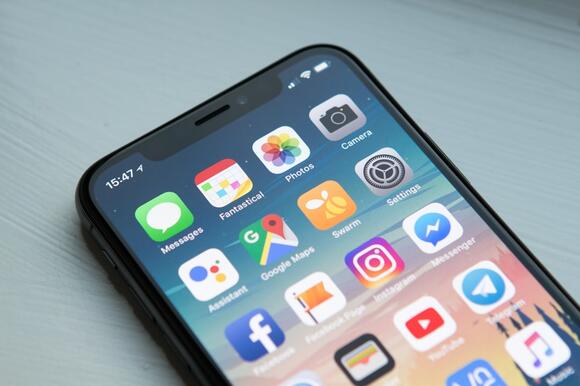
Simply receiving a particular iMessage, without opening it or interacting with it in any way, can allow an iPhone to be compromised, with personal data exposed. This is not a hypothetical scenario. It has been confirmed repeatedly in forensic investigations.
Suspicious activity observed in late 2024 and early 2025, with the most recent incidents dated March 2025, targeted six devices belonging to individuals affiliated with political campaigns, governments, media organizations, and tech companies in the EU and US. On four of those devices, security firm iVerify found signatures associated with the exploited vulnerability.
On iPhones where the vulnerability was likely exploited, iVerify found that directories related to SMS attachments and message metadata were modified and emptied just 20 seconds after the relevant process crashed, a pattern of clean-up activity typically associated with confirmed spyware attacks.
Samsung Devices Were Not Spared

A high-severity vulnerability tracked as CVE-2024-49415 affects Samsung devices running Android versions 12, 13, and 14. Google Project Zero researcher Natalie Silvanovich, who discovered the flaw, described it as requiring no user interaction to trigger and noted it works specifically when Google Messages is configured for rich communication services, the default configuration on Galaxy S23 and S24 phones, as the transcription service locally decodes incoming audio before a user even interacts with the message.
CVE-2025-21042, exploited as a zero-day before Samsung’s April 2025 patch, delivered LANDFALL spyware through malicious DNG image files sent via WhatsApp. This commercial-grade Android spyware targeted flagship devices, including the Galaxy S22 through S24 series, enabling comprehensive surveillance capabilities including call recording, location tracking, and message exfiltration.
Pegasus: The Most Documented Zero-Click Weapon

Pegasus, developed by NSO Group, is the most advanced mobile surveillance platform ever documented. Since 2011, it has evolved from SMS phishing payloads into highly automated zero-click exploits capable of compromising the latest iOS and Android devices. Its deployment across at least 45 countries has reshaped how governments, regulators, and civil society understand the risks of commercial spyware.
According to court proceedings in the WhatsApp vs. NSO Group trial, the zero-click attack worked by placing a fake WhatsApp phone call to the target, requiring no interaction whatsoever. NSO Group had built what it called a “WhatsApp Installation Server,” a special machine designed to send malicious messages across WhatsApp’s infrastructure mimicking real messages.
In May 2025, NSO Group was ordered by a US district court to pay $167 million in damages to WhatsApp for exploiting their messaging systems. In December 2024, the court found NSO Group liable for attacks on approximately 1,400 WhatsApp users, including activists and journalists.
WhatsApp and Apple: A Dangerous Chain Reaction

Meta confirmed that a WhatsApp flaw was likely exploited alongside an Apple vulnerability, CVE-2025-43300, raising the severity considerably. This Apple platform vulnerability affects iOS, iPadOS, and macOS, and involves an out-of-bounds write in the ImageIO framework, which can lead to memory corruption during image processing.
Together, these exploits formed a devastating zero-click attack chain that targeted journalists and civil society actors across Europe and the Middle East. WhatsApp confirmed that fewer than 200 users were targeted in sophisticated spyware campaigns, with victims including human rights defenders and media professionals.
Security researchers noted that it doesn’t matter what communication channel is being used if the device itself is compromised; attackers have access to all conversations, regardless of whether those happen over Signal, Gmail, or any secure application.
Who Is Being Targeted and Why

Zero-click exploits aren’t cheap, scalable malware. Each one can cost millions to develop or acquire, requires months of engineering, and is often used only a handful of times before being burned by a patch or disclosure. That level of investment means attackers reserve them for the highest-value targets: executives, high-ranking officials, and ultra-wealthy individuals whose devices hold intelligence worth the expense.
A working zero-click smartphone exploit, whether for Android or iOS, is priced up to $9 million by vulnerability broker Crowdfense, which offers $5 million to $7 million for iOS zero-days and up to $5 million for Android zero-days.
Commercial surveillance vendors acted as proliferation engines throughout 2025, lowering barriers to sophisticated zero-click capabilities. NSO Group’s Pegasus spyware continued evolving with zero-click methods, though its operators faced legal consequences including a $167 million penalty from WhatsApp. Paragon’s Graphite platform demonstrated that multiple commercial vendors now possess iPhone zero-click exploitation capabilities, fundamentally altering the threat landscape.
Can You Even Tell If You’ve Been Compromised?

With a zero-click attack, software can be installed on a device without the victim clicking on any link, making zero-click malware much more dangerous than traditional spyware. Detection is the central problem here: most users have no idea anything happened.
Specialized mobile threat defense apps can detect certain behaviors, such as a process running that shouldn’t be, or excessive battery and network usage. On macOS, endpoint detection and response agents can catch attacks in real time, but on iOS the best bet is network and backup forensics.
Watching for strange behavior on your device is still useful. Sudden battery draining, device overheating, and Safari randomly shutting down are signs that your device could be compromised. These signals are subtle, and most people never notice them.
What You Can Actually Do About It

Apple’s Lockdown Mode is designed specifically for targeted attacks. It restricts certain web technologies, blocks most message attachments, and limits attack vectors commonly used by spyware.
In April 2024, Apple alerted users in 92 countries about potential spyware targeting. Overall, between 2021 and April 2025, it had notified users in over 150 countries. Even for users who have not received an official alert but suspect they may be specially targeted, Apple recommends proactively activating Lockdown Mode for heightened defense against advanced spyware exploits.
Keeping all devices patched with the latest security updates, backing up devices regularly to recover data in case of compromise, and rebooting devices regularly to disrupt persistence and force threat actors to reinfect are among the core defensive practices recommended by security agencies. None of these guarantees immunity, but each one genuinely raises the cost of a successful attack.
The Bigger Picture: A New Normal in Mobile Security

As of 2025, zero-click exploits have transitioned from elite espionage tools to mainstream attack vectors. The convenience features powering our digital lives, automatic message parsing, seamless protocol handling, and intelligent AI agents, have become double-edged swords.
Zero-day exploitation hit 90 confirmed cases in 2025, up 15 percent from the prior year, with nearly half of all attacks targeting enterprise infrastructure. For the first time, commercial surveillance vendors outpaced nation-state espionage groups as the leading source of attributed zero-day exploitation.
While Lockdown Mode and Apple’s Memory Integrity Enforcement make attacks drastically more expensive and difficult to develop, the most advanced adversaries will continue to evolve their techniques. Apple itself has acknowledged this arms race, adapting its security bounty program to encourage highly advanced research on its most critical attack surfaces while protecting users across over 2.35 billion active Apple devices worldwide.
The hardest part of this threat to fully absorb is its passivity. You don’t have to do anything wrong. You just have to be worth targeting, and in an era where your phone holds your location, your private messages, your financial accounts, and your professional correspondence, the bar for “worth targeting” keeps getting lower. The age of the unopened message as a weapon is not coming. It’s already here. Add to Preferred Sources


