undefined
Posts
undefined
Followers
Monticello data center debate puts public trust to test
By Lauren Flaum,
16 days ago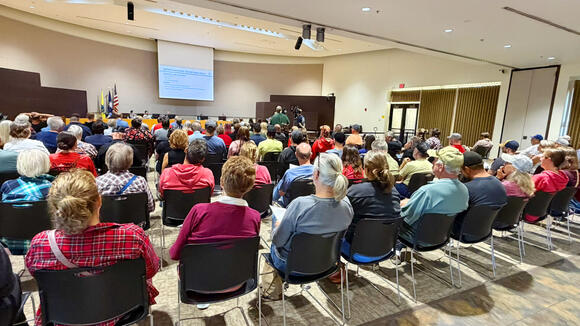
MONTICELLO — What does transparency look like when a community is divided over a controversial development?
In Monticello, the question has become central to the debate over the proposed Edmonson Business Center, a roughly 547-acre hyperscale data center development proposed by Monticello Tech LLC south of 85th Street NE and east of Highway 25.
The proposal has raised questions about electricity demand, water use, noise from backup generators and the financial obligations associated with the development.
Some residents have accused city officials of withholding information or failing to adequately address their concerns, while others say the information is available but want more explanation of how and why decisions are being made.
The city has published studies, development applications and meeting materials on its website. Public meetings have been livestreamed and recorded, an open house was held on the area’s environmental review, and government records have been made available upon request.
Yet as the proposal approaches a pivotal City Council hearing Nov. 9, disagreement persists over whether making information available is the same as being transparent.
For some, transparency means providing access to information and opportunities for public participation. For others, it means explaining decisions, acknowledging unanswered questions and demonstrating that residents’ concerns have been heard.
The debate also raises another question: Is transparency solely the government’s responsibility, or do residents, developers and others sharing information have obligations of their own?
More than making information available
Monticello City Administrator Rachel Leonard believes transparency involves both access to information and helping residents understand it.
“I do also think there is value in explaining positions or why you’re doing things a certain way, because I think that helps people,” Leonard said in an Oct. 24 interview with the Times.
Monticello resident Kara Albrecht agrees the city has made efforts to communicate, but believes those efforts have fallen short.
“I do feel like they try to get the information out there,” Albrecht said. “I feel like they’re trying to alleviate, you know, some of the tension. I just think they’re not going about it the right way.”
Albrecht believes officials should explain complex issues in accessible language, acknowledge what remains unknown and establish expectations for when additional information will be available.
“If an answer isn’t immediately available it should be disclosed that it’s not and a timeline given and accomplished for finding an answer out,” she wrote in a Facebook discussion initiated by the Times.
Public hearings aren’t Q&As
Those differing expectations became apparent following the Oct. 6 Planning Commission hearing, when commissioners voted 4-1 to recommend approval of the project’s development applications.
Residents raised questions about noise, electrical infrastructure, financial protections and the responsibilities of an eventual operator. Some were frustrated when commissioners did not respond directly before voting.
Leonard said public hearings are intended to gather testimony for officials to consider, rather than serve as question-and-answer sessions.
“I want your comments and your questions on the public record, but I can’t guarantee that every single question is going to get answered by the policymakers,” Leonard said.
Commissioners could have answered individual questions, Leonard said, but were not obligated to respond to each one before voting. They were, however, expected to consider the public’s feedback alongside the application materials and staff analysis.
City staff were preparing a written summary of questions and concerns raised at the hearing for the City Council, identifying which matters are addressed by existing regulations and where additional conditions might be appropriate.
The summary had not been released as of the Times’ Tuesday press deadline. The council’s Nov. 9 meeting packet is expected to be published Thursday, Nov. 5.
Albrecht welcomed the planned summary.
“I think it would go a long way,” she said. “I think it would help to have something concrete that you know you can see, look at, and refer back to.”
Sticking point on social media
The disagreement has also played out on Facebook, where Planning Commissioner Rob Stark, who voted to recommend approval of the data center applications, expressed frustration with the continued criticism.
“Hearing these continued cries of a ‘lack of transparency’ surrounding the proposed data center has gone from mildly entertaining to downright irritating,” Stark wrote.
He pointed to publicly available documents, recorded meetings and the city’s development of data center-specific regulations.
“Disagreeing with the process or not liking the answers doesn’t mean there has been a lack of transparency,” he wrote.
His comments drew criticism from residents who felt their concerns were being dismissed.
Michael Allen, a township resident who said he lives approximately two-tenths of a mile from the proposed development, objected to Stark’s description of the criticism.
“The fact that you found our concerns to the lack of transparency ‘mildly entertaining’ shows that you don’t take them seriously,” Allen wrote.
Another commenter, Monticello resident Beth Beaupre, argued that public access is only one part of transparency.
“Public documents and recorded meetings do not automatically mean residents have received clear, complete answers to their questions,” she wrote.
Stark later clarified that he was not suggesting there were no unanswered questions, but maintained that the project’s public review process was transparent.
Is the website enough?
Making information available online doesn’t necessarily mean everyone can access or understand it.
“It doesn’t matter how much you publish, people aren’t necessarily going to read it,” Albrecht said. She pointed to her 91-year-old father as an example of why relying heavily on online communication can leave some residents behind.
Although she considers him more technologically capable than many people his age, she said he would still struggle to navigate the city’s website to find the information he needed.
“And I know 60-year-olds who can’t handle that, and I’m over 60,” she said.
Albrecht said residents have widely varying levels of comfort with technology, while others simply prefer not to use it.
She believes the city could do more to provide tangible information, such as printed materials residents can keep and refer to, rather than relying so heavily on online documents.
Even for those who can find the documents, understanding their significance presents another challenge.
“They are relying on you as the entity that is responsible for making decisions to have a good understanding of what you’re presenting,” she said.
The unknown end user
One of the biggest unanswered questions surrounding the proposed data center is who will ultimately occupy and operate it.
Monticello Tech LLC is the developer behind the project, but the eventual end user has not been publicly identified.
At a January open house, developer Nick Frattalone told the Times that Monticello Tech was assembling land, power availability and regulatory approvals for a future operator.
“We’re not 100% sure who the end user is yet,” he said.
For Albrecht, that uncertainty complicates efforts to evaluate the project. Although she has found answers to some questions in the city’s documents, others depend on knowing who will ultimately operate the facility.
In written comments submitted to the Planning Commission on Oct. 5, township property owner Lisa Keenan, whose property directly adjoins the proposed development, questioned how the city would ensure that a future operator fulfills the project’s obligations.
“If the ultimate end user has not been identified, what legally enforceable mechanism ensures that any future end user, purchaser, assignee or operator will assume all of the project’s financial, infrastructure, environmental and operational obligations?” she asked.
The current applications establish a development framework rather than final building plans. Individual buildings would require additional site-plan reviews, and some operational details cannot be determined until an end user is identified.
Whose respo
“The fault does not lie with the city council, but with the interested developers,” Saville wrote. “They are not being transparent.”
Saville believes city officials should demand more information and independently scrutinize the developer’s representations.
Former Monticello City Administrator Jeff O’Neill raised a different concern: whether those sharing information about the project are presenting a complete picture.
In the Times’ Facebook discussion, O’Neill criticized a public recap of the developer’s Sept. 29 open house that he believed emphasized uncertainties while omitting potential benefits, including proposed infrastructure improvements, projected tax revenue and environmental protections.
“Transparency requires more than highlighting information that supports one perspective,” he wrote. “It also requires providing residents with sufficient context to understand both the uncertainties and the information presented to address them.”
Jill Neumann offers another perspective. Although she opposes the proposed data center and lives near the site, she has said city staff have been responsive when she has sought information.
“We as citizens also have a responsibility to stay informed and pay attention to what’s going on,” she wrote.
Neumann also criticized the personal attacks and hostility surrounding the debate, arguing that the fighting has distracted attention from other issues facing the community.
The limits of disclosure
Another source of frustration has been the reluctance of City Council members to publicly discuss their positions on the pending applications.
Leonard said council members must follow legal procedures when reviewing land-use applications, including avoiding statements that could suggest they have prejudged the proposal.
Premature declarations of support or opposition could jeopardize the validity of the city’s eventual decision, she explained.
“I want the public to understand that that is a protection for them,” she said.
Leonard also distinguished between making essential project information readily available and providing every government record generated during the city’s work.
Applications, studies, ordinances and other materials directly related to the review have been published, she said, while additional records can be requested under Minnesota’s Government Data Practices Act.
“I’m going to make everything that is critical for people to know and understand. I’m going to make that immediately available,” Leonard said, adding that residents seeking additional records must request them.
She acknowledged that a government could comply with open meeting and public records laws and still fall short of meaningful transparency, although she does not believe that describes Monticello’s handling of the proposal.
For Leonard, public criticism can also provide an opportunity to improve communication.
“If at the core of what they’re saying is a valid criticism of us, then absolutely, I’m going to take that, and we’re going to take it as a staff, and we’re going to figure out how to do it better,” she said.
For Albrecht, clearer explanations and a consistent effort to acknowledge unanswered questions could help residents feel their concerns are being taken seriously.
“If you tell people that there’s a timeline that you’ll get back to them with, and then stick to that, that’s where you earn the trust that you are actually active in representing their interest,” she said.
 Add to Preferred Sources