undefined
Posts
undefined
Followers
Is South Florida experiencing a ‘rain bomb?' Here's what to know
By David Goodhue,
6 days ago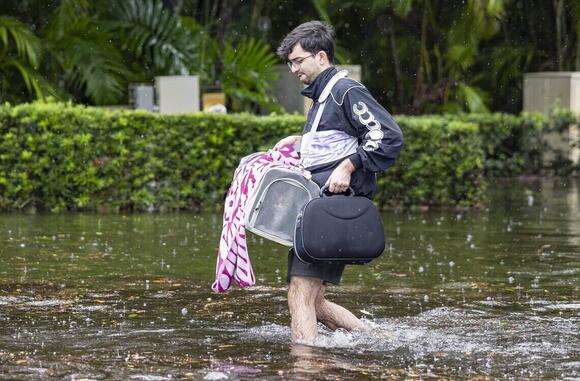
South Florida has been hearing the term “rain bomb” a lot in recent years.
The term is being used to describe the torrential precipitation and flooding that is affecting South Florida this week and affected parts of Broward, Brevard and Palm Beach Counties earlier this month.
But, forecasters warn that though Broward is obviously experiencing an extreme rain event, technically a “rain bomb” isn’t what happened overnight when up to 15 inches of rain soaked Hollywood. There’s no forecasted relief until Thursday or Friday.
Alejandra Garcia, a National Weather Service Miami meteorologist, said the term is used “colloquially” by television weather forecasters to describe intense periods of rain.
But what’s actually hanging over South Florida is an area of low pressure that began in Texas and is being trapped here by strong offshore winds, she said.
Read more: ‘Never seen it that bad’: State of emergency in South Florida after torrential rains
READ MORE: What’s causing all the rain in South Florida, and when will it end?
A “rain bomb,” however, is a microburst, a localized column of sinking air within a thunderstorm, usually “less than or equal to 2.5 miles in diameter, ” where rain and hailstones accumulate, said the agency explains on its website.
Sometimes the system is so strong that it pushes the moisture to the upper portions of the storm. But what goes up, must come down, says the Weather Service.
“Once this occurs, it is no longer capable of holding the large core of rain/hail up in the thunderstorm. As a result, the core plummets to the ground. As it hits the ground it spreads out in all directions. The location in which the microburst first hits the ground experiences the highest winds and greatest damage,” the Weather Service says, explaining why it’s analogous to a bomb.
 Add to Preferred Sources


