undefined
Posts
undefined
Followers
Inside Sierra Nevada’s High-Stakes Hop Harvest
By Gina Pace,
18 hours ago
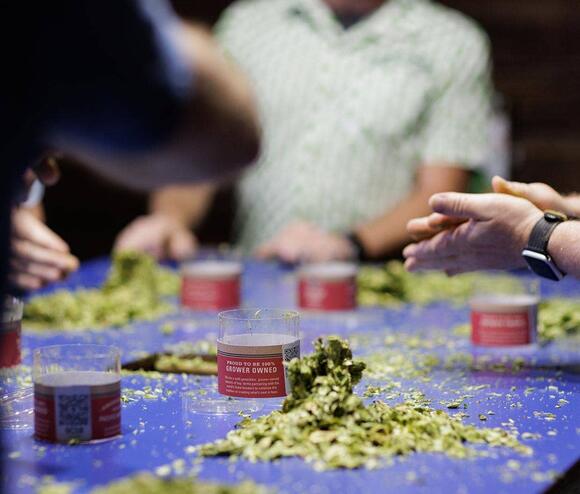
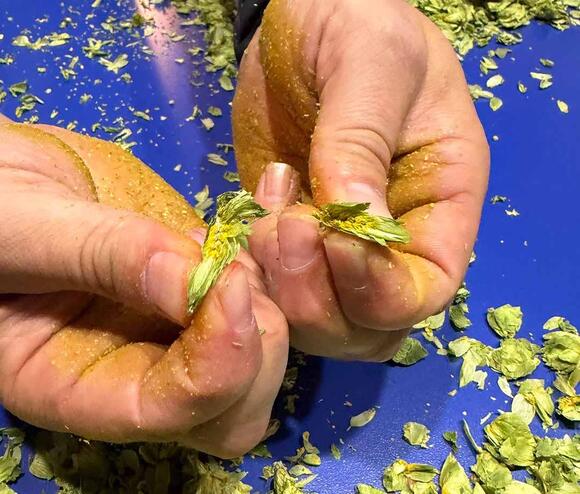
The air inside a hop grading room in Yakima, Washington, is thick enough to wear, and the seven people from the brewing team at Sierra Nevada will be doing exactly that soon enough. Standing shoulder-to-shoulder, they grab handfuls of whole-cone hops, tearing and rubbing them vigorously to rupture the lupulin glands.
The room explodes with sharp pine and bright citrus. But that aroma is a shapeshifter. As the yellow dust and sticky oils coat their hands and settle into the fabric of their clothes, the bright freshness oxidizes, and will eventually mutate into a lingering, funky aroma of aged cheese and garlic. I’m told that tonight I’ll need to find a garbage bag at the hotel and stuff my clothes into it so as not to weird out anyone on my flight back the next day.
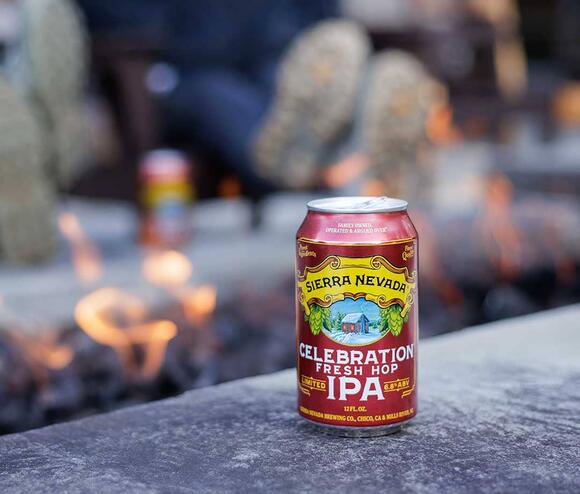
This isn’t a casual tasting—well, “sniffing” would be more accurate. It’s a high-stakes agricultural race. The brewers are here to select the exact lots that will be baled, loaded onto refrigerated trucks tomorrow morning, and rushed to kettles in California and North Carolina to make the brewery’s famous Celebration IPA.
Sierra Nevada
The sensory evaluation is an intense, predictive science. It’s not just about what smells good right now; it’s about anticipating how raw vegetation will behave inside a fermenter. Sometimes, the most immediately appealing hop on the grading table isn’t the one that makes the cut. The brewers might intentionally hunt for underlying, pungent notes of sulfur, onion, or garlic. While those aromas might seem like a flaw in the raw cone, the team knows those exact compounds can transform in the presence of yeast into vibrant, desirable tropical flavors. Every beer in the brewery’s portfolio requires a completely different hop profile, but today the target is highly specific. The team is hunting exclusively for early-pick lots of Cascade and Centennial to build the classic backbone of Celebration.
“The big thing is knowing how they’re going to show up later and how they’re going to show up in the beer,” explains Brian Grossman, Sierra Nevada’s chief brewer. “This panel has had years of experience knowing what that will turn into. So we will rub something and know it’s going to be positive, and another brewer might rub it, and they might not be able to see what that does in the future”.
A Tight Window in Yakima Valley
CLS Farms
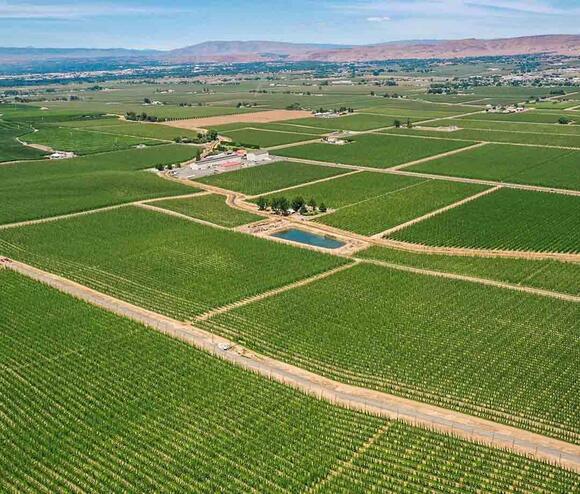
The clock is unforgiving. Yakima’s overall hop harvest runs from late August through early October, making Monday, September 7, roughly the midway point of the valley’s grueling season. But for crucial varieties like Centennial and Cascade, early September is a razor-thin window of peak maturity. To catch them, the Sierra Nevada team operates on a tight schedule. Most of the team flew in this morning, and today alone requires a 9 a.m. selection at Yakima Chief Hops, a 1 p.m. sprint to Steiner, and a 5 p.m. appointment at CLS Farms. And this is just one of several strikes the brewers make throughout the harvest, timing their arrivals to intercept different hop varieties the exact moment they peak.
“It’s part of the reason why we’ve got to come here multiple times throughout the growing season, so we can select those hops when they’re ready to go,” says Sean Lavery, Sierra Nevada’s director of technical brewing.
Partnership in the Hop Fields
CLS Farms
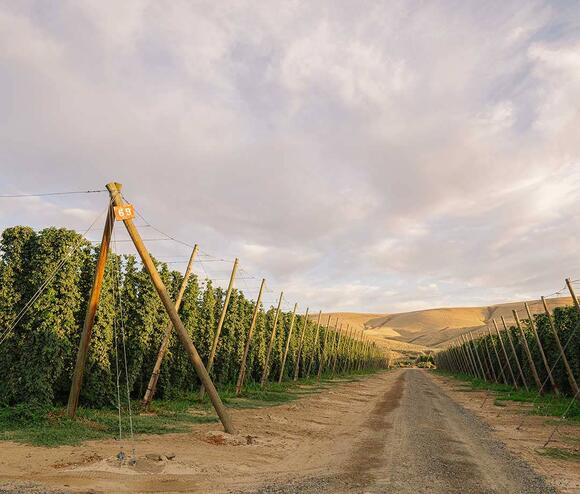
Hops grow on bines—stout, heavy stems that climb by wrapping themselves tightly around a trellis, rather than grabbing on with tendrils like a vine. Walking amongst these massive, 18-foot walls of green, my Blundstones kicking up the dry valley dust, I realize this isn’t a standard harvest—it’s a highly calibrated partnership. Over a 14-year direct relationship, the growers at CLS Farms have learned exactly what Sierra Nevada looks for on the grading table. While most farmers rush to pick their crop at standard maturity to avoid loss, CLS identifies specific fields and intentionally leaves them hanging on the bine just for Sierra Nevada. They push the crop to the absolute edge of maturity to capture the deep, intense aromas the brewery demands.
“We know they want it way out there,” says Eric Desmarais, a fourth-generation hop farmer. He says they left one of their best fields unharvested for nearly a week, only firing up the picking machines the night before the brewing team arrived.
Harvesting Machinery and The Drying Kiln
Gina Pace
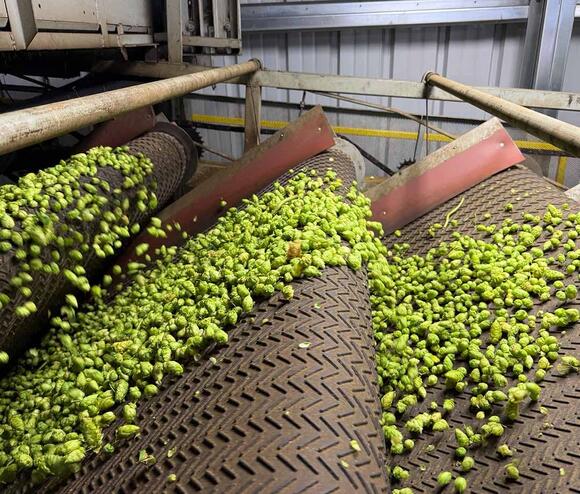
Once the bines are cut, they are hauled out of the field and fed into a processing gauntlet where the machinery ranges from mid-century workhorses to modern automated engineering. Some farms still rely on legacy Dauenhauer harvesters—roaring machines whose core mechanics haven’t changed since the mid-20th century, requiring a small army of seasonal workers to manually feed the bines and sort the biomass as sticky yellow lupulin, which looks like pollen, rains down around them.
Other facilities have invested millions in modern Wolf harvesters. These automated beasts eliminate the labor headache by violently chopping the entire 18-foot bine into pieces and using a cyclone of positive and negative airflow to separate the heavy cones from the lighter leaves. The new machines are efficient, but there’s a catch: the blades occasionally slice the cones, exposing the lupulin to oxygen before they even hit the drying floor.
“At the end of the day, it looks pretty, but really, we’re harvesting oils,” explains Mike Roy of Roy Farms, whose family has been growing in the valley for 120 years. “We’re trying to get those oil glands to peak maturity and fullness without rupturing, because at some point they rupture, and then a lot of those off-notes will come from oxidation.”
Whether hand-fed or machine-chopped, the crop faces its most dangerous bottleneck in the kiln. Hops come out of the field with roughly 75 percent moisture, and they must be dried down to a highly specific 8 to 10 percent. The kiln operator blasts 135-degree heat through the 30-inch bed of cones. If the hops are pulled too wet, the resulting 200-pound bales begin to compost and generate massive amounts of heat, and could spontaneously combust in the warehouse. But drying them too much can harm the final product.
“The process of adding heat is going to start to rupture those fine, nuanced molecules,” Grossman says. If the kiln gets too hot, those delicate aromatics simply evaporate into the atmosphere instead of making it into the beer.
To hit this exact target without cooking the crop, the team at CLS weaves ropes through the drying beds, pulling them midway through the cycle to fluff the hops, ensuring the air flows evenly and preventing the bottom layers from scorching.
Whole-Cone Purism and Logistical Sprints
Sierra Nevada
Sierra Nevada’s obsessive focus on the physical cone is an anomaly in modern brewing. The vast majority of the craft beer industry has shifted to highly processed T-90 and Cryo pellets. Pellets are shelf-stable, take up a fraction of the storage space, and can be dumped directly into standard brewing equipment. Sierra Nevada, however, is one of the industry’s last massive holdouts, along with a few others like Deschutes Brewery and Victory Brewing, refusing to abandon whole-cone hops for its iconic releases.
But there’s a logistical penalty for maintaining the purism. The brewery requires enormous refrigerated warehouses kept at 24 degrees just to store the bales. Sierra Nevada has two brewing facilities, one in Chico, California, and one in Mills River, North Carolina, near Asheville. The transit is a cross-country sprint. If selected on a Monday, West Coast batches could reach Chico by Wednesday or Thursday; the East Coast-bound hops require team drivers to run non-stop for three days out to the Mills River facility. Because whole cones clog standard brewing machinery, Sierra Nevada even had to invent and build custom equipment—like their Torpedo dry-hopping vessel, which circulates beer through a massive basket of raw hops to extract flavor without extracting harsh bitterness.
Gina Pace
This logistical headache continues on the cellar floor, where the team relies on an old-school, labor-intensive method to dry-hop the beer. “We have to pull these bags up into the tank,” Lavery explains. “We’ve got 40 bags.” Suspended from chains inside the massive fermenters, these pillowcase-sized sacks steep directly in the liquid. “Think of a pillowcase-size tea bag on a chain,” Grossman adds. It’s a lot of work, but Lavery says it’s the best way to capture the massive hop aroma they just spent weeks hunting.
When the beer is eventually drained from the tanks, those soaked sacks are left behind, dripping a hyper-concentrated hop liquor that pools at the bottom of the vessel. The brewers collect this incredibly rare runoff—dubbed “cellar drippings”—yielding a meager 10 to 12 barrels a season. “The chef’s cut,” Grossman calls it. It never sees a bottling line, strictly poured on draft for those lucky enough to be at the brewery on release day.
Bottle Conditioning and Final Touches
Sierra Nevada
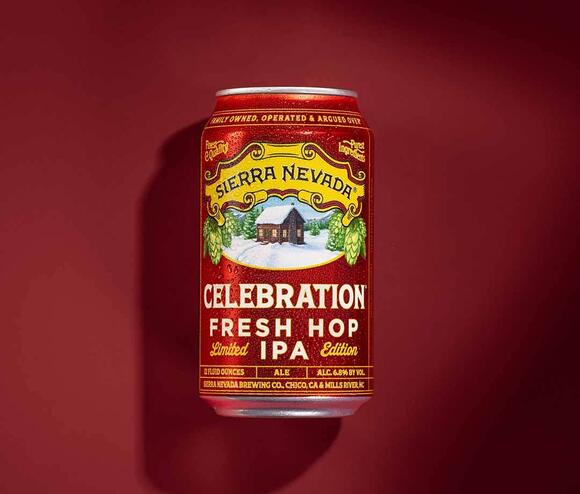
Even when Celebration is finally ready for packaging, Sierra Nevada adds one extra touch. Rather than force-carbonating the beer in tanks and shipping it out immediately, they dose the liquid with a tiny amount of yeast and sugar just before it goes into the bottle or can. This secondary fermentation, known as bottle conditioning, scavenges oxygen and creates a natural, refined carbonation bead. It also adds another 15 days to the production timeline. The brewery could theoretically release Celebration IPA two weeks earlier, capturing more of the lucrative fall retail window, but the team considers the practice non-negotiable for quality.
The process is expensive and labor-intensive. Stressful but fun. A reminder that the beer sitting on the store shelf isn’t meant to last forever, but bottle a specific moment of the harvest season. For the brewers rubbing the sticky resin off their hands, there is simply no other way to build this beer.
“These hops that we’re going to select right now are going to be on trucks literally tomorrow, and they’ll be down to Chico by Wednesday,” Lavery says, looking over a table of freshly broken cones. “You can’t get any fresher.”
 Add to Preferred Sources