693
Posts
537
Followers
Pasadena Media Foundation is dedicated to saving local news. Our publications feature provocative reporting about the Greater Pasadena and Greater Southern California areas.
‘I’m defending the ideals our Constitution grants to all of us.’ – Donna Tryfman
By Sheryl Turner,
3 hours ago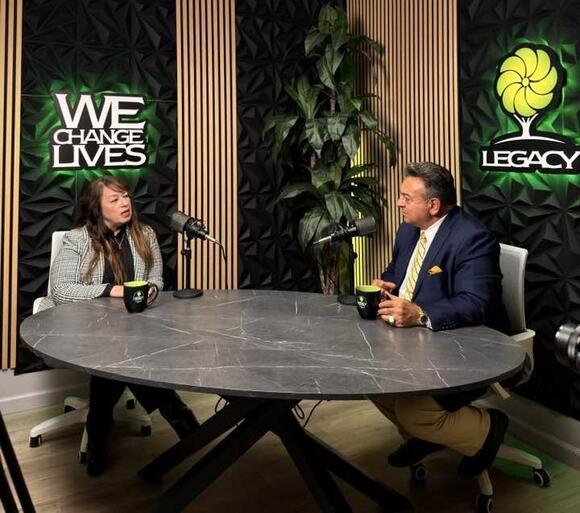
An experienced lawyer
Tryfman: I have been a career government attorney in public defense for over 30 years. I’m currently assigned to the Major Cases Unit, which handles only capital litigation, the most serious cases, the ones with special circumstances attached, such as multiple murders, torture, and sex offenses. It’s the apex of criminal defense in my office, and only the most experienced attorneys are trusted with that kind of litigation, because the death penalty is on the table.
In California, we don’t have the death penalty in practice. Governor Newsom placed a moratorium on it. But it isn’t the governor’s choice whether to proceed to the death penalty; that’s up to the filing district attorney’s office. There’s an entire procedure, with requirements from the American Bar Association and the California State Bar for preparing and defending a person accused of a capital offense. That requires hours of mitigation investigation, working on collaborative teams to investigate that person’s life, sometimes going back generations, because part of the penalty presentation is presenting mitigation.
The office started this unit a couple of years ago and chose me as one of 10 out of 700 lawyers. It’s a very respected position, and I’m proud of it. I really enjoy the work because you dive into a person’s full story; it’s a more elevated practice than just churning out DUI trials — which is still important work, and which I’ve also done throughout my career. I’ve handled over 100 jury trials and defended every type of criminal case.
Defense philosophy
‘I’m defending the ideals our Constitution grants to all of us.’
Tryfman: People always ask how I can defend someone I know is guilty. My answer is that it’s irrelevant to me whether my client is guilty. What I’m defending is the ideals our Constitution grants to all of us — the right to fairness, the right to due process. I’m here to make sure the government does it correctly, because law enforcement and the prosecution are a very big machine, and it’s in everyone’s interest that the government handles the process correctly. We have an adversarial system, and I see myself as a tester of evidence. Whether someone is guilty doesn’t relieve the government of its burden to prove that beyond a reasonable doubt — that’s my role in the system.
I was also a supervisor in the juvenile court in East Lake for three years, and I handled one of the first transfer hearings up in Lancaster for the public defender’s office. Juvenile practice is different from adult practice, because delinquency law has moved from being purely punitive toward being more rehabilitative. We don’t want to throw human beings away, and the human beings we least want to throw away are children. We want to invest in them and redirect kids who’ve fallen into drugs or oppositional behavior, because their brains aren’t fully formed until they’re 25. I believe strongly in working with juvenile youth in delinquency to give them structure and help them become contributing members of society.
My career has prepared me to be a judge because I’ve seen firsthand what happens in a courtroom. I’ve dealt with many different personalities and with heightened, difficult emotional situations, and I’ve had to maintain an even temperament — with victims and complaining witnesses recounting terrible things that happened to them — approaching them and the process with the respect and dignity it deserves. Doing that for over 30 years has also given me a sense of humility, because people don’t come before the court because they’re having a great day. In both criminal and civil courts, this is the mechanism our society has created to handle people’s disputes. You want a judge on the bench who has humility, who treats the process with dignity, who isn’t there to hold a position of power but who brings humanity and understanding in an efficient, formal way that operates according to the law.
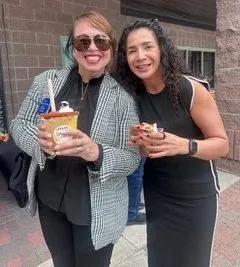
Life experience and leadership
Tryfman: Personally, I haven’t lived in a bubble either. I’m the daughter of immigrants, a single mom, and a widow — I had to decide whether to continue or discontinue life support for my husband. People make decisions like that in their daily lives all the time, so I’m not coming to the court as a tenured attorney with no lived experience. I understand that people have real issues in their lives, and I’m sensitive to that. I want to give everyone a fair shake and be a person who listens.
I’ve also held several leadership positions in my office. I was president of the Public Defenders Association for six years, and president of the Jewish Public Defenders Association from 2022 to 2025. I led my office and colleagues through some very difficult times with solid, respectful leadership. I learned that leadership isn’t the same thing as authority — a good leader has to exhibit the same qualities a judge should: listening, respect, and dignity, so that everyone feels they got a fair shake, even if they’re unhappy with the decision. They have to leave the courtroom feeling they were heard.
‘My three rules as an attorney — be prepared, prompt, and polite.’
I’ve also prepared to serve as a judge directly, having served as a judge pro tem — a volunteer judge. I applied to the Los Angeles County Superior Court, was appointed, and went through training. I sat in civil assignments, including small claims and traffic, which temporary judges often handle because many pro se litigants — people representing themselves who aren’t familiar with the process — appear. A bench officer has to be patient there while still moving the calendar, and I feel I have that ability because I’m always prepared. My three rules as an attorney — be prepared, prompt, and polite — will translate well to the bench.
Facing antisemitism
Tryfman: We formed the Jewish Public Defenders Association in 2022, basically as a social club — to hold Hanukkah parties and be a place to mentor other Jewish attorneys, because this office used to be about 75% Jewish. That’s not true anymore. I happened to be president after October 7th in 2023, and I can tell you what happened in my office was quite shocking — there were unbelievable displays of Jew-hate. I have a mezuzah on my office door; it was vandalized and ripped off four times. People — including union presidents and others — were posting a lot of the antisemitic tropes that have become common, essentially calling for the annihilation of Jews in Israel.
No judge brings their personal politics or personal views to the bench or to judicial decisions. I’m telling you these stories because I was able to get through a very difficult time in my office dealing with Jew-hate, much of it directed at me personally, since I was the face of the association — even though we had about 60 members. I took a leadership role, reaching out to the Board of Supervisors and the executive management of my office. All we ever wanted was training, awareness, and to get people talking, because when people talk to each other, they find they have more in common than what divides them. That went okay for a while, but there’s still a real division in this office. During this campaign, some candidates and endorsing bodies have invoked antisemitic tropes against me regarding my role as president of the Jewish Public Defenders Association.
What I always say to people is: there is not one statement, not one post, not one video anywhere — in the courts or anywhere else — where I have expressed hate or bias about any other group, at any time. What this experience has taught me is that I can stand up straight and proud of who I am, and stand up for other people, without that meaning that I hate anyone else. It’s been a tough time in public defense and a tough time for me personally in this campaign, but I know I can stand up, do the right thing and make difficult decisions in a respectful, dignified manner.
Making decisions, getting endorsements
Tryfman: That’s something judges deal with a lot — people come in with their own confirmation biases and implicit biases, and a judge has to weed through that and make difficult decisions without fear or favor. That’s the kind of judge I will be. My reputation is stellar, and I wouldn’t be entrusted with the cases I handle, or have the endorsements of so many respected judges, public defenders, and district attorneys, if that weren’t true.
The LA County DA’s union endorsed me — the first time they’ve ever endorsed a public defender — which tells you they think I’m fair. Endorsements are a statement by organizations that they believe in your qualifications — I don’t think these are truly nonpartisan races. I’ve been a registered Democrat all my life because I believe the Democratic Party has, at most times, stood for fairness, due process, and equality, which is what my life’s work has been about. But other nonpartisan organizations have also recommended me. It’s immaterial to a judge whether they’re progressive, moderate, or conservative — I’m not looking to be any of those things on the bench. When you put on that robe, you have to be everyone’s judge; you rule according to the law and the facts.
Approach to fundraising
Tryfman: Honestly, I don’t like to ask for money. It feels strange that even running for judge is a political campaign. I’ve received some very nice donations from friends and family, and if I need money and have it, I’ll self-fund. My campaign has really been about the people — I’m pounding the pavement, getting out to many communities and events, both legal and otherwise. I go to city council meetings because that’s free, and you get to go up to the podium and speak for a few minutes. I’m out every night and every weekend — I haven’t been out this much since my twenties. It’s impossible to door-knock an entire county, so I’ve been speaking to neighborhood councils and hoping that when people meet me, they’ll remember me.
I wasn’t a big social media user before the campaign. But according to my daughter, I’m blowing up my Instagram now, posting about my events every day. I already have some podcast appearances and articles coming up. That’s really the only way to reach people: keep taking opportunities to speak.
I wouldn’t take money from corporations, because they could potentially appear before me someday. Corporations don’t really care about judicial races anyway; they’re not giving us any money. I’ve also done some targeted digital outreach. But it’s just impossible to reach the entire county — you might see me driving around; my car has magnets on it asking people to vote for me. I’m basically a traveling billboard all over LA County.
Rent stabilization experience
Tryfman: I was chair of the Rent Stabilization Commission. I’m interested in housing issues, and the city put the commission to use during COVID. I acted in a quasi-judicial capacity there, hearing landlord-tenant disputes. I’ve seen how housing intersects with criminality. A lot of my clients are unhoused people charged with crimes in Los Angeles, and housing instability contributes to crime and to those kinds of incidents.
I joined the commission because I enjoy working collaboratively with others. There were seven of us, plus two alternates, and we alternated as neutral chairs — myself and another neutral commissioner. We heard landlord-tenant disputes during COVID, which gave me real insight into what tenants and landlords feel. That was a great experience.
The city has since sunset that commission, mostly due to funding issues, so it now goes through the Building and Safety department. But it was very interesting because I got to see what happens with aging housing stock and how seniors are affected. We were able to get into those issues in a way I wouldn’t otherwise see in public defense.
That’s also part of why I volunteered to be a judge pro tem. I wanted to make sure I could do the job, and that I liked it, before running for office. I wanted to be sure I could do it and that I felt fulfilled by it.
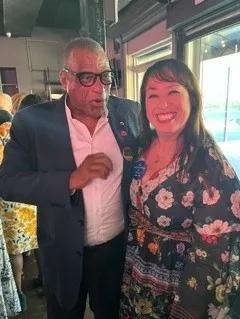
Operational challenges facing the courts
Tryfman: I think the biggest operational problem is personnel. There’s a court reporter shortage and, frankly, a bit of a lawyer shortage in government offices, too. The Board of Supervisors instituted significant budget cuts because of the $4 billion settlement to victims of assaults and abuse from the 1970s and ’80s. I don’t think Governor Newsom, when he signed the law extending the statute of limitations, took into account that it would put this kind of financial strain on small cities and possibly the county — it’s really a specter hanging over Los Angeles County. Our office wasn’t immune from budget cuts either.
There’s also a lot more discovery to handle as a defense attorney now — body-worn camera footage and reams of material — and that’s hard to manage well for every client. I think the courts are dealing with the same issue operationally: there are judicial vacancies. You may have noticed Governor Newsom made interim appointments of several candidates who won their elections outright in the primaries, so they could start serving now rather than waiting until January. Personnel is always an operational problem, and I don’t think we’ve fully recovered from the COVID backlog — we weren’t doing trials regularly during that time, and we’re still recovering.
I know the courts are having trouble hiring reporters. Operationally, that’s a pretty significant issue. The courts are trying to bring in more court reporters and other support staff — including judicial assistants — with signing bonuses and by covering training, education, and certification costs. In felony matters, there’s always been a court reporter; I think the shortage is affecting the civil courts more, since those are the ones moving to electronic recording unless litigants agree to pay for a live reporter themselves. I don’t think there’s a real replacement for a live court reporter.
There’s also a technology catch-up underway. The technological advances have probably helped court operations in some ways. Still, if a family doesn’t have reliable Wi-Fi or doesn’t understand how to file a full packet of documents, forms, and orders, that becomes a real hindrance to their access to justice.
Several courthouses have closed over the years: Huntington Park, South Gate, Bell, Beverly Hills, Santa Monica. I think that’s had a real impact on the backlog. Ultimately, the courts are only as efficient as the people working inside those courtrooms. There has to be a system in place that everyone accepts and that allows cases to move forward. I think the responsibility falls to the judge on the bench to set the tone, expectations, and the organization of the courtroom. Ultimately, it comes down to communication: checking in and professionalism on both sides. That’s something I would bring to a courtroom.
Comments
YOU MAY ALSO LIKE
Jim O’Rear
Florida Man’s Poop Fight Goes Completely Off the Rails.
Folks, I’ve said it before and I’ll say it again: Florida is the only place where a disagreement over dog poop can apparently escalate into a felony case, an assault with a scooter, and enough body-cam footage to make Netflix start taking notes.
CJ Coombs
CJ Coombs
Missing since 1999 from Wasilla, Alaska: Michael Timothy Palmer disappeared when he was only 15
Michael Timothy Palmer has been missing from Wasilla, Alaska (Matanuska-Susitna Borough), since June 4, 1999, according to the National Center for Missing and Exploited Children (NCMEC). His photo above is an age-progressed likeness of how he might have looked at 28 years, though she would now be 42.
CJ Coombs
Pasadena Media Foundation is dedicated to saving local news. Our publications feature provocative reporting about the Greater Pasadena and Greater Southern California areas.
693
Posts
537
Followers