undefined
Posts
undefined
Followers
Atmospheric River Sets San Francisco Rainfall Record, Floods Financial District
By José Gutierrez,
1 days ago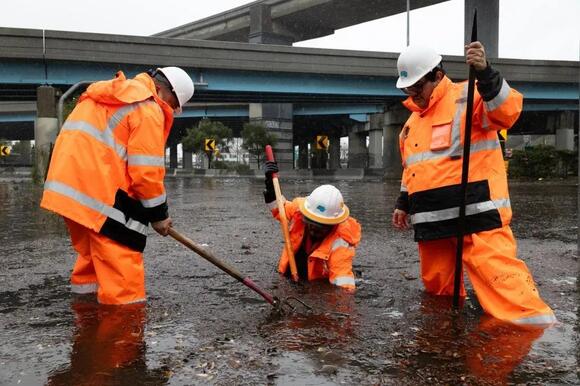
The Briefing:
- An atmospheric river broke a 76-year pre-noon rainfall mark and set a new November 18 daily record in downtown San Francisco on Wednesday, flooding streets and disrupting transit across the Bay Area.
- Tens of thousands of homes and businesses lost power across the region, with tens of millions of coastal residents facing flood and surf hazards as the storm pushed south toward Los Angeles and San Diego.
- Meteorologists warn this event marks the beginning of what could be one of California's wettest winters in modern history, driven by an intensifying El Niño pattern and saturated soils across the state.
An atmospheric river broke a rainfall record in downtown San Francisco that had stood since 1950, flooding major arteries in the Financial District, halting public transit, and cutting power to thousands of Bay Area homes on Wednesday — marking what forecasters describe as the opening act of a potentially historic wet season for California.
The scale of the damage extends far beyond flooded streets: 30 million people along the state's coastline remain under flash flood threat as the storm advances south toward Los Angeles and San Diego, where fire-scarred hillsides from the summer blazes dramatically raise the risk of mudflows.
Calles Convertidas en Ríos: Chaos in San Francisco
Wednesday morning, residents of San Francisco's Financial District witnessed an extraordinary scene: water surging under pressure through storm drains along California Street, flooding sidewalks and basement-level businesses as the city's drainage infrastructure buckled under the rainfall load. Muni's M-Ocean View service was rerouted due to water accumulation on the tracks, while images circulating on social media showed vehicles stranded at intersections turned into temporary lakes.
In the North Bay, Marin County bore some of the most severe damage, with large trees blocking major roadways and downed power lines forcing the closure of several residential neighborhoods. ABC7 meteorologist Drew Tuma noted that the storm laid bare the vulnerabilities of the Bay Area's water infrastructure heading into what promises to be a demanding season.
What Is an Atmospheric River — and Why This One Stands Out
An atmospheric river is a long, narrow band of moisture that travels thousands of miles across the atmosphere, functioning like a high-pressure hose aimed directly at a coastline. The system that struck California Tuesday night and Wednesday was classified by the National Weather Service Bay Area as the first truly widespread moderate-to-intense rainfall event of the season, distinguishing it from prior storms whose impacts had been more localized.
What makes it particularly significant is the context: this event arrived days after a series of storms between November 14 and 16 that had already saturated soils across Northern California and the Pacific Northwest. With the ground effectively impermeable after that prior saturation, every additional millimeter of rainfall converted directly into runoff.
The Sierra Nevada: A Second Front
While the Bay Area battled flooding, the Sierra Nevada peaks were accumulating snow at an accelerating pace. Active winter storm warnings covered vast swaths of the mountain range, including access corridors to Lake Tahoe and Mammoth Lakes. Interstate 80 and Route 50 — two of the state's most heavily traveled mountain corridors — were operating under severe restrictions.
Flooding and debris blocked roads and highways across the Bay Area and Sierra foothills as crews worked in hazardous conditions to clear roadways and restore power.
Southern California Braces for the Next Wave
As the storm shifted south through Wednesday night and Thursday, Los Angeles and San Diego raised their alert levels. Los Angeles County authorities issued specific warnings for communities in areas burned by recent wildfires, where the absence of vegetation transforms any intense rainfall into an immediate threat of mud and debris flows. Dangerous surf advisories were also issued along the southern state coastline.
A Winter That Has Only Just Begun
The pattern shows no signs of moderating. CNN reported that California faces a potentially historic season driven by an intensifying El Niño that significantly raises the probability of an extraordinarily wet winter. Meteorological models project additional waves of atmospheric rivers in the coming weeks, placing sustained pressure on drainage infrastructure, reservoirs, hillsides, and communities in high-risk zones.
For the Bay Area, Wednesday was a sharp test of local drainage and a preview of the storms ahead. The question is no longer whether another storm will come — but when, and with what force.
© {{Year}} Latin Times. All rights reserved. Do not reproduce without permission.
 Add to Preferred Sources
