undefined
Posts
undefined
Followers
How a Shuttered Rural Prison Became a Half-Billion-Dollar Federal Acquisition—and a Corruption Probe
By Tercio Santos,
3 days ago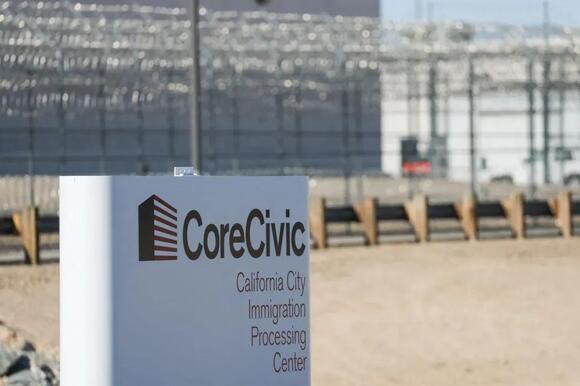
The Briefing:
- The Appleton Detention Facility in western Minnesota accepted its first ICE detainees on November 9, with capacity for up to 1,600 people—making it one of the Midwest's largest immigration custody sites.
- CoreCivic previously offered the same prison to Minnesota's Department of Corrections for $75 million in 2025; the state declined. The federal government paid $495.6 million—6.6 times that amount—just one year later.
- Sen. Maggie Hassan has formally demanded that both DHS and CoreCivic preserve all records tied to the acquisition, citing potential "undue influence, corruption, or other violations of federal law."
- Total federal financial exposure tied to the site exceeds $1 billion, combining the purchase price with a five-year, $536 million contract for CoreCivic to continue operating the facility.
A Vacant Prison Gets a Second Life—and a Half-Billion-Dollar Price Tag
The Prairie Correctional Facility—now renamed the Appleton Detention Facility—stood empty for 16 years before federal vehicles began rolling through its gates last week. Located roughly 30 miles from the South Dakota border in Appleton—a community of about 1,300—the facility was confirmed operational by the Department of Homeland Security on November 12. A DHS spokesperson framed the opening as part of delivering "the American people's mandate for mass deportations."
The facility was originally built by the city of Appleton but sold to CoreCivic in 1997 to house state prisoners. After declining demand forced a 2010 closure, the company spent years unsuccessfully pitching the site for reuse—including an offer to Minnesota's corrections department for $75 million in 2025. That bid was rejected. Roughly one year later, the federal government paid 6.6 times that amount for the same property.
The $420 Million Gap That Triggered a Senate Investigation
On November 13, Sen. Maggie Hassan (D-NH)—set to chair the Senate Homeland Security and Governmental Affairs Committee after Democrats recaptured the Senate majority in the November 3 midterms—announced a formal inquiry into the transaction. She sent letters to DHS Secretary Markwayne Mullin and CoreCivic executives demanding the preservation of all documentation connected to the deal, including internal communications, financial appraisals, and any contacts with White House officials.
Hassan's office pointed to $500,000 in donations CoreCivic made to President Donald Trump's inaugural committee, and noted the Appleton sale was part of a broader arrangement in which CoreCivic sold four detention facilities to the federal government for a combined approximately $2.2 billion—a portfolio transaction that sent the company's total revenue surging 28% year-over-year, according to its latest earnings report.
The private prison firm pushed back against the scrutiny, stating the sale price reflected an independent valuation. CoreCivic shares still fell roughly 2.5% in New York trading after the investigation became public.
Official Responses: Dismissal and Silence
Administration officials have largely declined to engage substantively with the valuation questions. When pressed about the deal at a Minnesota press conference, Treasury Secretary Scott Bessent responded, "I don't know anything about that," and dismissed the line of questioning as "a waste of our time."
DHS, as of this writing, has not formally responded to Hassan's preservation letters, though the department has defended the acquisition on policy grounds, stating the facility will help expand the country's immigration enforcement infrastructure.
Appleton's Divided Reckoning
For a town whose property tax base faces significant erosion once federal ownership—and its attendant tax exemption—takes full effect, the tradeoffs are concrete.
To offset the loss of local property taxes now that the site is under federal ownership, CoreCivic agreed under its operating arrangement to pay the city $1.5 million in 2026 and $1.2 million annually thereafter, alongside promises of local hiring—a lifeline that has divided residents between economic pragmatism and moral opposition.
Over the weekend of November 14–15, faith leaders, activists, and community members held a vigil and protest march outside Appleton's civic center, calling for the facility's closure. Similar demonstrations have echoed across the region since the August announcement.
The facility is expected to reach full operational capacity by mid-2027. Whether Hassan's investigation—set to accelerate once Democrats assume Senate committee chairmanships in January—will produce findings of legal wrongdoing remains uncertain.
What is already clear is that the government paid more for a shuttered rural prison than many American cities spend across a decade, and the full accounting for that decision has only just begun.
© {{Year}} Latin Times. All rights reserved. Do not reproduce without permission.
 Add to Preferred Sources


