undefined
Posts
undefined
Followers
Mayor Wilson will expand Seattle’s CCTV surveillance program. Here’s how it works
By Teo Popescu,
7 days ago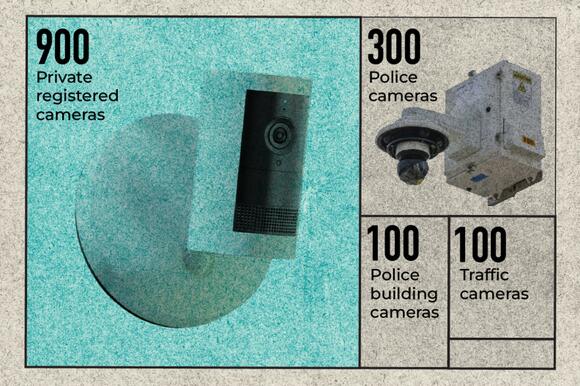
Mayor Wilson will expand Seattle’s CCTV surveillance program. Here’s how it works
Tuesday, November 17, 2026
By: Teo Popescu
View this story on mobile here.
Seattle Mayor Katie Wilson announced last week she will move forward with the expansion of the city’s surveillance camera program into three neighborhoods.
This comes after the mayor’s office received the findings of a long-anticipated audit of the city’s surveillance technology by New York University’s Policing Project. The audit, commissioned by Wilson when she took office, focused on privacy concerns surrounding the city’s Real-Time Crime Center, the digital hub for all of Seattle’s camera feeds and AI-powered surveillance software.
Flock and similar companies like Axon provide AI-powered license plate readers that capture images of each car that passes by. AI translates those images into a text description that can be searched for in a database managed by each individual company. Users can search these databases for the original footage by license plate, color, and make of a car, details about the car’s physical condition — and in some software, descriptions of people or items captured in the visuals. For example, an operator can search for “man in yellow shirt” similar to how you would search your phone photo library for “man in yellow shirt” in your vacation photos.
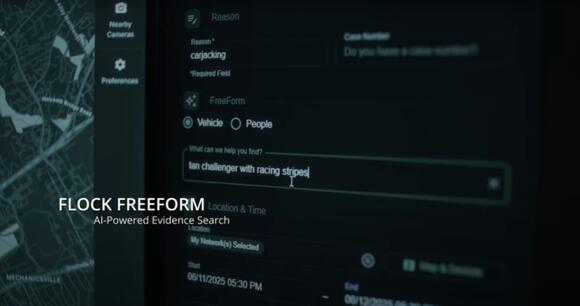
Seattle does not have a contract with Flock but does contract with a similar license plate reader, Axon. Axon provides the Seattle Police Department with cameras and the software needed to run similar searches using CCTV footage in the Real-Time Crime Center.
Over 400 Seattle Police Department patrol cars are also equipped with Axon license plate readers. However, these license plate readers have been turned off to comply with new state laws. There is no current plan to turn them back on.
The Real-Time Crime Center is a central hub from which Seattle Police can access footage from more than 500 cameras across the city (police, traffic cameras, private cameras, and so on). Operators at the center access the footage through specialized software from Axon called Fusus, which allows them to view multiple feeds at once and take advantage of an AI-powered, object-based search, similar to license plate readers and your phone photo library.
Axon and its software competitors also promise a slate of futuristic features marketed as modern crime prevention tools for investigative work. In Seattle’s Fusus software, operators can generate crime heat maps and track relationships between people and the places they frequent from data gathered on surveillance cameras — although the Seattle Police Department has disabled these features to comply with current state regulations. Operators also have access to police and criminal databases, allowing them to cross-reference names with photo IDs, criminal background history, property records, and more in real time.
Seattle Police policy states cameras in the Real-Time Crime Center should only be used to respond to incidents, making the term “real-time” a bit of a misnomer. Operators are not supposed to be actively monitoring feeds until they receive a request for assistance, either to assist police in the field during an active, dangerous crime in progress, or to gather evidence during an investigation. That request for assistance usually comes in the form of a 911 call or a police case number.
Does it work?
Proponents of the Real-Time Crime Center say these uses help solve crimes faster. In the case of crimes in progress, crime center operators can provide details a 911 call may not have, such as which direction a suspect fled or whether they are carrying a weapon. When it comes to investigations, proponents say the Real-Time Crime Center frees up detectives to focus on leads other than video footage.
The Seattle Police Department has said this technology supported 17 homicide investigations last year, 10 of which were closed. However, the NYU audit was quick to point out the term “supported” in this context refers to any action taken by Real-Time Crime Center operators, regardless of whether that action meaningfully impacted investigations.
Available data on surveillance cameras show mixed results at best. A 40-year meta-analysis of CCTV footage across the United States, United Kingdom, and other countries showed surveillance cameras, when coupled with additional patrols and other measures, led to a 14% decrease in property and vehicle theft, but had no significant impact on violent crime rates.
A separate audit by the University of Pennsylvania and Seattle’s Office of the Inspector General is slated to come out late next year and will look more closely at the effectiveness of Seattle’s Real-Time Crime Center on local crime rates.
This is part of a series on surveillance in Seattle. See other stories in this series:
 Add to Preferred Sources
