undefined
Posts
undefined
Followers
Five years after pandemic started, inconceivable trauma and officials’ blunders have split society
By Clay Wirestone,
2025-03-13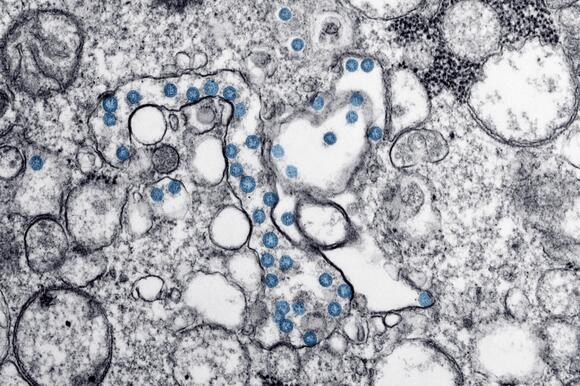
This transmission electron microscopic image shows an isolate from the first U.S. case of COVID-19. (Centers for Disease Control and Prevention)
Imagine that on Friday, March 13, 2021, an explosive device detonates in Atchison. All but 600 of the city’s 10,885 residents die.
Imagine the passage of five years after that explosion. Imagine the investigations, the attempts to rebuild, the efforts of those few hundred to remember the departed. Imagine the monuments built, the ceremonies held. With solemn expressions on their faces, state and national officials promise never to forget those souls.
Now imagine that we’ve reached the five-year anniversary of that explosion and it comes time to write about the subject, about the unfathomable loss and trauma to Kansas and its residents.
Here I am, and here’s the column.
It’s not actually about an explosion in Atchison. But it is about an unexpected event that cost the lives of 10,200 Kansans over a short time: the COVID-19 pandemic. I chose March 13 as the anniversary because that was the day a national emergency was declared , and my first one working from home. A pandemic had been declared two days before by the World Health Organization. Months of suffering and death lay ahead. A breathtaking 1.2 million Americans would die, along with more than 7 million worldwide
In the five years since, we have not as a state or nation come to terms with the omnipresent trauma caused by the overwhelming number of deaths, or the effects of widespread closures on children, seniors and workers. We have not come to terms with the gaping chasm that has opened between right and left when it comes to trust in medical authorities, and in the very process of science. Americans have not healed, and there appear to be no mechanisms through which we can do so.
Both left and right have much work to do. Neither tribe escaped from the pandemic with much to brag about.
On the left, leaders and advocates haven’t grappled with the fact that the mitigation measures they championed — foremost among them work and school closures — harmed the very people that progressives claim to value. These measures arguably harmed children attending public schools, those in need, seniors in nursing homes, those attempting to practice religion or those who voiced dissenting views. Other ideas, such as masking and social distancing, found mixed success if any.
On the right, the elevation of quacks and anti-science cranks such as Robert F. Kennedy Jr. have alienated the best and brightest from conservative circles. What scientist or doctor in his or her right mind would admit to supporting such a cause? Meanwhile, this attitude curdled into an anti-vaccine mania that cost lives as conservatives avoided the safe and effective COVID-19 vaccine. More residents of Republican-dominated states died after vaccine rollouts than residents of Democratic states.
As for those of us in the news media, tantalizing stories like the lab leak theory of COVID-19’s origin were ignored or denigrated for far too long. Dissenting yet reputable voices were dismissed. That left our audiences — the folks we serve — worse off.
I don’t mean to second guess. I wrote opinion pieces throughout the pandemic, columns and editorials. Readers should follow the science , I wrote. They should listen to experts and protect themselves . Many people did their best during a trying time. But there has been precious little introspection, and I think it’s a fruitful practice for those who value truth over partisanship.
In recent days, several authors have attempted to grapple with this half-decade of American life. Perhaps the easiest to digest yet most comprehensive is an essay accompanied by infographics by David Wallace Wells at the New York Times. “ How COVID remade America ” fulfills that headline and then some, examining the myriad ways the virus altered human health, behavior and opinion.
In the Atlantic, Tom Nichols writes “ When Experts Fail: They saved us from disaster during the pandemic — but they also made costly errors. ” He sees the pandemic as the culmination of a long effort to denigrate the work of experts in public life, leaving grifters and con artists to exploit an all-too-willing public. He notes, however, the way in which partisan divisions hindered good-faith public health efforts.
Finally, offering the most length and challenge, comes the book “ In Covid’s Wake: How Our Politics Failed Us ,” by Princeton University professors and avowed progressives Stephen Macedo and Frances Lee. The authors offer a scathing critique of progressive groupthink as COVID-19 erupted, asking tough questions about almost all pre-vaccine public health measures. They don’t claim that mask mandates, distancing and closures are useless. They do write that none were proven effective. And they highlight the costs of such interventions on the groups I mentioned earlier: children, the poor and the elderly.
Those interested in the subject, and in figuring out what we’ve learned through the past decade, would be well-served to read the book and face its arguments. I plan to write more about it.
On the other side of these five years, Kansans find themselves further apart than ever. The state Legislature and our nation’s president do their damnedest to exacerbate those divisions for their own political goals. COVID-19 may have broken our state and nation. Yet those interested in mending it must learn the lessons of the past and apply them to the future.
Otherwise, we risk far worse in years to come.
Clay Wirestone is Kansas Reflector opinion editor. Through its opinion section, Kansas Reflector works to amplify the voices of people who are affected by public policies or excluded from public debate. Find information, including how to submit your own commentary, here .
 Add to Preferred Sources


