undefined
Posts
undefined
Followers
Quantum Computing Could Be a $1 Trillion Revolution—And Wisconsin Is in the Race
Quantum Computing: Wisconsin’s Golden Goose or Just Fool’s Gold?
AI was utilized for research, writing, citation management, and editing.
The author has no affiliation with any companies mentioned. This article is for informational purposes only and is not investment advice.
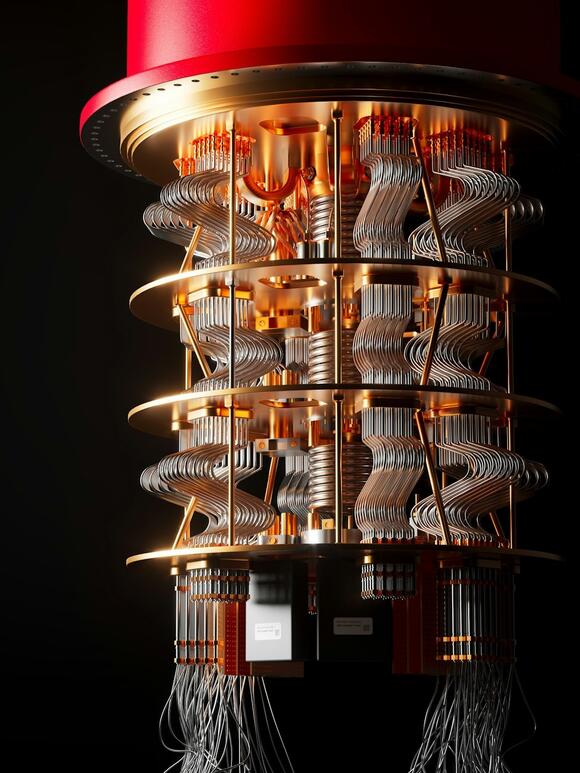
Imagine it’s the early 1900s. Automobiles are new, clunky, and expensive. Most people still trust horses. Roads aren’t paved, gas stations are scarce, and skeptics laugh at the idea that cars will ever replace carriages. Fast forward a few decades, and the horse is history—cars reshape the world.
That’s precisely the kind of crossroads we’re standing at today with quantum computers. They are awkward, expensive, and surrounded by more hype than horsepower at the moment. But if they deliver on their promise, they could change life in Wisconsin—and everywhere—just as much as cars changed the 20th century.
From Flashlights to Floodlights
A regular computer—the one in your pocket or on your desk—is like a flashlight. It shines light in a straight line, checking one thing at a time. Quantum computers, on the other hand, are like floodlights that spray beams in all directions at once.
- Classical bits (the flashlight) are just ones or zeros—on or off.
- Quantum bits, or qubits (the floodlight) can be both at once, exploring countless possibilities simultaneously.
It sounds like magic, but it’s real physics. In theory, this means problems that would take today’s fastest supercomputers longer than the age of the universe could be solved by quantum machines in a matter of hours (Woodside Capital).
Why Wisconsin Should Care
Here’s where the story takes a local turn. Wisconsin isn’t just sitting in the bleachers watching the quantum parade march by.
- The Wisconsin Quantum Institute (WQI) at UW–Madison is a central research hub, working on the science that could make these machines practical. WQI already partners with national labs and tech giants.
- Industry partnerships — Intel and HRL Labs have teamed up with UW researchers to accelerate qubit development (UW News).
- Startups are sprouting. Qolab, born in a Madison lab, has joined the Chicago Quantum Exchange and is working to turn cutting-edge science into real products.
- Regional coalitions matter. With Illinois and Indiana, Wisconsin is part of a growing Midwest quantum corridor.
Think of it as the early days of aviation: Wisconsin might not build the first airplane, but it could become one of the first states to run the airports.
What Quantum Could Unlock
Instead of staring at mysterious physics equations, let’s look at what quantum computers might actually do for everyday life:
- Healthcare: Just like cracking a safe with thousands of possible combinations, drug discovery involves testing endless molecular recipes. Quantum computers could spin through them faster than any lab, opening doors to new cures. NIH researchers are already experimenting here.
- Energy: Imagine batteries that last ten times longer or power grids tuned as perfectly as a violin. Quantum tools could optimize energy in ways we can’t with today’s math (RiskHedge).
- Weather & farming: Predicting Wisconsin’s weather is tricky. Quantum systems could provide farmers with far more accurate forecasts, saving crops from floods or droughts.
- Logistics: From shipping cheese across the country to running fleets of milk trucks, routes could be optimized in seconds, cutting costs and fuel.
It’s not that classical computers can’t try these things—they just choke on the math. Quantum could clear the logjam.
Bubble or Breakthrough?
Every gold rush has two types of people: those who strike it rich and those who get stuck selling shovels. Quantum is no different.
- The risk: Some companies are hyped beyond belief. Their stock prices soar on promises that may be decades away. Skeptics warn a “quantum bubble” could burst, much like dot-com stocks in the early 2000s (Woodside Capital).
- The reality: Even if the bubble pops, the groundwork is laid. Just as the internet survived its crash and went on to dominate life, quantum will leave behind labs, talent, and ideas that stick (arXiv).
For Wisconsin, that means research dollars, jobs, and prestige—even if the ride gets bumpy.
Wisconsin’s Opportunity
Picture this:
- A farm kid from Green Bay heads to UW–Madison, studies quantum physics, and instead of leaving for Silicon Valley, joins a Wisconsin startup.
- That startup builds partnerships with manufacturers in Milwaukee or biotech firms in Madison.
- Suddenly, Wisconsin isn’t just America’s Dairyland—it’s a quantum hub, exporting not just cheese, but breakthroughs.
It’s not science fiction. It’s a path that depends on the state supporting research, incubating companies, and retaining talent locally.
The Bottom Line
Quantum computers may sound mysterious, but so did electricity, radio, and airplanes when they first appeared. Every world-changing invention starts as a wild gamble. Wisconsin is already planting seeds in the quantum garden.
Will it be a bubble? Probably. Will it also be a future? Almost certainly. And when the dust settles, the states that invested in the foundations—research labs, startups, and education—will be the ones holding the golden egg.
The question for Wisconsin isn’t whether quantum computing will matter. It’s whether the Badger State will be ready when the future arrives.
Enjoying this story? Stay connected:
Follow Jim DeLillo on NewsBreak for more local stories, business updates, and Wisconsin news.
Download the NewsBreak App to get updates delivered straight to your phone.
Write for NewsBreak — share your own stories and earn.
Do you think Wisconsin can ride the quantum wave—or will it get swept aside like other passing tech fads?
 Add to Preferred Sources

