undefined
Posts
undefined
Followers
New Mexico Has Homes Built Into Cliffside Caves That Survived for Centuries
By Kathy Haan,
11 days ago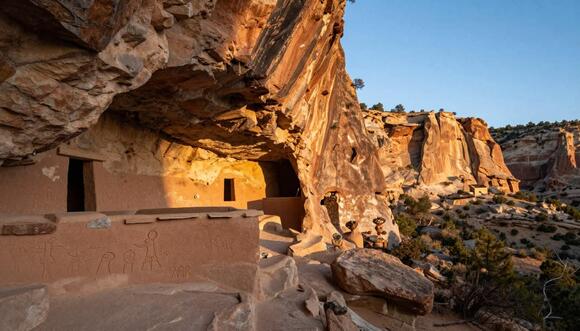
Gila Cliff Dwellings National Monument preserves homes built inside natural caves by Tularosa Mogollon people in southwestern New Mexico. The Southern Ancestral Pueblo people made these rooms their home, and you can walk inside several of them today.
The visit suits you if Indigenous history and a remote New Mexico setting appeal to you. Expect a short but demanding walk, not an easy stroll from the parking area. The quiet canyon and stone rooms make the effort feel worthwhile, especially if you take time to notice how the homes fit the cliff.
Key Takeaways
- Southern Ancestral Pueblo people built the homes inside natural caves.
- The site preserves rooms within a cliff above a canyon.
- Plan for a remote trip and a physically demanding walk.
- Several open rooms can be entered by visitors.
- The visit pairs a rare chance to enter historic rooms with a mountain drive that deserves careful planning.
Gila Cliff Dwellings New Mexico History and the People Who Built Them
The people archaeologists call Tularosa Mogollon occupied the cliff homes for about one generation in the late 13th and early 14th centuries. These Southern Ancestral Pueblo people lived in natural caves high above the canyon floor. Their story is one part of a much longer Indigenous history in this area.
Indigenous peoples have lived in the area for thousands of years. Cultural records at the monument reach back about 2,000 years. The protected site was established in 1907 and covers 533 acres.
The earliest identified tree-cutting date in the dwellings is 1276 CE, but it does not confirm when construction began.
That date comes from tree-ring dating, which means estimating when a tree was cut by examining its growth rings. The date offers a firm clue about building materials, not a complete record of the homes’ start.
Indigenous history and the name Tularosa Mogollon
Tularosa Mogollon is an archaeological label, not a name descendants use for themselves. Archaeologists use it to describe a group and its material culture. The people who built these rooms were Southern Ancestral Pueblo people.
For readers exploring Gila Cliff Dwellings, New Mexico history also includes living Indigenous communities and places beyond this monument. These Pueblo cliff dwellings in New Mexico offer one view of the past, but they do not stand for every Pueblo people or tradition.
The caves hold signs of much earlier human activity, too. Soot deposits show that people used them thousands of years before the Tularosa Mogollon occupation. The cliff shelters carry traces of more than one period of human life.
How the cave homes were built and used
The dwellings sit in natural caves in a cliff face about 180 feet above the canyon floor. Builders shaped rooms with local stone and mortar, fitting walls into the shelter of the caves. The cliff gave the homes a striking setting, but daily life still depended on nearby resources.
The Gila River supplied water, food, and fertile soil for crops. Families grew squash, corn, and beans, and they made pottery for household use. Those tasks connected the homes to the river valley below.
What tree-ring dates can tell us
Tree-ring dates help place construction materials within a time range. The dwellings’ earliest identified tree-cutting date is 1276 CE, while the occupation lasted roughly 30 years, from the 1270s through the early 1300s.
This period roughly coincided with the Great Drought of 1270-1300. That timing gives researchers a climate context, but it does not establish why residents left. Departure around 1300 marks the end of occupation, not proof of a known reason for leaving.
What the Cliff-Dwelling Trail Is Like and How Long It Takes
Plan on a moderately strenuous one-mile loop and about an hour to an hour and a half for the walk and time inside the dwellings. The unpaved trail climbs and descends 180 feet, so sturdy footwear matters on the uneven stone steps.
Steep steps have no handrails, and the hiking estimate includes time to explore the rooms. The trailhead sits beside the WNPA Bookstore. The route begins at the mouth of Cliff Dweller Canyon and follows a stream toward the caves.
From the canyon mouth to the caves
The loop changes as you move uphill, from open canyon to shaded rooms set into the cliff. These three stages help you picture the route before you start:
- Start at the canyon mouth, beside the WNPA Bookstore.
- Follow the stream-side trail as it climbs through the canyon.
- Enter three of the six caves along the route and explore the open rooms.
The cave rooms make the walk more than a steep path up and back. You can pause to look at the stone walls and the way each space follows the natural alcoves. Leave room in your schedule to move slowly inside.
Steps, elevation change and hiking effort
The cliff dwellings trail is moderately strenuous because it combines an unpaved surface, a 180-foot climb, and a descent. The stone steps are steep and uneven, which can feel harder on the way down when your legs are tired.
Give yourself about 1-1.5 hours for hiking and exploring the dwellings. That time covers the loop and a visit inside, rather than walking time alone. A rushed visit can make it harder to watch each step.
Hiking poles may help some visitors, but they do not replace steady footing on narrow steps. Take breaks when you need them, and keep your eyes on the path where stones are uneven. Visitors who cannot manage the steps can still view the dwellings from the canyon floor.
How to Reach the Monument and Plan the Drive
From Silver City, follow NM 15 north for 44 miles and allow as much as two hours to reach the dwellings. The paved highway is narrow, winding, and steep in places, so the miles do not tell the whole story.
Cell service drops out after you leave Silver City. The trailhead sits at the end of NM 15, at an elevation of 5,700 feet. For a map app, enter the Gila Visitor Center coordinates: 33.22387314, -108.2417984.
NM 15 crosses a remote part of southwestern New Mexico, with long stretches through the Gila Wilderness area. A warning sign near the start of the drive says reaching the dwellings may take as much as two hours. Plan the day around that slower pace, not a quick highway run.
If you are planning a longer drive, these road trip planning tips offer a useful reminder to leave room for delays. The roads here call for the same practical mindset, though the route itself is very different.
Use this pre-drive checklist before leaving town:
- Allow up to two hours for the drive.
- Save directions offline while you still have service.
- Check weather and road conditions.
- Avoid bringing trailers over 20 feet on NM 15.
Large trailers are not recommended on this highway if they are over 20 feet long. The tight bends and steep sections can make them difficult to handle. Save the visitor center coordinates to your map before leaving Silver City, where cell service is available.
Hours, Entry Rules and Weather to Know Before You Go
The dwellings admit visitors from 9:00 AM to 4:00 PM, but the last trail entry is at 3:59 PM. The visitor center opens earlier, at 8:00 AM, and no fee or permit is required for entry.
Only water is allowed on the trail. Check the hours for each part of the site before you set out, especially if you want to see the exhibits or catch a guided tour.
Opening hours, fees and visitor-center stops
The visitor center, dwellings, and trailhead contact station open every day except Christmas Day and New Year’s Day. Guided tours may be available, depending on staffing. The schedule below separates trail access from other stops.
| Item | Hours or schedule | Entry details |
|---|---|---|
| Cliff dwellings | Daily, 9:00 AM-4:00 PM | Last trail entry at 3:59 PM |
| Visitor center | Daily, 8:00 AM-4:30 PM | Exhibits, bookstore, bathrooms, and 20-minute film |
| Site admission | No fee | No pass or permit required |
The visitor center has museum exhibits and artifacts, plus a WNPA bookstore and bathrooms. Its 20-minute film gives you a short overview before you head to the trail. A guided tour can add context when staff are available, but tours are not guaranteed every day.
For a wider look at Indigenous places in the state, you can also read about Taos Pueblo in New Mexico. It is a distinct place with its own history and community.
Trail restrictions and seasonal conditions
Leave food, flavored drinks, gum, tobacco products, vaping devices, pets, and drones off the trail. Free pet kennels are available at the trailhead. The water-only rule helps protect the historic rooms and the people who visit them.
The walls are roughly 80% original, so do not touch, climb, sit on, lean on, or carve them. Closed rooms are off limits, even if you can see inside. No pass or permit is required for the monument.
Summer temperatures can rise above 90°F, and the National Park Service recommends at least one liter of water per person. The rainy season runs from July through September. July and August can bring afternoon storms, downpours, flash flooding, and lightning.
Winter roads may have snow and ice, while summer storms can change conditions quickly. If thunder starts, shelter in a car or building until the storm has passed.
Which Other Cliff-Dwelling Sites Are Worth Comparing?
For a visit centered on homes built into natural caves, Gila is the strongest fit among these examples. Natural cave rooms set it apart from cliff homes built into rock alcoves or larger sites with other kinds of ruins.
Bandelier is the leading New Mexico alternative for ancestral history and a walk through a Pueblo site. Its Pueblo Loop Trail gives you another way to explore the region’s past, with a Santa Fe-area stop that fits many itineraries.
Bandelier protects ancestral and traditional lands of at least 23 tribal nations. The park offers a different view of Indigenous history, so it can add depth to a trip rather than stand in for Gila. These unusual New Mexico landscapes also show how varied the state’s remote places can be.
| Site | State | What it offers |
|---|---|---|
| Gila Cliff Dwellings | New Mexico | Homes built inside natural caves |
| Bandelier | New Mexico | Pueblo Loop Trail and ancestral history |
| Montezuma Castle | Arizona | Cliff-dwelling site in a limestone alcove |
| Walnut Canyon | Arizona | Cliff homes along a canyon rim |
Arizona offers Montezuma Castle and Walnut Canyon as other cliff dwellings, while Mesa Verde sits in Colorado. Each site has its own setting, access, and history. Choose the places that match your trip, rather than trying to fit every example into one route.
Travelers comparing cliff dwellings in New Mexico near Santa Fe can start with Bandelier. Gila suits visitors willing to travel farther for cave homes, while Bandelier adds Pueblo history closer to Santa Fe. Check current access and operating conditions for your chosen site before setting out.
Respect each site’s rules and closed areas, even when a room or ruin looks easy to reach.
Conclusion
Gila Cliff Dwellings National Monument is a memorable choice for travelers ready to pair Indigenous history with a remote mountain visit. Its cave homes give you a rare chance to step inside rooms shaped by Southern Ancestral Pueblo people.
Make the trip at a pace that leaves room for the long drive and the walk through the site. If you want more remote New Mexico scenery, the Southwest detour planning ideas can help you think through another stop, though its details cover Utah.
Before leaving, check current operating conditions and weather, then save your route for offline use.
FAQ
Can you visit the Anasazi cliff dwellings?
Yes, visitors can enter the open rooms at Gila Cliff Dwellings National Monument. The Southern Ancestral Pueblo people, described archaeologically as Tularosa Mogollon, built and used the homes. You can look closely at the rooms, but you must leave closed rooms alone. Keep your hands off the walls, too, since much of their original material remains.
Who lived in the Gila Cliff dwellings?
Southern Ancestral Pueblo people, archaeologically described as Tularosa Mogollon, lived in the dwellings from the 1270s into the early 1300s. They built homes in natural caves above the canyon and used local stone. The Gila River supported their crops and daily needs. Archaeologists use the Tularosa Mogollon label, but descendants do not use it as their own name.
What are the best cliff dwellings in New Mexico?
Gila Cliff Dwellings is the best fit if you want to see homes built inside natural caves. Bandelier is another strong New Mexico choice, with a Pueblo Loop Trail and a long Indigenous history. The two sites offer different settings, so choose based on the kind of place you want to visit. You can also plan Bandelier as part of a Santa Fe-area itinerary.
How hard is the hike to the Gila Cliff Dwellings?
The hike is moderately strenuous, with an unpaved one-mile loop and a 180-foot climb and descent. Steep, uneven stone steps have no handrails, so sturdy footwear helps you keep a firm step. The route includes a stream-side stretch and time inside the caves. Visitors who cannot manage the steps can still see the dwellings from the canyon floor.
How long does it take to see Gila Cliff dwellings?
Allow about 1-1.5 hours for the trail and exploring the dwellings. That estimate includes the loop and time inside the rooms, rather than just the walk. You may want extra time if you prefer to pause and look closely at the stonework. Starting late can leave little room to explore before the trail’s last entry time.
Is the road to Gila Cliff dwellings paved?
Yes, NM 15 is paved, but it is narrow, winding, and steep in places. Allow as much as two hours for the 44-mile drive from Silver City. Cell service drops out after you leave town, so save your directions before driving. Trailers over 20 feet are not recommended on the highway.
Are there rattlesnakes in the Gila National Forest?
Yes, rattlesnakes live in the Gila region. Stay on the trail and give wildlife plenty of space, especially near rocks and brush. Do not approach or handle a snake, even if it seems still. Step back slowly if you see one, then let it move away before continuing along the trail.
Are there bears in the Gila Mountains?
Yes, bears live in the Gila region. Keep your distance if you see one, and never approach or feed it. Give the animal room to move away on its own, and do not try to take a closer look. A calm, respectful response helps keep both you and wildlife safer.
 Add to Preferred Sources


