undefined
Posts
undefined
Followers
New Meridian center will train Life Flight clinicians
By MATTHEW NEIL WELLS,
2026-09-03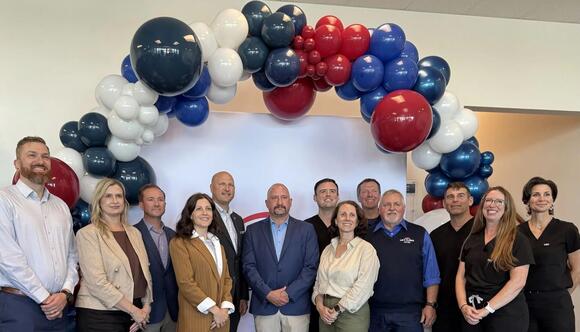
MERIDIAN — A 10,000-square-foot state-of-the-art training ground for health professionals who work through emergency crises wherever their patients may be officially opened Wednesday in Idaho’s second largest city.
Life Flight Network (LFN) — the not-for-profit patient transport service that provides helicopter, fixed-wing airplane and ground ambulance transport to 34 locations throughout Idaho, Oregon, Washington, Montana and Hawaii — opened its Clinical Center of Excellence on Wednesday, nearly five months since the site broke ground on April 4 at 1550 South Tech Lane in Meridian.
The $800,000 facility houses simulation-based training and advanced clinical education, according to the organization’s website. LFN trains 400 to 500 people a year, according to Mitchell Tillman, clinical simulation manager.
Casey Seckel, LFN’s chief clinical officer, spoke about what led to the project.
“This was a culmination of a very long journey of us trying to figure out how do we accomplish training and provide clinical excellence for an organization that’s so geographically dispersed and up to about 450 clinicians now,” Seckel said to a large crowd at the opening. “We looked at several different options over the last couple years, and ultimately we came to find that really hard structure of central location where our clinicians can come and train, those are the best ones.”
LFN exists so people such as Laurel Whittemore, flight nurse and clinical practice training manager, can do their jobs of taking care of patients outside the hospital should they need such care.
“We hope it will really enhance their training. ... We know simulation is an excellent way to learn, to put them right in the situation,” said Whittemore, who added that she has worked for LFN since about 2010 and was a clinical care and emergency nurse for Saint Alphonsus Health System before that.
In the simulation area, where there are four advanced simulation and debrief rooms, Whittemore said the Life Flight students and trainers will have all the equipment they’ll normally use. A nearby control center monitors their performance and then they debrief afterwards.
“The advantage of the mannequins that we have now is that it will give real-time feedback,” Whittemore said. “So for example, ventilators, we can have the patient be as sick as we want. We can put them on a ventilator with multiple medications running in the (IV) drips, we can put x-rays up on the wall. We can show an entire picture that would simulate them picking up a patient from a hospital.”
Being able to take those lessons out into the field is critical.
“When they’re making decisions without a doctor by their side, they need to understand concepts and anticipate what’s going to happen the best they can and be able to respond quickly when something does or doesn’t go the way that we think it might,” Whittemore said. “It’s a really dynamic world that Life Flight works in, whether it’s in the facility or out on a highway or a mountain, they get to make decisions without a doctor, and that, they need that ability to critically think.”
Whittemore pointed out that the health care workers who come to LFN are not rookies.
“Anyone coming into Life Flight, we want five years of experience. If that’s a paramedic, we want five years in a busy 911 system. We want (you to have) a lot of practice,” Whittemore said. “For nurses, you need five years as a (registered nurse). We prefer them to have three years, minimum, of adult (intensive care unit) experience.”
She said some with 20 years of experience come back and ‘refine their skills.”
“As medicine changes, as equipment changes, medications in general change, they can practice all those things in a situation that’s safe and comfortable to learning,” Whittemore said.
Whittemore spoke about a few of the difficulties working for Life Flight.
“Working as a Life Flight paramedic or nurse, it does take a particular type of person; it’s not for everybody,” Whittemore said. “First of all, you have to be OK working 24-hour shifts, you need to be OK working out in the world, you need to be OK without a physician by your side telling you what to do — that’s a lot of responsibility. And you need to be OK caring for any age patient — babies to grandpas — in any condition. When we show up, we’re expected to help the situation, whatever that situation is. And that takes a lot of training.”
In addition to training at the facility, they get trained inside the helicopter as well. Part of that training is in the fuselage.
“In that small confined space, we’re sitting this close — just feet apart from each other — with the (medical) bags in our laps and the cold and the rain, all of those things,” Whittemore said. “We can make that room warm (to) simulate summer. We can open it up in the wintertime and simulate a cold, wintry mountainside. We will make it as real as possible. But they will have to open their own equipment, do their things in the confined space and it will put some pressure on them.”
The fixed-wing aircrafts, helicopters and ambulances are just as equipped as an intensive care unit inside a hospital.
Beyond the medical training, there is also in-flight training in order to keep everyone as safe as possible.
“It is a big deal, putting someone around a helicopter with the blades and everything moving,” Whittemore said. “All of the safety that comes with that, we want that to be first.”
The training continues through the next several months, from their introductory phase showing what a call looks like from “beginning to end,” and then documenting and charting afterwards and restocking the helicopter. Then for five to six months, the students are on orientation, where they fly only with an experienced person with them to show them the ropes, safely.
“All new people who come to Life Flight have a very structured support system in place,” Whittemore said.
Along with the simulation rooms and the helicopter, the center also hosts the following:
Ambulance-mock-up training areas.Expanded classroom space for didactic and team-based learning.Administrative offices that support simulation operations, curriculum development and clinical administration.Dedicated cadaver lab for students to undergo advanced procedural training.
Kari Zabala, director of clinical education for Life Flight, said the center will “truly will have an impact, a direct impact on patient care.” Zabala is also a registered respiratory therapist and paramedic.
Zabala said when the team came into the building and saw the “bones” of the building, that the building was “perfect.”
“We could see the vision, we could see everything coming together, so that was super exciting,” Zabala said.
Ben Clayton, Life Flight’s CEO, said the story started “eight or 10 years ago,” with discussions about a mobile simulation lab.
“We budgeted for it every year and then it just never materialized,” Clayton said. “I’m glad because this (here) represents a huge leap forward than anything we could do with a mobile sim-lab, bringing people in togeter to do standardized training. The team can find out what are the trends? What are we seeing, where we need to train our teams better to further advance our skills? They can do so in a structured way and people can get the standardized training that they need. So it’s really, really great.”
 Add to Preferred Sources

