undefined
Posts
undefined
Followers
The smallish MTA projects that could make a big difference for riders
By Ramsey Khalifeh,
1 days ago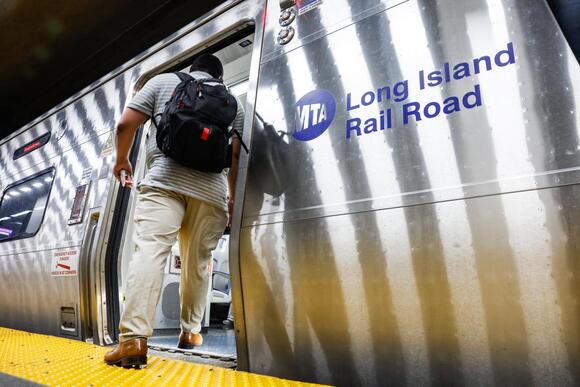
This column originally appeared inOn The Way,a weekly newsletter covering everything you need to know about NYC-area transportation.
Sign upto get the full version, which includes answers to reader questions, trivia, service changes and more, in your inbox every Thursday.
The transit team behind On The Way is in the middle of launching an hourly call-in show every Thursday at 1 p.m. For the inaugural episode, we opened up the phones and asked listeners to share their transit moonshots — the big ideas that would dramatically change life for commuters in the city.
But transit planners' dreams led us down another road: the practical plans sitting on the shelf at MTA headquarters that could also make a difference in riders’ commutes.
A 2023 report from the MTA lays out several affordable — at least by New York standards — projects that could add service for thousands of commuters.
Take the MTA’s $30 million idea to build a busway beneath the elevated M line tracks in Ridgewood. The bus-only route would run a half-mile from Palmetto Street and Onderdonk Avenue to Fresh Pond Road. A busway could help several routes bypass gridlocked local streets and make commutes for thousands of riders “more reliable and operationally efficient,” the MTA’s report states.
The MTA evaluated the plan favorably, writing that it scores “exceptionally well in cost effectiveness since it saves money operationally.”
Another plan floated in the same MTA report would restore an LIRR station in Elmhurst, Queens, that was demolished in the 1980s. The MTA estimates it could be rebuilt for $210 million and pull riders away from the area’s crowded subways. The neighborhood would have a new commuter railroad connection to Manhattan.
But the transit agency wrote in an assessment that the restored station would provide only “marginal benefits in an area already well served by transit.”
U.S. Rep. Grace Meng, whose district covers Elmhurst, disagreed. She said the MTA doesn’t account for the growing local population that will bring more demand for commuter railroad service.
“This would allow people to take advantage of mass transit, drive less and increase ridership on the train,” Meng said, adding that residents could commute to Penn Station or Grand Central Terminal in around 10 minutes.
Liam Blank, who chairs the City Club of New York transportation and infrastructure committee, said the MTA could “unlock a virtuous cycle” by pursuing smaller capital projects. He called busways “low-hanging fruit.”
“Right now, busway implementation is probably at the highest feasibility because [the MTA] has a friendly administration, in working with a friendly New York City [Department of Transportation],” Blank said.
This is not to say the MTA is ignoring smaller-scale projects. Over the summer, the agency released a plan to fix dozens of subway bottlenecks that strain service, including two major chokepoints in Brooklyn that are a familiar inconvenience for riders.
Fixing one of the bottlenecks at Nostrand Avenue would cost an estimated $410 million — that’s just chump change!
NYC transportation news this week
Paving the way for low-traffic neighborhoods. The city transportation department is using plastic bollards to push car traffic away from the streets around McGolrick Park in north Brooklyn, aiming to stop drivers from speeding through Greenpoint.
Speeding sanitation supervisors. A Gothamist analysis found that DSNY workers who oversee trash collection and issue tickets rack up hundreds of automated speed camera tickets each year.
Study links ADHD to subway surfing trend. People killed “surfing” on top of New York City subway trains tend to be teen boys diagnosed with ADHD, according to a new study published this week by researchers from NYU-Langone and the city hospital system.
Canal Street is getting a facelift. The Department of Transportation has split the Reimagining Canal Street project into two phases — one targeting west Canal Street and one targeting east Canal Street — with goals of adding new crosswalks, two-lane bike lanes, pedestrian areas lined with planters and concrete blocks and more. But it may take a while.
A new Newark Bay Bridge is coming. Work is underway to replace the outdated Newark Bay Bridge, which carries the New Jersey Turnpike extension into Hudson County and serves as one of the main connecting roads between the Garden State and New York City. Officials say it should be wrapped up by 2031 with minimal disruptions to commuters.
Penn Station plan could funnel taxpayer money to new venue for James Dolan. The federal government's plan to rebuild Penn Station could lead to heaps of taxpayer money being used to subsidize a new entertainment venue for the Madison Square Garden Company.
MTA chair optimistic with Democrats in control of Congress. President Donald Trump’s administration has repeatedly withheld funding from New York and the MTA since he took office in 2025. But MTA Chair Janno Lieber says he has “more confidence that the existing projects will be funded” with a Democratic majority in both the House and Senate.
Brooklyn woman killed after falling from a moving SUV on the BQE. Police said Chasna Thelemaque opened the rear door of a Toyota RAV4 and tumbled out of the car at around 2:30 a.m. on Sunday and was struck by a Hyundai Elantra heading in the same direction.
Curious Commuter
Have a question for us? Usethis formto submit yours and we may answer it in a future newsletter!
Question from Mike in Queens
Why isn't there any graffiti on subway trains anymore? I see photos of trains covered in it from the 1970s. It's not like graffiti disappeared from the city, but you don't see it on the subways.
Answer
During the 1970s and 1980s, graffiti was a huge problem for the MTA. Crews would “bomb” entire trains with paint and treat subway cars as canvases on wheels. But the transit agency eventually took a drastic measure in 1989, implementing a policy to pull any graffitied train from service, no matter the disruption to commutes. That’s why you don’t see cars covered in paint. To this day, when a train does get “bombed,” it is sent back to a yard where crews spend hours cleaning it with a pressure washer.
 Add to Preferred Sources