undefined
Posts
undefined
Followers
Florida Tests 'Armed' School Drones as Safety Debates & Costs Explode Across the State
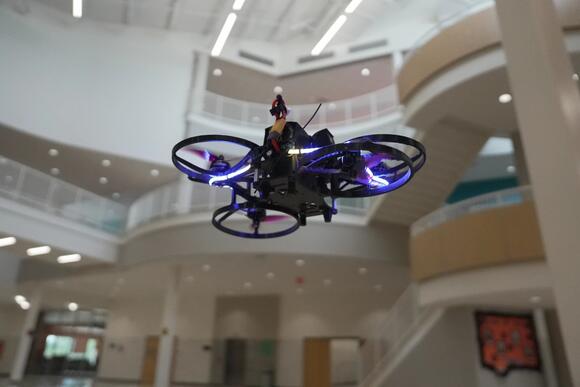
The drones can launch in 15 seconds, blast sirens and pepper spray, ram an attacker at 60 mph and beam live video to cops, and Florida parents are split on whether it is genius protection or straight out of a sci fi movie
*This article was created, researched, and developed entirely without any use of AI
By Senior Staff Writer, Edmond Thorne for OmniCom MultiMedia
Florida News Network: Tallahassee — Florida is trying something few other states have attempted. In select high schools across Broward, Leon, and Volusia counties, small nonlethal drones now sit ready in ceiling-mounted boxes. When a staff member hits a panic button under the state’s Alyssa Alert system, those aircraft can launch, race through hallways and deliver live video plus deterrents long before most deputies reach the campus.
Are you a parent of a student attending a public school in Florida? We are interested in hearing your perspective on the presence of armed drones in Florida schools. Please share your thoughts with us in the comments section below. Thank you.
The program is called Campus Guardian Angel. It received $557,000 from the Florida Legislature in its first year and another $564,500 in the latest budget, bringing the state’s total commitment to more than $1.1 million. Education Commissioner Anastasios Kamoutsas announced the pilot in November 2025, naming the three districts as participants. The system is designed to pair directly with Alyssa’s Alert, the mobile panic network required in every public school since the 2021-22 school year.
How the System Works on Campus:
The drones remain powered and charged in secure boxes installed throughout the school. Deltona High School in Volusia County, the first campus to complete installation, received dozens of the aircraft. Boyd Anderson High in Lauderdale Lakes and Amos Godby High in Tallahassee are the other Florida sites. When an alert is triggered, remote operators based in Austin, Texas, take control. The company says its goal is to launch within five seconds, reach the reported location within 15 seconds, and begin disrupting an attacker within about a minute. Company leaders note that many shootings end within two minutes, so speed is the point.
If you enjoyed the article, consider supporting Edmond and his investigative work by buying him a coffee at https://buymeacoffee.com/edmondthorne. Your support means a lot—thank you!
Each drone carries cameras that stream live audio and video to school guardians and law enforcement. Operators can activate sirens, flashing lights, and a pepper-spray or pepper-gel device. As a final option, the aircraft can physically strike a target at high speed. The drones do not carry firearms. Justin Marston, CEO of Campus Guardian Angel, has described the approach as a way to buy critical time until officers arrive. Volusia County Schools hosted a public demonstration at Deltona High in early May 2026. Sheriff Mike Chitwood called the technology “the future.” Superintendent Carmen Balgobin said the district is proud to test tools that add another layer of protection.
Mixed Signals From Broward and Practical Questions:
Broward County Public Schools, still marked by the 2018 Parkland tragedy, is moving more carefully. District officials have confirmed that Boyd Anderson High will host the pilot but stressed that the program remains in the planning stages. Superintendent Howard Hepburn has said that the primary focus is on improving surveillance and situational awareness for first responders. A district spokeswoman noted that Broward has not evaluated or authorized specific capabilities such as pepper spray. That caution reflects wider questions. Can the drones navigate crowded, chaotic hallways without colliding with students or staff? Who decides when the pepper spray is used?
What happens if a drone is activated by mistake or loses connection? Parents and some advocates wonder whether the presence of these devices will make students feel safer or more anxious. Company operators include former special-operations personnel and top drone pilots. The aircraft are American-made and kept on site. Still, the technology has never been tested in a real school shooting. Demonstrations have shown the drones striking dummies and spraying targets, but real-world performance inside a school building during an actual emergency remains unproven.
The Push for Faster Response:
Supporters argue the system fills a deadly gap. Traditional police response times, even when measured in minutes, can leave students and teachers alone against an attacker. School resource officers and guardians already on campus remain the first human line of defense. The drones are meant to support, not replace, those people. Florida has spent more than $1.3 billion on school safety measures in recent years under Governor Ron DeSantis. Alyssa’s Alert, named for a Parkland victim, was one earlier step.
The drone pilot is the newest. Lawmakers have not yet decided whether the second round of funding will expand the program to more districts or deepen the existing three. Leon County leaders have described the pilot as an additional layer of protection that enhances awareness and coordination. Volusia officials have worked closely with local law enforcement to fold the drones into existing emergency plans. Encrypted communications and verification steps are built in so the system activates only for confirmed threats.
Balancing Hope & Caution:
No one pretends the drones solve every problem. Mental health support, locked doors, trained staff, and clear communication still matter. Some parents and civil-liberty groups have raised concerns about surveillance, accidental injury, and the idea of remotely operated force on school grounds. The Libertarian Party of Florida voiced early objections to potential malfunctions and privacy concerns.
At the same time, many school leaders and sheriffs see the technology as a practical answer to a terrible reality. Principal Christina Lapnow of Deltona High has said her deepest hope is that the drones are never needed. That sentiment is shared across the pilot sites. The coming school year will test whether the system works as advertised. Operators will train with local agencies. Districts will measure response times, reliability, and staff comfort. An independent study involving the University of Florida is already under discussion to compare drone arrival times with traditional officer response times.
Florida Forward:
Florida’s experiment with nonlethal school drones will either prove a useful new tool or reveal limits that keep the idea from spreading. If the technology reliably shortens the most dangerous minutes of an attack and earns the trust of parents, teachers and law enforcement, more districts may seek it.
If problems surface with accuracy, control or acceptance, the state will have paid more than a million dollars to learn those lessons early. Either way, the pilot forces a hard conversation about what “protection” looks like inside a classroom in 2026 and beyond. The results will shape the next chapter of Florida school safety.
Let us know what you think in the comments. If you enjoyed this, please like, share, and follow for more updates. Please research and explore these topics to form your own opinions.
For questions, email Edmond at EdmondThorne@proton.me. You can read more of his articles at https://medium.com/@edmondthorne.
For copyright or fair use questions, contact OmniComMultiMedia@gmail.com.
This article was reviewed and edited with Grammarly to ensure clarity and accuracy. No other AI tools were used. Our editorial team checks all content and sources.
Florida News Network, part of Omnicom MultiMedia Company. All rights reserved. For inquiries, contact info@OmniComMultiMedia.com.
 Add to Preferred Sources


