undefined
Posts
undefined
Followers
Fincantieri plans upgrades as it prepares for Navy LSM program
By JIM PAUL EagleHerald,
6 hours ago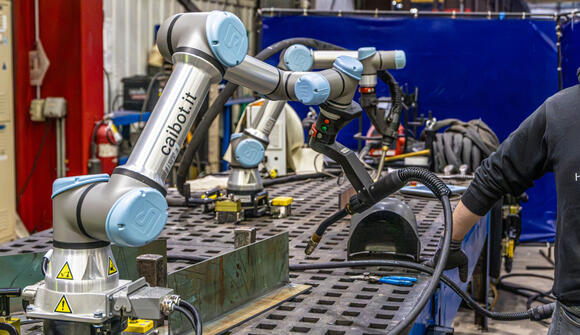
MARINETTE — Fincantieri Marine Group (FMG) plans to install new automated welding equipment at its Wisconsin shipyards beginning early next year, part of a federally supported modernization effort intended to prepare the company for the Navy’s Landing Ship Medium program.
The equipment is being selected with that program’s production needs in mind, said Thomas Levac, vice president of program management said.
The broader investment totals $10 million in U.S. Navy and Maritime Administration funding, according to a company announcement. It includes $8.3 million Navy Shipbuilding Capability Industrial Base (SCIB) funding and $1.3 million through a U.S. Maritime Administration (MARAD) small-shipyard grant.
The money will support advanced manufacturing and workforce investments across FMG’s Wisconsin shipyards.
Levac said some of the new equipment is expected to arrive early next year for the LSM program. He described the purchases as a set of machines for the front end of the yard, where early production takes place.
“These are specific to the landing ship medium,” Levac said. “We specifically chose these to make sure that the production for the landing ship is efficient, they were tailor selected.
Levac described the equipment as a way to improve efficiency and keep production moving, but he said he did not have a specific estimate for how many labor hours automation could save per vessel.
“It is not necessarily all about hours,” Levac said. “It is also about just kind of being able to do it more efficiently and keep things moving. Because when you actually look at the build cycle for these vessels — we want to move pretty fast.”
Fincantieri’s modernization plans include testing collaborative robots, or “cobots” that work alongside employees. Francesco Greco — the company’s vice president of integration, innovation and control — described the technology as one part of a broader approach that begins with the needs of workers and the tasks they perform.
“In general, I like to say that innovation is an industrial capability that has to be seen as a multiplication of factors,” Greco said. “These factors are certainly data, processes, knowledge, assets, investments, all of the above and people. So I like to start from people, meaning that if you do not balance the factors of this multiplication in a harmonic way, and you leave people behind, you will not get industrial capability.”
Greco said Fincantieri can draw on the knowledge and technology of a global network of shipyards. He said the company’s goal is to bring solutions to Marinette that address worker’s challenges, while adapting equipment to the particular demands of shipbuilding.
Unlike highly standardized automobile production, shipbuilding includes both repeatable work and construction stages that require specialized skills, Greco said. Automated equipment can help with the predictable processes, while more customized work still depends on workers’ craftsmanship and knowledge.
The cobot integrates some artificial intelligence technology, Greco said, but he called it an early step rather than a full autonomous system. Employees operate the machine and remain responsible for checking that the work meets required quality standards.
“The welder, the people, our workforce, our human factor is still at the center,” Greco said. “Our people, they operate the machine, they run it and they also verify and make sure the machine is producing and manufacturing to the level of quality that is required.
Levac also emphasized the role of employees in using the new systems. He said the technology could appeal to workers who want to operate modern equipment and that training initiatives are intended to help newer employees develop skills.
Levac also added that the cobots could help new welders begin production work with on-site training.
Greco said robotic welding could also improve working conditions by allowing employees to stand farther from fumes and heat. He cited exoskeletons already in use at the shipyard as another example of technology intended to reduce fatigue during physically demanding work.
The investment builds on previous federal support for a welding lab under development at Fincantieri Marinette Marine. The facility is intended to bring more welding training, qualification and recertification in-house.
An announcement also said the Navy funding would allow Fincantieri Marine Group to continue its employee dependent-care contribution program through 2027 which includes an annual tax-free payment of up to $5,000.
Levac said the new equipment is focused on shipyard improvements for the LSM program rather than commercial vessels. He said the Marinette and the Sturgeon Bay shipyards would contribute heavily to the early portion of the program.
The investment, Levac said, is also intended to sustain shipbuilding in the Great Lakes region, specifically Wisconsin.
“The Navy values the Great Lakes region, specifically Wisconsin,” Levac said. “It is a historical shipbuilding hub, and they want to keep our workforce and they want to keep the people here in Wisconsin building ships because that is what we are good at.”
A company announcement said Fincantieri has invested more than $800 million in its U.S. shipyards over the past two decades and employs approximately 3,000 workers through its U.S. subsidiary. The latest funding is intended to strengthen production capabilities and workforce readiness as the company prepares for future Navy shipbuilding requirements.
 Add to Preferred Sources

