undefined
Posts
undefined
Followers
14 Dog Breeds That Handle Pennsylvania Winters Best
By Gargi Chakravorty,
4 days agoPennsylvania’s harsh winters demand dogs with thick coats, cold tolerance, and energy bred for snow—these 14 breeds thrive when temperatures drop below freezing.
Some breeds were literally built for blizzards while others struggle the moment frost appears. Most dog owners assume any large breed can handle winter, or that a fluffy coat automatically means cold protection.
That assumption ignores centuries of selective breeding for specific climates. A thick coat means nothing if the undercoat structure can’t trap heat, and size alone won’t save a dog whose ancestors evolved in warm regions.
Pennsylvania winters bring freezing rain, lake-effect snow, and overnight lows that regularly hit single digits. Here’s what actually matters when the temperature drops.
#14 — Golden Retrievers handle wet snow better than you’d expect
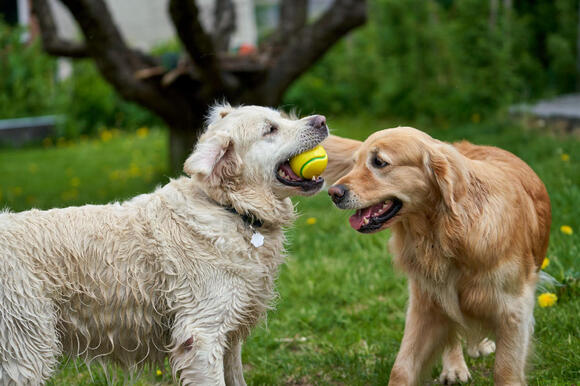
Their double coat isn’t just for show.
Golden Retrievers were originally bred in the Scottish Highlands, where cold, wet conditions shaped every aspect of their physiology. The outer coat repels water while the dense undercoat insulates against cold.
This two-layer system works because the outer guard hairs prevent the undercoat from getting soaked. When snow melts on contact, the dog stays dry underneath, and body heat remains trapped close to the skin.
They maintain energy levels in cold weather that would exhaust single-coated breeds. A Golden will retrieve in icy water repeatedly without the shivering fits common in thinner-coated dogs, and their paw pads contain extra fatty tissue that resists frostbite.
Quick Compare
- Double coat with water-repellent guard hairs
- Undercoat density increases in fall
- Paw pads contain cold-resistant fat tissue
- Comfortable range: 20–45°F
But #13 comes from a region where winter lasts eight months…
#13 — Siberian Huskies were bred for subzero endurance
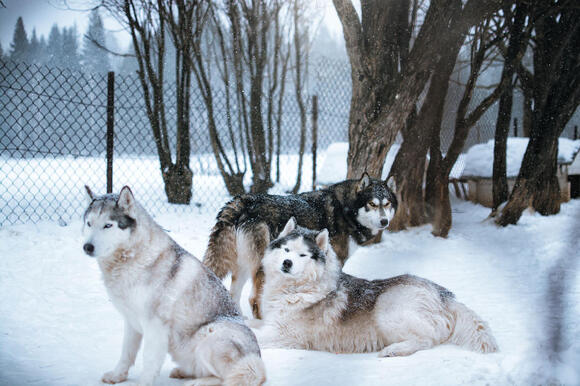
They pulled sleds across frozen tundra for thousands of years.
The Chukchi people of northeastern Siberia developed this breed in conditions far harsher than anything Pennsylvania offers. Their metabolism actually increases efficiency in cold weather, burning calories to generate heat without the shivering response most breeds rely on.
Huskies regulate temperature through their paws, which contain a heat-exchange system in the blood vessels. Warm arterial blood flowing to the paws passes close to cold venous blood returning, pre-warming it before it reaches the core.
Their coat consists of two distinct layers—a soft undercoat up to two inches thick and coarse guard hairs that block wind. During Pennsylvania winters, Huskies often choose to sleep outdoors in snow rather than heated spaces, and many owners report their dogs become MORE energetic when temperatures drop below freezing.
But #12 thrives in conditions that would hospitalize a Husky…
#12 — Alaskan Malamutes outperform Huskies in extreme cold
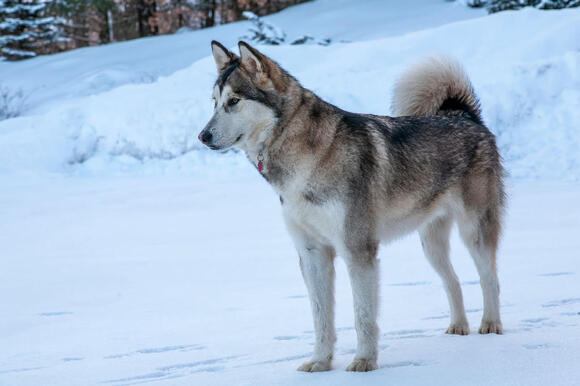
This breed pulls heavier loads in worse weather.
Malamutes were bred to haul freight across Arctic ice, not for speed but for raw power in the coldest inhabited places on Earth. Their bone structure is heavier than a Husky’s, and their coat is denser, with an undercoat that can reach three inches thick.
The difference shows in their cold tolerance threshold. While Huskies begin seeking warmth around -20°F, Malamutes remain comfortable well below that point, and their paw pads are noticeably thicker and more heavily insulated.
A Malamute’s undercoat is so effective that snow landing on their back won’t melt—the heat simply never reaches the surface.
They need significant exercise even in blizzard conditions. A Malamute kept indoors during a Pennsylvania winter will develop behavioral problems from under-stimulation, while the same dog given outdoor work time remains calm and focused.
But #11 brings an unexpected advantage most people overlook…
#11 — Bernese Mountain Dogs have cold-weather stamina built in
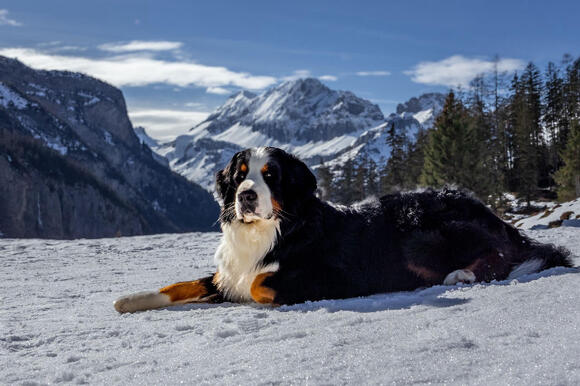
Swiss farmers relied on them through alpine winters.
Bernese were draft animals in the Swiss Alps, bred to pull carts loaded with dairy products through mountain passes during winter. Their tri-color coat isn’t just distinctive—the black outer layer absorbs solar heat even on overcast days, giving them a temperature advantage other breeds lack.
Their chest is unusually deep and broad, which increases lung capacity for cold, thin air. This adaptation means they maintain oxygen efficiency in conditions where other large breeds begin laboring.
Fast Facts
- Originally pulled carts weighing up to 1,000 pounds
- Coat thickness doubles between summer and winter
- Black coloring absorbs ambient heat in winter sun
- Comfortable in sustained activity down to 15°F
Their calm temperament makes them easier to manage than sled breeds when indoor time is necessary. A Bernese will transition between outdoor work and indoor rest without the destructive frustration common in Huskies forced indoors.
But #10 offers something no other mountain breed can match…
#10 — Greater Swiss Mountain Dogs add size to cold tolerance
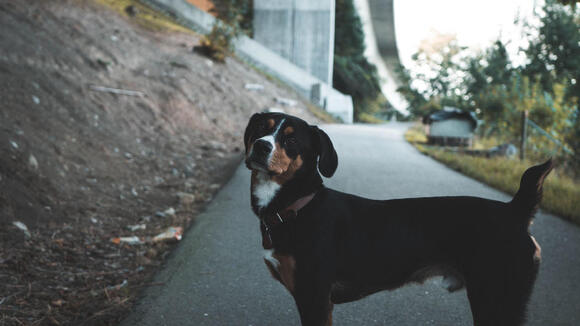
They’re the largest of the Swiss mountain breeds.
Greater Swiss Mountain Dogs can weigh up to 140 pounds, and that mass provides thermal momentum—they retain body heat far longer than lighter breeds. Their coat is shorter than a Bernese’s but denser per square inch, with guard hairs that shed water efficiently.
The breed was developed for draft work at higher elevations than the Bernese, where temperatures average colder year-round. Their muscling is designed for sustained pulling power rather than speed, which generates consistent body heat during work.
Their size means they handle deep snow better than medium breeds—their chest clears drifts that would force a 60-pound dog to leap or flounder. During Pennsylvania’s heavier snowfalls, a Greater Swiss moves through two feet of powder with less energy expenditure than a Retriever half its weight.
Their exercise requirements remain high regardless of temperature. An adult Greater Swiss needs at least an hour of outdoor activity daily, even during single-digit cold snaps, or destructive behaviors emerge indoors.
But #9 combines size with a coat designed for the worst weather…
#9 — Newfoundlands are built for icy water rescue
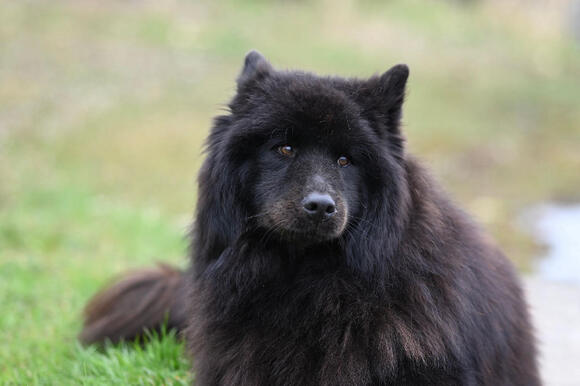
Their coat is literally waterproof down to the skin.
Newfoundlands were bred on the Canadian island of the same name, where they worked alongside fishermen in frigid North Atlantic waters. Their outer coat contains natural oils that repel water so effectively the undercoat remains dry even after prolonged swimming in near-freezing conditions.
The undercoat itself is woolly rather than fluffy, trapping air in thousands of tiny pockets that maintain insulation even when damp. This structure explains why Newfoundlands can perform water rescues in temperatures that would cause hypothermia in humans within minutes.
Their webbed paws function as snowshoes in deep powder and as propulsion in water. The extra surface area distributes weight across snow, reducing the effort needed to move through drifts common in Pennsylvania’s lake-effect regions.
They require space and outdoor access year-round. A Newfoundland confined to indoor living during winter will overheat in typical home temperatures, and their massive size makes indoor exercise impractical.
But #8 brings Arctic breeding to a more manageable size…
#8 — Samoyeds combine cold tolerance with moderate size
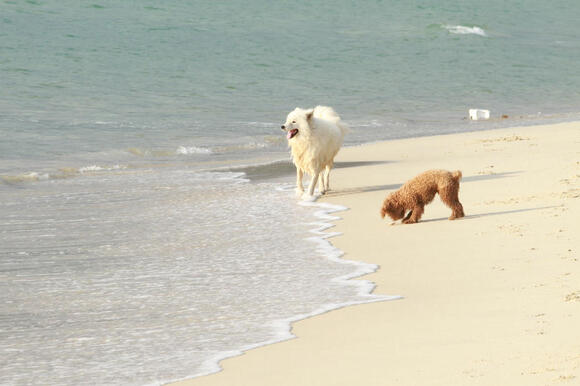
They’re small enough for most homes but tough enough for tundra.
The Samoyed people of Siberia bred these dogs to herd reindeer and pull sleds across the same frozen landscape that produced Huskies. At 50–60 pounds, Samoyeds deliver Arctic-level cold tolerance in a package more practical for suburban Pennsylvania homes.
Their white coat isn’t just aesthetic—it reflects solar radiation in summer while providing the same insulation as darker breeds in winter. The double coat is remarkably dense, with an undercoat that feels like wool and stands away from the body, creating dead air space for insulation.
Samoyed fur was historically collected and spun into yarn—the insulating properties rival sheep’s wool.
They maintain the high exercise needs of working breeds without requiring the extreme space of a Malamute. A Samoyed adapts well to a large suburban yard with daily outdoor activity, though they’ll choose to sleep outside during Pennsylvania’s coldest nights if given the option.
But #7 offers something no other cold-weather breed provides…
#7 — Saint Bernards bring rescue instincts to winter conditions
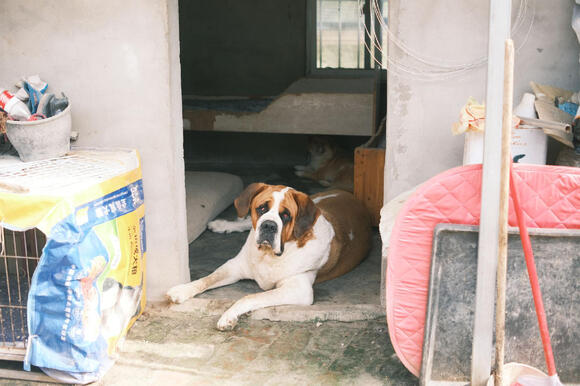
They located avalanche victims in the Swiss Alps for centuries.
Monks at the Saint Bernard Pass bred these dogs specifically to find travelers buried in snow at elevations above 8,000 feet. Their sense of smell functions reliably in conditions that confuse other breeds, including during active snowfall and in winds that scatter scent particles.
Their size—often exceeding 180 pounds—generates enough body heat that they could warm hypothermic victims found in the snow. Historical accounts describe Saints lying against trapped travelers to prevent fatal heat loss until human rescuers arrived.
Their coat is thick but not as long as many people assume, which prevents the ice-ball accumulation that plagues longer-haired breeds. After moving through deep snow, a Saint Bernard’s legs remain relatively clear while a Bernese or Newfoundland requires careful de-icing.
Worth Knowing
- Original Alpine rescue dogs worked at 8,000+ feet elevation
- Sense of smell remains accurate during active snowfall
- Body mass generates enough heat to warm hypothermia victims
- Short-coated variety exists specifically for ice prevention
Their calm temperament makes them reliable in emergency conditions. Unlike more excitable breeds, Saints remain focused during the chaos of heavy weather or search operations.
But #6 adds agility to cold-weather capability…
#6 — Norwegian Elkhounds hunt through Scandinavian winters
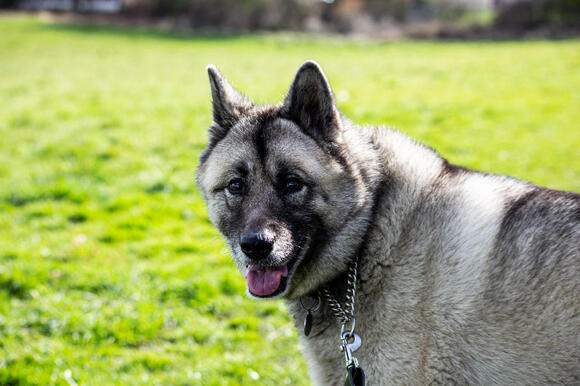
They track large game in subzero forests.
Norwegian Elkhounds were bred to hunt moose and bear in conditions where temperatures routinely drop below zero Fahrenheit. Their coat is designed to shed ice crystals rather than allow them to accumulate, with guard hairs that remain slightly oily to the touch.
This breed’s compact build—rarely exceeding 55 pounds—makes them more agile in deep snow than larger working breeds. They can change direction quickly when moving through drifts, an advantage when tracking game across varied terrain.
Their stamina in cold weather exceeds their moderate size. Elkhounds were expected to track for hours in freezing temperatures, then hold a moose at bay while waiting for hunters—a combination of endurance and cold tolerance that translates well to Pennsylvania’s winter hiking conditions.
They bond strongly with families but retain strong prey drive. An Elkhound needs secure fencing and consistent recall training, as their hunting instinct can override commands when they detect wildlife during winter walks.
But #5 brings unexpected versatility to cold climates…
#5 — German Shepherds adapt to cold better than their reputation suggests
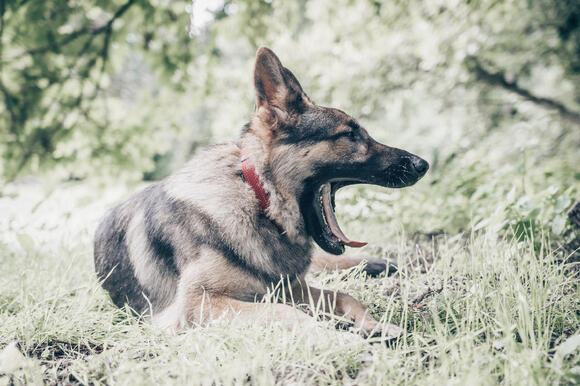
Their working-line coats rival dedicated snow breeds.
Most people associate German Shepherds with police work in temperate climates, but the breed originated in regions with harsh winters. Working-line German Shepherds develop a double coat thick enough to work comfortably in sustained cold, though show lines often lack this density.
The difference between lines is dramatic. A working-line Shepherd from Czech or East German breeding will grow an undercoat during fall that rivals a Husky’s, while American show lines remain relatively thin-coated year-round.
Their versatility shows in cold-weather work. German Shepherds serve in search and rescue operations across Pennsylvania winters, maintaining focus and energy in conditions that force many breeds to quit early. Their intelligence allows them to problem-solve when snow obscures familiar landmarks or trails.
They require mental stimulation as much as physical exercise. A German Shepherd given only outdoor running time without tasks or training will develop behavioral problems regardless of weather, while the same dog engaged in work remains stable.
But #4 specializes in a type of cold no other breed handles as well…
#4 — Tibetan Mastiffs were bred at extreme altitude
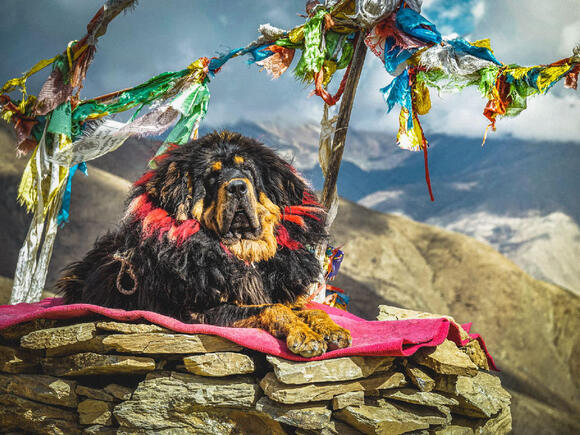
They guard livestock at 15,000 feet where oxygen is thin.
Tibetan Mastiffs evolved in the Himalayas, where temperatures plunge at night and the thin air challenges cardiovascular systems. Their lung capacity and red blood cell count are higher than lowland breeds, adaptations that allow sustained activity in conditions that would exhaust other dogs.
Their coat is extraordinary—a dense undercoat covered by guard hairs that can reach four inches long. This combination provides insulation even when wind chill drives effective temperatures far below zero, and the coat naturally sheds moisture that would freeze in other breeds.
Their independent nature reflects their original work. Mastiffs were expected to guard flocks overnight without human supervision at altitudes and temperatures that made frequent human presence impractical. This independence means they’re less demanding of constant interaction than herding breeds.
They mature slowly and need experienced handling. A Tibetan Mastiff reaches full physical and mental maturity around age four, and their protective instincts require early socialization to prevent territorial aggression.
But #3 brings the most dramatic cold-weather transformation…
#3 — Akitas grow a winter coat that doubles their insulation
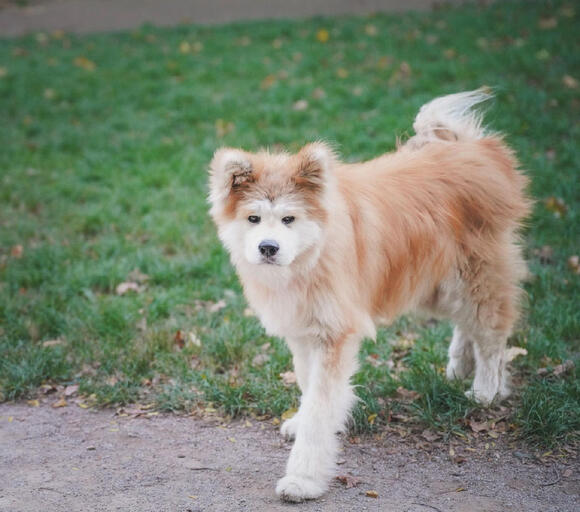
Their coat thickness changes so dramatically they look like different dogs.
Akitas originated in mountainous northern Japan, where they hunted bear and wild boar through heavy snow. Between summer and winter, an Akita’s undercoat can increase in density by 300 percent, creating a layer of insulation so thick that snow landing on their back won’t melt from body heat.
This seasonal transformation is more extreme than other double-coated breeds. While a Husky’s coat thickens noticeably, an Akita in full winter coat appears substantially larger and feels dramatically different to the touch—the undercoat stands so densely that guard hairs sit away from the body.
Their hunting heritage shows in their cold-weather behavior. Akitas remain silent in extreme cold when other breeds begin whining for shelter, and they can maintain pursuit of prey through conditions that force other hunters to quit.
Their loyalty is intense and selective. An Akita typically bonds strongly with immediate family while remaining aloof or suspicious of outsiders, a trait that made them effective property guardians in isolated mountain villages.
But #2 offers something no previous breed can match…
#2 — Anatolian Shepherds combine desert and mountain genetics
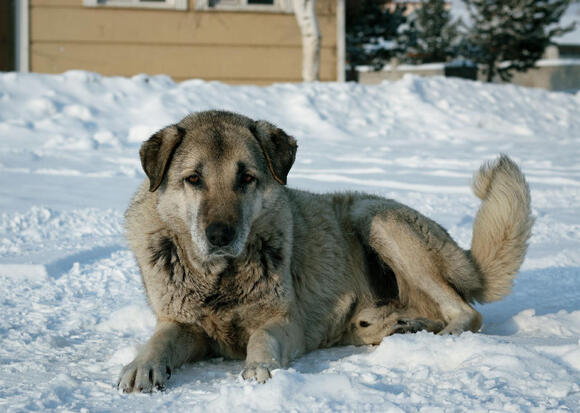
They handle temperature extremes most breeds can’t survive.
Anatolian Shepherds were bred in Turkey’s central plateau, where summer temperatures exceed 100°F and winter nights drop below zero. Their coat adapts to seasonal extremes more effectively than breeds developed in stable climates, thickening dramatically in fall while remaining manageable enough to prevent overheating in variable Pennsylvania spring weather.
This adaptability comes from their working history. Anatolians guarded livestock across terrain that ranged from hot valleys to snow-covered mountain passes, often within the same seasonal migration route. The breed developed physiological flexibility rather than specialization for one temperature range.
Their size and strength allow them to move through deep snow while defending livestock from predators. An adult Anatolian weighs 90–150 pounds and stands tall enough that chest-deep snow for a human remains manageable for the dog.
They require extensive property and experienced handling. Anatolians were bred to make independent decisions about threats, which means they need early socialization and secure fencing—their protective instinct can manifest as aggression toward unfamiliar people or animals.
But #1 stands alone for a reason most people never consider…
#1 — Great Pyrenees remain outside through the worst winter nights
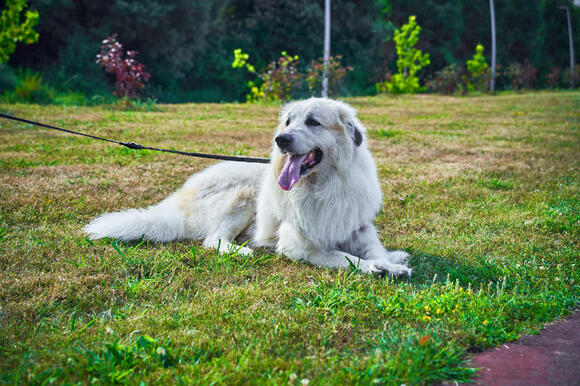
They were bred to live with sheep flocks full-time in mountain weather.
Great Pyrenees spent centuries as livestock guardians in the Pyrenees Mountains between France and Spain, where they remained with flocks overnight through conditions that killed unprotected humans. Their coat isn’t just thick—it’s structured to remain functional when covered in ice, with guard hairs that shed frozen precipitation before it can mat against the undercoat.
The breed’s independence and cold tolerance combine uniquely. While other guardian breeds seek shelter during severe weather, Pyrenees remain vigilant regardless of temperature, a trait that makes them reliable even during Pennsylvania’s worst winter storms.
Their double coat is self-maintaining in cold weather. The outer layer repels moisture while the undercoat remains lofted, and the coat’s natural oils prevent ice from adhering to individual hairs. After a night in freezing rain, a Pyrenees shakes once and remains dry underneath.
Why It Stands Out
- Only breed documented sleeping in snow by choice at -20°F
- Coat structure prevents ice accumulation even in freezing rain
- Independent temperament suited to unsupervised outdoor work
- Lower metabolism means less food needed in winter
They bond deeply with their territory rather than seeking human proximity. A Pyrenees given access to outdoor space will patrol property lines through the coldest nights, behavior that remains consistent even in temperatures that drive other breeds to doors and windows.
Their calm presence around livestock extends to families. While protective of property, Pyrenees are notably gentle with children and smaller animals they recognize as part of their “flock.”
The Bottom Line
Pennsylvania winters test dogs in ways that surprise owners accustomed to milder climates. The breeds that handle it best share specific traits beyond just thick coats—they need cardiovascular adaptations for sustained cold exposure, coat structures that resist ice accumulation, and often independent temperaments bred for outdoor work.
The best winter dogs aren’t just tolerating the cold—they’re more comfortable outside in January than inside your heated home.
Size matters, but so does coat structure and metabolic efficiency. A 60-pound Samoyed outperforms many 100-pound breeds in sustained cold because of its Arctic-bred efficiency, while a Great Pyrenees thrives in conditions that would hospitalize a similarly-sized mastiff from warmer climates.
Which of these breeds have you seen handle Pennsylvania winters best, or did we miss one that belongs on this list?
 Add to Preferred Sources
