undefined
Posts
undefined
Followers
11 Animals That Vanished From Ohio and Have Come Back
By Sameen David,
21 hours agoOhio’s wildlife has staged one of the most remarkable conservation comebacks in America, with eleven species that once disappeared now thriving across the state again.
The bald eagle soaring over Lake Erie today would have been impossible to imagine just fifty years ago. Most Ohioans assume the state’s wildlife has been in steady decline since settlers arrived. But the truth is far more complex and hopeful than that narrative suggests.
Over the past century, targeted conservation efforts, habitat restoration, and changing land use patterns have brought back species that vanished completely from Ohio’s landscape. Here’s what the data actually says.
#11 — River Otters Returned After 50 Years Gone
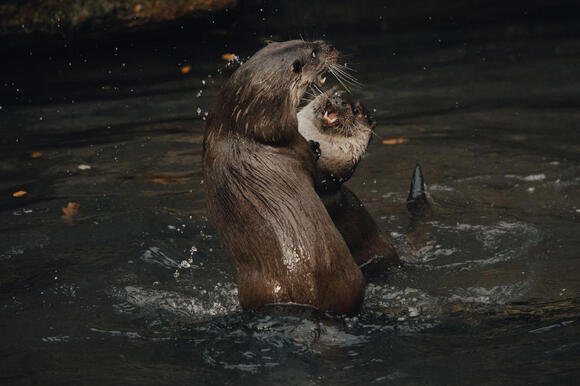
These sleek swimmers vanished from Ohio entirely by the 1950s.
River otters disappeared due to unregulated trapping and severe water pollution that made most of Ohio’s rivers uninhabitable for sensitive aquatic mammals. By mid-century, not a single otter remained in the state.
The Ohio Division of Wildlife began reintroduction in 1986, releasing 123 otters from Louisiana into eastern Ohio watersheds. Clean Water Act regulations had improved river quality enough to support them again.
Today, otters occupy every major watershed in Ohio, with populations stable enough that limited trapping seasons resumed in 2005. Biologists estimate several thousand now live statewide.
But #10 shows an even larger predator that reclaimed Ohio’s skies…
#10 — Bald Eagles Nearly Reached Zero Nests
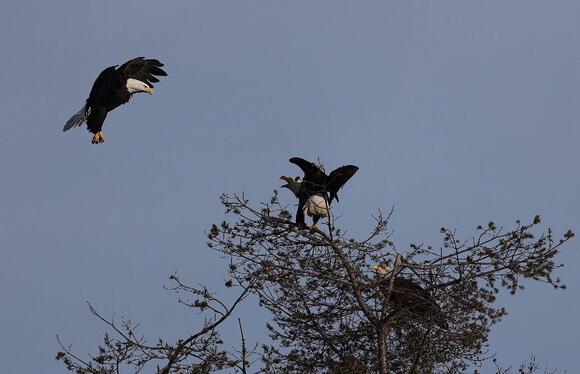
Ohio counted just four eagle nests in 1979.
DDT pesticide caused eggshell thinning that made successful breeding nearly impossible for bald eagles across the eastern United States. The chemical accumulated in fish, the eagles’ primary food source, reaching toxic concentrations in adult birds.
When females laid eggs, the shells were too fragile to support incubation weight. Embryos died before hatching, and the breeding population collapsed within two decades.
Quick Compare
- 1979: 4 active nests in Ohio
- 2000: 73 nests documented
- 2023: Over 700 nesting pairs statewide
The DDT ban in 1972 allowed fish populations to cleanse gradually. Eagles were removed from the endangered species list in 2007, though they remain protected under other federal laws.
Ohio now hosts one of the densest eagle populations in the Great Lakes region, with concentrations highest along Lake Erie’s shoreline and major reservoir systems.
But #9 reveals a forest architect that reshapes entire ecosystems…
#9 — Wild Turkeys Were Completely Extirpated by 1904
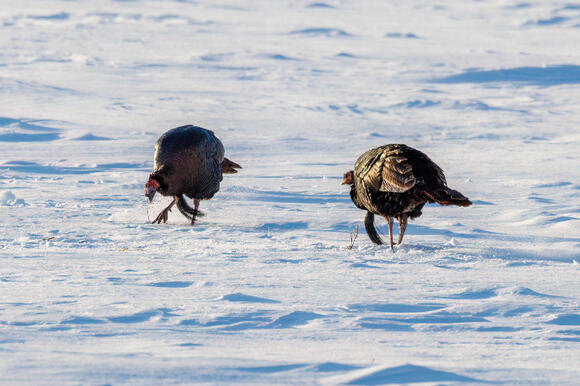
Not a single wild turkey remained in Ohio by the early 1900s.
Unregulated hunting and widespread forest clearing eliminated both the birds and their habitat within a 50-year span following the Civil War. Market hunters shipped thousands of turkeys to eastern cities, while remaining forests were too fragmented to support breeding flocks.
Early reintroduction attempts using pen-raised birds failed completely. These domestic-strain turkeys lacked the survival instincts of wild birds and couldn’t establish breeding populations.
The breakthrough came in 1956 when Ohio obtained wild-trapped turkeys from West Virginia. These birds carried the behavioral traits needed for survival, and biologists used newly developed cannon nets to capture and relocate them.
By 1990, turkeys had recolonized all 88 Ohio counties. The fall harvest now exceeds 20,000 birds annually, and spring gobbler seasons draw hunters from across the Midwest.
River otters, eagles, and turkeys prove that extirpation isn’t permanent when science guides the recovery.
But #8 represents the most controversial return on this list…
#8 — Sandhill Cranes Came Back Without Help
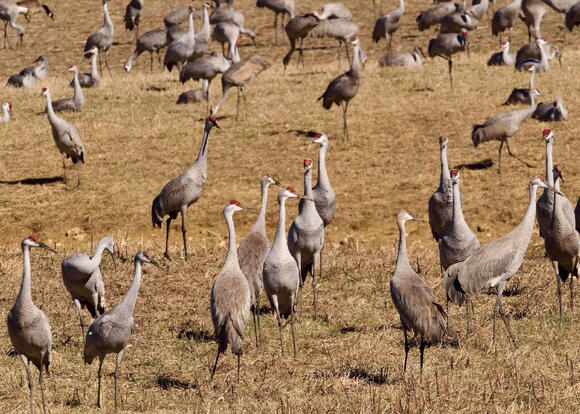
These four-foot-tall birds recolonized Ohio entirely on their own.
Sandhill cranes disappeared from Ohio breeding grounds in the 1890s due to wetland drainage that eliminated 90 percent of the state’s marshes. The birds continued migrating over Ohio but stopped nesting here for more than a century.
Wetland restoration projects in the 1990s, particularly in northwestern Ohio’s former Great Black Swamp region, created suitable habitat again. Cranes from nearby Michigan and Wisconsin populations began exploring these areas.
The first confirmed breeding occurred in 2010. By 2023, Ohio hosted over 30 breeding pairs, with numbers increasing each year.
Fast Facts
- Adult cranes stand 3-4 feet tall with 6-foot wingspans
- Pairs mate for life, often 20+ years
- Chicks can walk and swim within hours of hatching
- Migration flocks stage in northwestern Ohio each March
Wildlife officials haven’t released a single crane—this recovery happened through natural range expansion as habitat became available again. Some long-time farmers remember their grandparents’ stories about cranes and consider this a restoration of the landscape they knew.
But #7 shows a predator that generates far more debate…
#7 — Coyotes Filled the Wolf’s Empty Niche
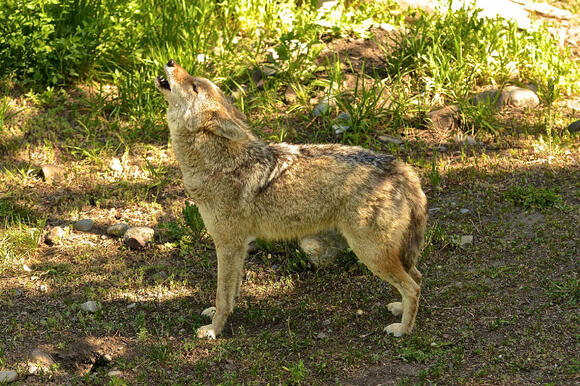
Coyotes didn’t exist in Ohio until wolves were eliminated.
The extirpation of wolves by the 1850s created an open ecological role that coyotes from western states gradually filled. Wolves had kept coyotes restricted to prairies and open country west of the Mississippi River through direct killing and competition.
As wolves vanished and forests were cleared for agriculture, coyotes found suitable habitat and no larger canid to exclude them. They reached Ohio by the 1930s and now occupy every county.
The expansion happened without any human assistance or reintroduction program. Coyotes are remarkably adaptable, thriving in suburbs, agricultural land, and forest fragments where wolves required large unbroken territories.
Ohio’s coyote population is estimated between 75,000 and 100,000. While some livestock producers report conflicts, the animals primarily consume rodents, rabbits, and deer fawns, filling predatory roles that disappeared with wolves and mountain lions.
But #6 reveals a fish that traveled up newly built ladders…
#6 — Lake Sturgeon Survived in Tiny Numbers
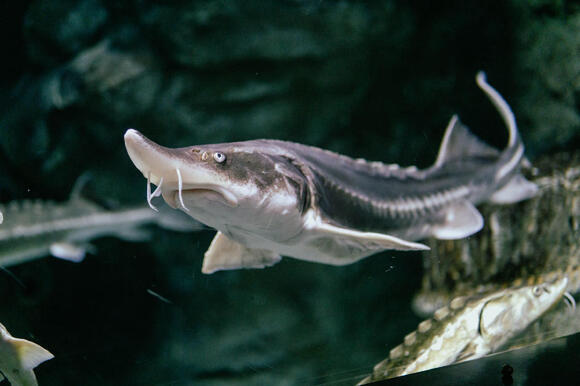
These prehistoric fish came within a few dozen individuals of disappearing.
Lake sturgeon populations crashed by 99 percent due to overfishing and spawning habitat destruction in the late 1800s. These slow-growing fish don’t reproduce until age 15-20, making population recovery extremely difficult once depleted.
Dam construction blocked their spawning migrations up tributary streams. Pollution degraded water quality in remaining habitat, and the few survivors were often caught as bycatch in commercial fishing operations.
A breeding population survived in a single Lake Erie tributary near Sandusky. Biologists began intensive monitoring in the 1990s, protecting spawning sites and working with dam operators to provide fish passage during migration periods.
The population has grown slowly but steadily. Annual spawning runs now attract researchers and wildlife watchers, though sturgeon remain listed as threatened in Ohio.
Individual sturgeon can live 100 years and reach 200 pounds. The species existed before the glaciers retreated, making their survival a connection to deep ecological history.
But #5 brings back one of Ohio’s most beautiful songbirds…
#5 — Bluebirds Nearly Lost to Invasive Competition
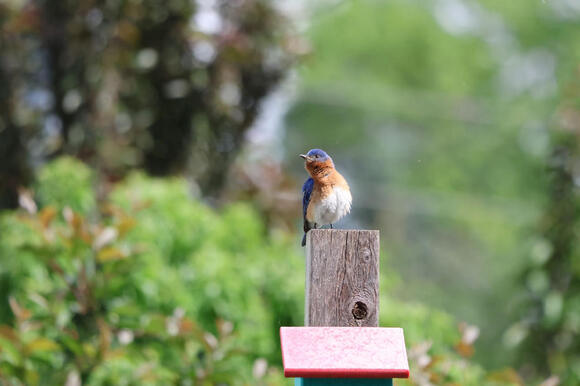
Eastern bluebirds declined by 90 percent between 1920 and 1970.
Introduced house sparrows and European starlings outcompeted bluebirds for tree cavity nesting sites that both species require. These aggressive invasives physically evict bluebirds from holes, destroy their eggs, and occasionally kill adult birds.
The situation worsened as old orchards and wooden fence posts rotted away, eliminating natural cavities. Modern farming practices removed the habitat features bluebirds depended on for generations.
Worth Knowing
- Bluebirds need cavities 1.5 inches in diameter—too small for starlings
- Nest boxes placed in open areas away from buildings reduce sparrow competition
- Ohio’s bluebird trail network includes over 50,000 monitored boxes
Volunteer-driven nest box programs beginning in the 1970s provided artificial cavities designed to bluebird specifications. Boxes with specific entrance hole sizes and placement strategies favor bluebirds over competitors.
The species has recovered remarkably. Bluebirds now nest in every Ohio county, and breeding bird surveys show population increases of 200-300 percent since the low point.
But #4 reveals an amphibian battling a deadly fungus…
#4 — Peregrine Falcons Were Down to Zero
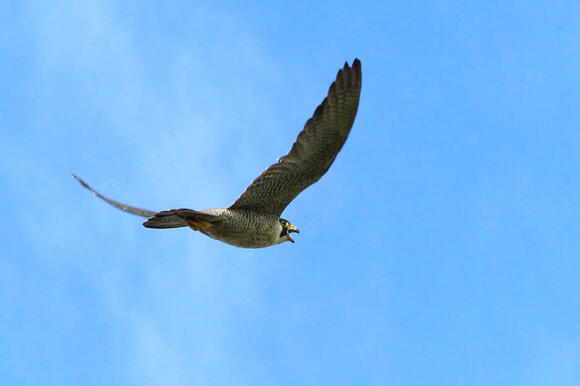
No wild peregrines nested in Ohio for nearly 30 years.
The same DDT contamination that devastated eagles completely eliminated breeding peregrines from the entire eastern United States by 1964. These falcons eat primarily birds, concentrating pesticides to even higher levels than fish-eating eagles.
Peregrines require tall cliff faces or similar structures for nesting. Ohio’s natural cliff habitat is limited, so the historical population was always small but occupied scattered sites along river gorges.
Reintroduction began in 1981 using captive-bred birds released from tall buildings and bridges—artificial cliffs that peregrines readily accept. Biologists used a technique called hacking, where young birds are raised in boxes on structures until they can fly.
The first successful wild nesting occurred in 1992 in Cleveland. Today, over 20 pairs nest on skyscrapers, bridges, and power plant stacks across Ohio, primarily in urban areas where pigeon populations provide abundant prey.
Urban falcons now hunt pigeons from the same skyscrapers where engineers work, bringing wilderness into city centers.
But #3 shows how changing attitudes saved an misunderstood predator…
#3 — Osprey Followed Eagles Back to Cleaner Waters
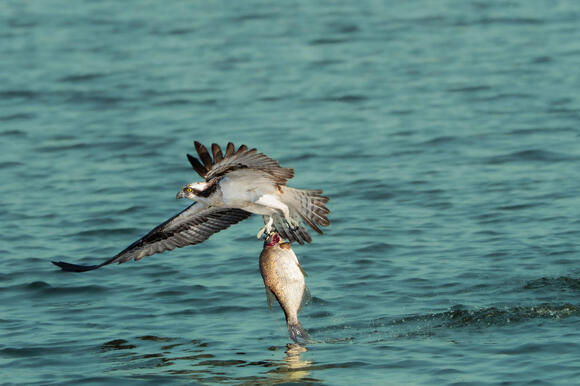
Ospreys vanished from Ohio’s breeding population entirely by 1960.
These fish-eating raptors suffered the identical DDT-induced reproductive failure that eliminated eagles, though ospreys proved even more sensitive to the pesticide’s effects. Their exclusive fish diet and high metabolic rate concentrated toxins rapidly.
Unlike eagles, ospreys never maintained even a remnant breeding population in Ohio during the contamination period. The species was completely absent for decades.
Natural recolonization began in the late 1990s as Lake Erie and major reservoirs recovered from pollution. Ospreys from northern populations gradually explored Ohio waters during migration and found conditions suitable again.
The first confirmed breeding occurred in 2010 on a channel marker in Lake Erie. By 2023, Ohio documented over 50 active nests, primarily along the Lake Erie shoreline and at large inland reservoirs.
Ospreys build massive stick nests on channel markers, dead trees, and specialized platforms that wildlife agencies install on poles. The nests grow larger each year as pairs reuse and add to them.
But #2 demonstrates that recovery isn’t always about large charismatic animals…
#2 — Bobcats Crept Back Into Southern Counties
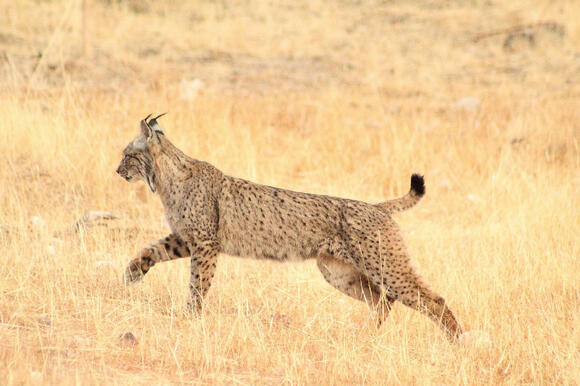
Ohio’s official position was that bobcats were extinct by 1850.
Widespread forest clearing and predator eradication campaigns eliminated bobcats from all but the most remote areas of southern and eastern Ohio. For 150 years, the state considered them extirpated and reports were dismissed as mistaken identifications.
Genetic analysis of roadkill and trail camera evidence in the 1990s forced officials to acknowledge that a small breeding population had persisted undetected in heavily forested counties along the Ohio River. These cats are extremely secretive, hunt at night, and avoid human contact.
As reforestation occurred on abandoned agricultural land, particularly in the Appalachian region, habitat connectivity improved. Bobcats began expanding their range northward and westward into previously unoccupied territory.
Why It Stands Out
- Bobcats recolonized Ohio without any reintroduction program
- Population estimated at 300-500 adults statewide as of 2023
- Now documented in 32 counties, mostly southern and eastern Ohio
- Removal from endangered list occurred in 2014
The bobcat recovery happened almost entirely without public awareness until populations reached detectable levels. Unlike eagles or turkeys, there was no conservation program, no releases, and no management plan until after the population had already recovered.
Most Ohioans still don’t realize bobcats live in their state. The species represents a reminder that wildlife persists in ways we don’t always see or expect.
But #1 represents the most emotionally powerful return—and the most contentious future…
#1 — Black Bears Are Reclaiming Eastern Ohio
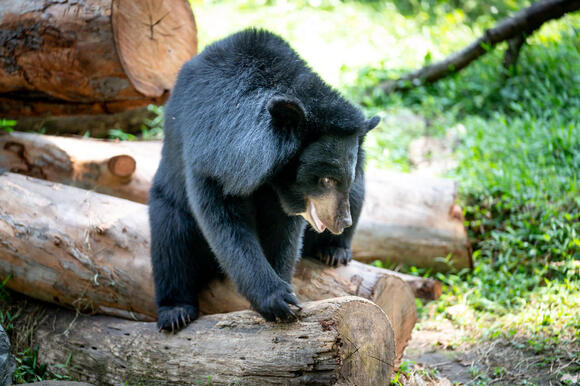
Ohio eliminated its last black bear around 1850.
Bears were systematically hunted and trapped as threats to livestock and crops during the settlement period. As large predators competing with humans for space and resources, they were among the first species targeted for removal.
For 150 years, Ohio had no breeding bear population. Occasional sightings were dismissed as escaped captives or lone wanderers from neighboring states that wouldn’t establish permanent residence.
That assumption proved wrong. Beginning around 2000, young male bears from Pennsylvania’s recovered population began dispersing into eastern Ohio’s reforested hill country. Trail cameras, DNA evidence from hair snags, and credible sightings accumulated.
The first female with cubs was documented in 2019—proof of breeding. By 2023, Ohio officials confirmed a small but growing resident population in a seven-county area of eastern Ohio, with 50-100 bears estimated statewide.
This recovery happened without any reintroduction. As Pennsylvania’s bear population exceeded 20,000, young males seeking new territories naturally moved westward into available habitat.
The return generates mixed reactions. Some residents celebrate the restoration of a native species and the ecological role large predators play. Others worry about property conflicts, livestock losses, and human safety.
Ohio now faces questions it hasn’t confronted in 170 years: How many bears can the landscape support? Who pays for damage? Will hunting seasons eventually be necessary for management?
The Bottom Line
Eleven species prove that extirpation doesn’t have to be permanent. River otters swim in watersheds that were toxic fifty years ago, eagles nest in numbers that would have seemed impossible in 1979, and bears walk forests their ancestors were killed in.
The recoveries followed different paths—intensive reintroduction programs, natural recolonization, improved habitat, and cleaner water. But they share a common thread: legal protection, funded conservation work, and habitat that could support wildlife again.
These eleven comebacks remind us that ecological damage can be reversed when science guides the recovery and patience outlasts the timescale.
Not every species will return, and new challenges like climate change and habitat fragmentation continue to threaten wildlife. But Ohio’s landscape today is wilder than it was fifty years ago, and that trend doesn’t have to reverse.
Which of these recovered species have you seen in Ohio, and do you think black bears will eventually expand beyond the eastern counties?
 Add to Preferred Sources


