undefined
Posts
undefined
Followers
13 Predators That Have Quietly Returned to Wisconsin’s Forests
By Gargi,
1 days agoWisconsin’s forests are witnessing the quiet return of predators once thought lost to the region, reshaping ecosystems in ways that surprise even veteran wildlife biologists.
Most people picture Wisconsin as dairy farms and northern lake cabins, not as recovering predator habitat.
That image made sense fifty years ago, when decades of hunting pressure and habitat loss had pushed most large carnivores to the edge of extinction across the state.
But the forests have changed in ways that rarely make headlines. Species declared locally extinct have crossed back over state lines, and others never truly left—they just learned to avoid us. Here’s what the data actually says.
#13 — Fisher populations have exploded since reintroduction
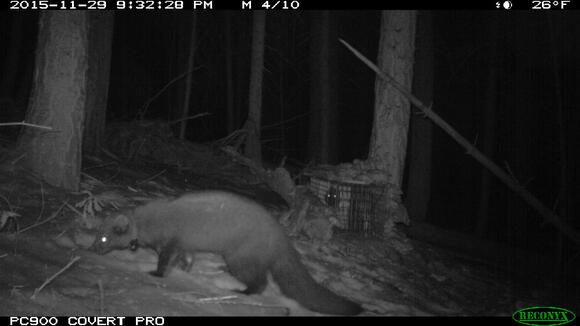
Fishers were completely eliminated from Wisconsin by the 1930s.
The state reintroduced just 48 animals between 1956 and 1963, expecting modest recovery at best. Instead, the population now numbers in the thousands across the northern third of the state, with verified sightings pushing steadily southward.
Fishers thrive because they exploit a niche most predators ignore. They’re one of the few animals capable of killing porcupines reliably, flipping them over to attack the unprotected belly.
That skill gives them access to prey other carnivores can’t touch. Trappers report fisher tracks in areas where none were seen even ten years ago, and trail cameras capture them raiding grouse nests and hunting snowshoe hares in mixed hardwood stands.
Quick Compare
- Fishers: 48 reintroduced animals, now thousands statewide
- Martens: 172 reintroduced, population still struggling
- Otters: Self-recovered without reintroduction assistance
But #12 represents a predator that never needed human help at all…
#12 — Coyotes moved in the moment wolves disappeared
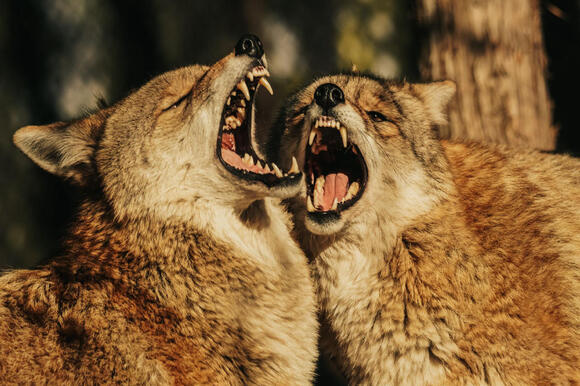
Coyotes were rare in Wisconsin before 1900.
Wolves kept coyote numbers suppressed through direct killing and competition for prey, a dynamic that wildlife biologists call “top-down regulation.” When wolf populations collapsed in the early twentieth century, coyotes moved into every available habitat within two decades.
They succeeded because they’re generalists in a way wolves never were. Coyotes eat everything from white-tailed deer fawns to apples, grasshoppers to garbage, adjusting their diet to whatever the season provides.
Now they occupy every county in the state, from downtown Milwaukee alleys to the most remote stretches of the Chequamegon-Nicolet National Forest. Deer hunters report hearing coyote packs during the rut, and suburban homeowners find tracks crossing their lawns at dawn.
The expansion happened so smoothly that most residents assume coyotes were always here…
#11 — Bobcats are breeding in counties they abandoned generations ago
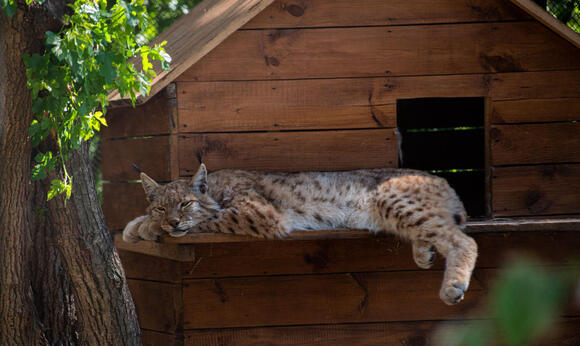
Bobcat sightings in southern Wisconsin were once dismissed as misidentifications.
The Department of Natural Resources now confirms breeding populations in at least twelve counties south of Highway 29, areas where the last verified bobcat was killed in the 1950s. Trail camera networks document kittens, repeated sightings of the same individuals, and territorial marking behavior.
Bobcats returned because prey returned first. The white-tailed deer population exploded over the past forty years, and cottontail rabbits rebounded as marginal farmland reverted to brushland.
Where deer are abundant, fawn predation provides reliable spring calories. Bobcats also hunt along the edges of agricultural fields at night, taking rabbits and voles in the same areas where red foxes hunt. Tracks appear in sand along back roads, and farmers occasionally find deer carcasses cached under brush piles.
The predators we thought were gone often just moved to the margins, waiting.
Still, #10 reveals a predator whose return has been anything but quiet…
#10 — Gray wolves crossed back from Michigan and Minnesota simultaneously
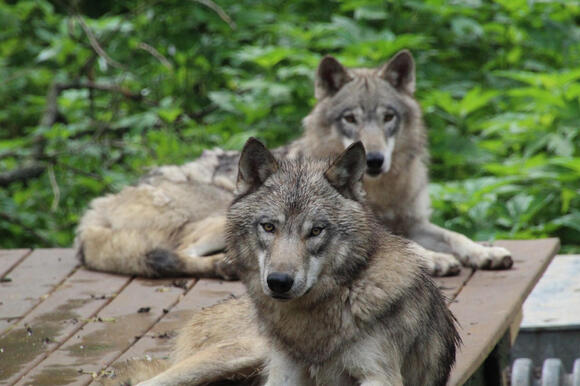
Wisconsin’s last wild wolf was reportedly killed in 1960.
By 1980, biologists confirmed wolves breeding again in the state, migrants from recovering populations in Michigan’s Upper Peninsula and northern Minnesota. The population grew to more than 1,000 animals by 2012, concentrated in the northern forests but with dispersing individuals reaching as far south as Dane and Iowa counties.
Wolves succeeded because Wisconsin maintained connected forest corridors. A young wolf can travel sixty miles in a night, and the unbroken stretches of public land across the northern third of the state provided exactly the kind of habitat they needed to establish territories.
Fast Facts
- First confirmed Wisconsin wolf litter: 1980 in Douglas County
- Peak population: 1,034 wolves in 2012 state survey
- Average territory size: 50–100 square miles per pack
- Primary prey: White-tailed deer, with beaver in summer
Packs now occupy territories that have been continuously held for more than two decades. Deer hunters report finding wolf-killed carcasses, and howls echo across lake chains where silence dominated for a century.
But #9 involves a predator most people never see, even when it’s hunting nearby…
#9 — Great horned owls have moved into suburban neighborhoods
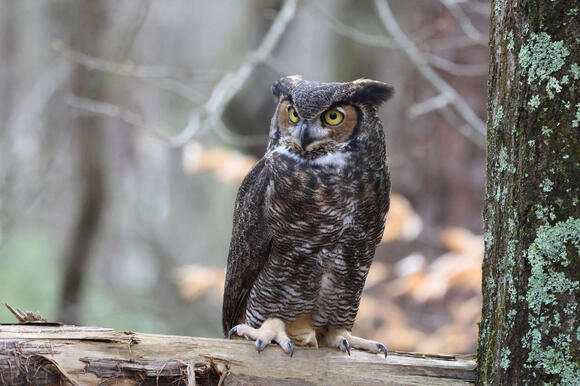
Great horned owls were always present in Wisconsin, but historically they nested in deep forest.
They’ve now established breeding territories in city parks, cemeteries, and residential neighborhoods, attacking pets and nesting in backyard pines. What changed was prey availability and human tolerance.
Suburban areas support dense populations of cottontail rabbits, squirrels, and rats—the exact prey base great horned owls prefer. Mature trees in older neighborhoods provide nesting sites, and reduced hunting pressure means owls can nest close to humans without lethal consequences.
Madison, Milwaukee, and Green Bay all report annual conflicts between owls and pet owners, particularly during the late-winter nesting season. Owls defend nest sites aggressively, diving at joggers and striking dogs walked after dark. Wildlife rehabilitators handle injured owls hit by cars in areas where the birds were never reported before 1990.
This shift shows how predators adapt faster than we expect them to…
#8 — Mink populations have recovered along every major watershed
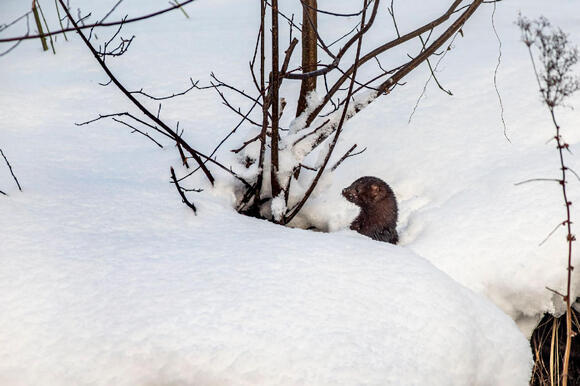
Mink were heavily trapped across Wisconsin through the 1970s, reducing populations to remnant levels.
Modern surveys document mink presence along more than 80 percent of the state’s river miles, from the Mississippi backwaters to tiny coldwater trout streams in the Driftless Area. The recovery happened quietly, with almost no public awareness.
Mink rebounded because water quality improved. Federal clean-water regulations reduced toxic runoff, allowing prey fish populations to recover, and the collapse of the fur market eliminated trapping pressure almost entirely.
Mink hunt muskrats, crayfish, and small fish along shorelines, primarily at night. Tracks appear in mud along boat landings, and anglers occasionally spot them hunting shallows at dawn. They’ve recolonized urban streams where water quality has improved, including sections of the Milwaukee River system.
The recovery was so complete that biologists now use mink as an indicator species for healthy riparian corridors…
#7 — Red foxes are displacing gray foxes in southern forests
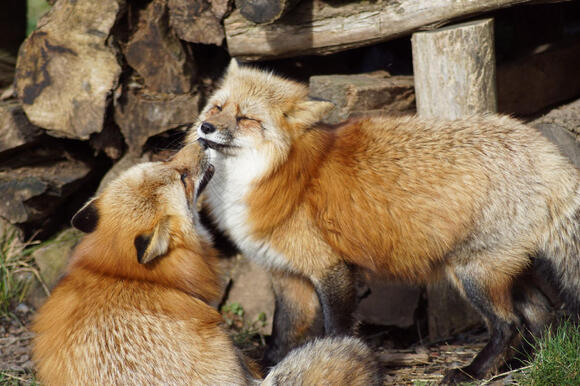
Gray foxes were the dominant small canid in Wisconsin’s southern hardwood forests for centuries.
Red foxes have moved into those same forests over the past three decades, outcompeting gray foxes through superior hunting efficiency and tolerance for human-modified landscapes. Gray fox sightings have dropped sharply in areas where red foxes are now common.
Red foxes succeed because they hunt more aggressively and adapt faster to changing conditions. They cache food more efficiently, tolerate colder winters, and thrive along agricultural edges where gray foxes struggle.
Hunters and trappers report the shift clearly. Areas that produced gray fox harvests through the 1980s now yield almost exclusively red foxes, and den sites have moved from wooded ravines to field edges and brushy fencerows. The change happened without management intervention, driven entirely by competitive dynamics.
But #6 reveals a predator whose success depends on darkness itself…
#6 — Barn owls are nesting in structures they once avoided
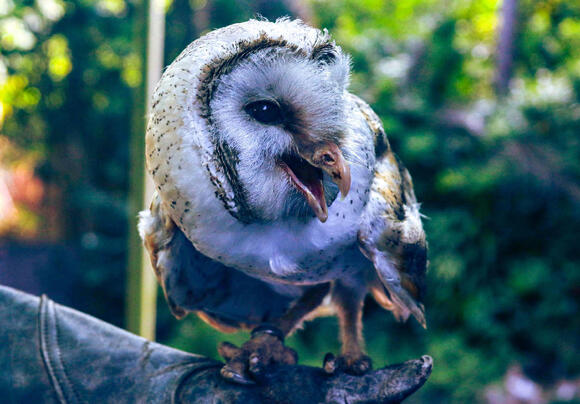
Barn owls were rarely documented nesting in Wisconsin before 1990.
The state now confirms nesting in barns, silos, and abandoned buildings across the southern third of Wisconsin, areas where the species was considered a rare migrant just thirty years ago. Nesting records have increased more than 400 percent since 2000, according to breeding bird surveys.
Barn owls moved north because winters have moderated. They require access to prey through the coldest months, and reduced snow depth allows them to hunt voles and mice even in January and February.
The owls nest in structures that provide shelter from wind and concealment from great horned owls, their primary predator. Farmers report finding regurgitated pellets beneath loft beams, and conservation groups have installed hundreds of nest boxes to accelerate the expansion. The species still can’t survive the harshest winters, but milder years allow populations to build between severe cold snaps.
This success reveals how small climate shifts ripple through predator communities…
#5 — Weasels have recolonized agricultural regions they abandoned decades ago

Short-tailed and long-tailed weasels were common in Wisconsin farmland through the 1950s.
Intensive agriculture and widespread pesticide use reduced populations to isolated pockets by the 1970s, but weasels have returned as farming practices changed. Modern conservation tillage and reduced insecticide use have restored prey populations.
Weasels hunt voles and mice in grassy field edges and ditches. A single weasel can take more than a hundred voles per year, controlling prey that damage crops and orchard roots.
Predators returned to farmland the moment we stopped poisoning their prey base.
Tracks appear in snow along field margins, and farmers occasionally find weasel-killed voles cached in hay bales. The animals remain largely nocturnal and secretive, so most landowners never realize weasels are present even when populations are healthy. Wildlife biologists consider the return one of the most underappreciated conservation successes in the state.
Still, #4 represents a predator most people actively want to avoid…
#4 — Timber rattlesnakes persist in bluff country despite heavy persecution

Timber rattlesnakes were nearly extirpated from Wisconsin by 1980.
The surviving population clings to limestone bluffs and south-facing slopes in the Driftless Area, with perhaps a few hundred individuals remaining. Every verified den site is now monitored, and conservationists work to prevent illegal killing.
Rattlesnakes survived because a few key hibernacula remained undiscovered. The snakes overwinter communally in deep rock crevices, emerging in late April to hunt small mammals across the surrounding bluffs.
Hikers encounter them basking on rock ledges during spring, and rural residents report sightings along gravel roads at dusk. The snakes are non-aggressive unless cornered, but public fear drives continued illegal killing. Biologists radio-track individuals to document range use and breeding success, finding that pregnant females may travel more than a mile from den sites to reach optimal basking habitat.
Worth Knowing
- Timber rattlers give live birth to 5–10 young in late summer
- They’re the only venomous snake species in northern Wisconsin
- Basking sites face south or southwest for maximum sun exposure
- Most bites occur when people attempt to kill or handle the snake
The species’ hold remains tenuous, and a single bad winter could collapse the remaining population…
#3 — Bald eagles now nest in every Wisconsin county
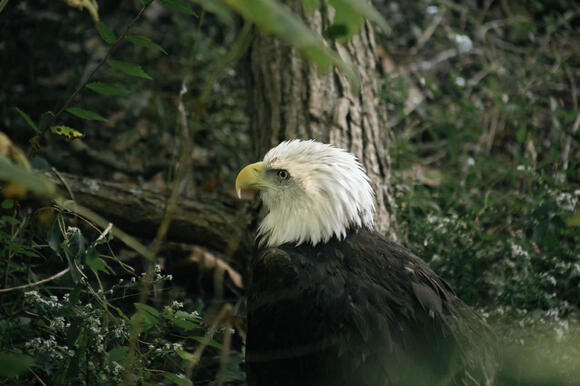
Bald eagles were reduced to fewer than 150 nesting pairs in the lower 48 states by 1960.
Wisconsin now supports more than 1,500 nesting pairs, with active nests documented in all 72 counties. The recovery represents one of the most dramatic predator comebacks in North American history.
Eagles rebounded because DDT was banned and waterways recovered. The pesticide caused eggshell thinning that prevented successful reproduction, and its removal allowed populations to rebuild within two generations.
Eagles nest in tall pines and cottonwoods near water, hunting fish and scavenging carrion. Winter concentrations form below dams, where open water provides access to stunned or dead fish. Nest sites that have been occupied for decades now host second and third generations of breeding pairs, and suburban eagles nest within sight of shopping centers and subdivisions.
The species moved from endangered to common so quickly that many younger residents don’t remember when seeing an eagle was a rare event…
#2 — Northern goshawks hunt deep forest wherever old growth remains
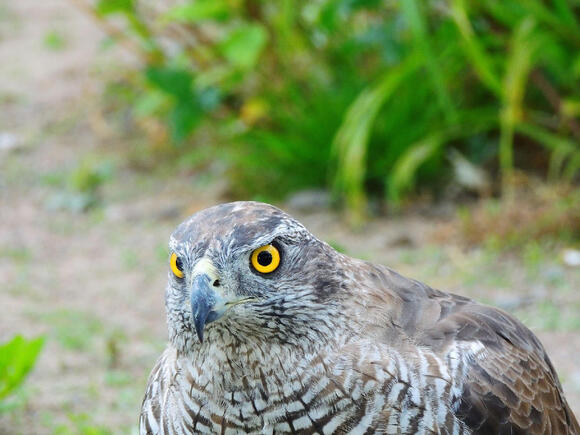
Northern goshawks are Wisconsin’s largest forest hawk.
They require mature forest with closed canopy and limited understory, conditions that exist only in the oldest stands scattered across the northern half of the state. Breeding territories are widely spaced, and the population remains small but stable.
Goshawks hunt ruffed grouse, squirrels, and snowshoe hares by flying fast and low beneath the canopy. They’re aggressive nest defenders, striking biologists and hikers who approach active nests during the breeding season.
Foresters occasionally find nests during timber surveys, and grouse hunters report sudden explosive flights when goshawks attack nearby. The birds nest on large lateral branches in mature aspens or pines, often reusing the same structure for multiple years. Logging and forest fragmentation remain the primary threats, as goshawks abandon territories when canopy cover drops below critical thresholds.
Their presence signals forest health in ways that few other species can match…
#1 — Black bears have expanded into counties they never historically occupied
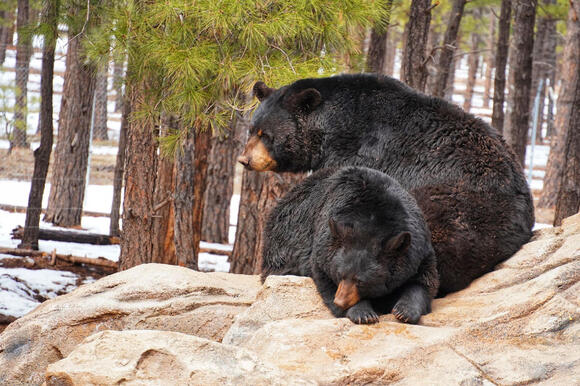
Black bears were always common in northern Wisconsin, but rare anywhere south of Highway 29.
Bears now occupy territories in Dane, Sauk, Grant, and even Kenosha counties, far south of their historical range. Trail cameras document sows with cubs in landscapes that held no bears within living memory.
Bears expanded because forest connectivity improved and human tolerance increased. Young males disperse widely from natal territories, and even narrow corridors of woodland provide enough cover for bears to move between larger habitat blocks.
Why It Stands Out
- Wisconsin bear population has tripled since 1980
- Annual harvest quota exceeds 4,000 animals statewide
- Urban encounters now occur in Madison and Milwaukee suburbs
- Corn and birdseed provide high-calorie food sources in fall
They feed on everything from berries and acorns to garbage and agricultural crops. Bird feeders draw bears into yards, and corn fields in autumn provide the calories bears need to build fat reserves before hibernation.
Homeowners wake to find trash scattered and feeders destroyed. The animals are surprisingly tolerant of human presence, and problem bears are often the same individuals returning repeatedly to reliable food sources. Biologists trap and relocate the most persistent offenders, but the core issue is attractant management, not bear behavior.
This expansion reveals a larger truth about predator recovery: when humans provide food and habitat, predators arrive quickly and settle permanently.
The Bottom Line
Wisconsin’s predator recovery happened without fanfare, one dispersing animal at a time. Wolves, bears, and fishers returned because forests recovered and prey populations rebounded, while species like coyotes and red foxes filled empty niches the moment larger predators vanished.
The quiet return of predators proves ecosystems can heal when we stop actively destroying them.
The changes remain invisible to most residents because predators are secretive and most active at night. But trail cameras, hunter observations, and wildlife surveys document a landscape transformed. The forests now support predator communities that resemble those present a century ago, though the specific composition has shifted.
What predator return has surprised you most on your own property, and have you changed how you manage the land as a result?
 Add to Preferred Sources


