undefined
Posts
undefined
Followers
13 Ice Age Giants That Roamed Pennsylvania
By Sameen David,
5 days agoPennsylvania’s Ice Age landscape hosted massive creatures—from towering mammoths to giant ground sloths—that left behind fossils still turning up across the state today.
Imagine stumbling across a ten-foot-tall beaver while hiking through Pennsylvania woodlands. During the last Ice Age, that wasn’t just possible—it was routine.
Most people picture Ice Age megafauna roaming only the western plains or arctic tundra. They rarely think of the Northeast as home to giant mammals.
But Pennsylvania sat at the southern edge of the Laurentide Ice Sheet, creating a unique ecosystem where cold-adapted giants mixed with temperate species. The fossils prove it: massive creatures walked, grazed, and hunted across what’s now the Keystone State. Here’s what the evidence actually reveals.
#13 — American Mastodon Left Teeth Across the State
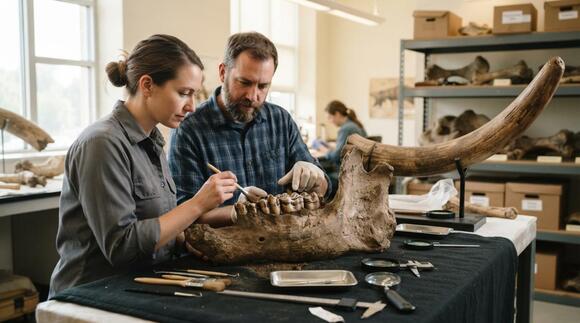
Pennsylvania has yielded more mastodon remains than almost any northeastern state.
These elephant relatives stood nine feet tall at the shoulder and weighed up to six tons. Males carried tusks that curved inward, unlike the outward-sweeping tusks of mammoths.
Mastodons preferred spruce forests and wetlands rather than open grasslands. They browsed on leaves, twigs, and aquatic plants using grinding molars perfectly adapted for woody vegetation.
Quick Compare
- Mastodon: forest browser, 9 feet tall, inward-curving tusks
- Mammoth: grassland grazer, 11+ feet tall, outward-sweeping tusks
- Modern elephant: 10-13 feet tall, adapted to savanna and forest
Their teeth turn up regularly in Pennsylvania creek beds, particularly in the western counties. One nearly complete skeleton was recovered from a bog near Marshalls Creek in Monroe County during the 1960s.
But #12 reveals a predator that could take down even these giants…
#12 — American Lion Prowled the Valleys
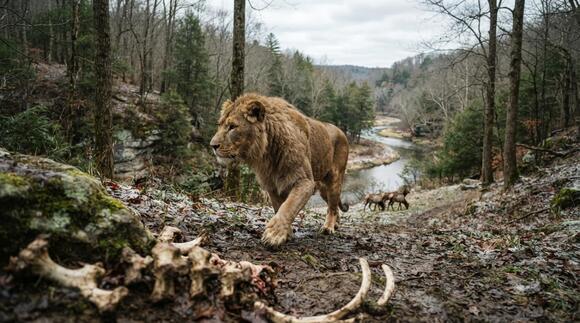
This wasn’t the African lion seen today—it was larger.
The American lion measured up to eight feet long and weighed over 500 pounds, making it one of the largest cats ever to exist. It stood about four feet at the shoulder.
These apex predators hunted in Pennsylvania’s valleys and open woodlands, targeting young mammoths, bison, and horses. Their size and strength allowed them to bring down prey much larger than themselves.
Fossil evidence from Pennsylvania caves includes lion bones alongside the remains of their typical prey species. The Big Bone Cave in Van Buren County yielded partial skeletal remains in the early 1900s.
Meanwhile, #11 shows the prey species these lions depended on…
#11 — Steppe Bison Formed Massive Herds
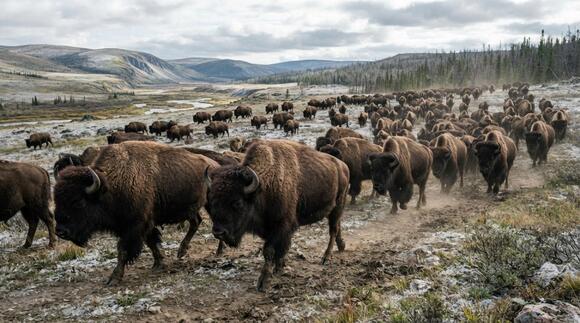
Pennsylvania’s Ice Age bison dwarfed their modern descendants.
Steppe bison stood six and a half feet at the shoulder with horn spans reaching seven feet. Males weighed up to 2,000 pounds—nearly double the size of today’s plains bison.
These grazers formed enormous herds that migrated seasonally across Pennsylvania’s grasslands and open forests. Their massive horn cores appear frequently in fossil deposits, particularly along the Susquehanna and Allegheny river valleys.
Pennsylvania sat at the crossroads where Ice Age giants from north and south mixed freely.
The Pennsylvania State Museum houses several nearly complete bison skulls showing the characteristic long, forward-pointing horns. These animals provided crucial prey for the region’s large predators.
But #10 identifies a creature even stranger than oversized bison…
#10 — Giant Beaver Built Dams Six Feet High
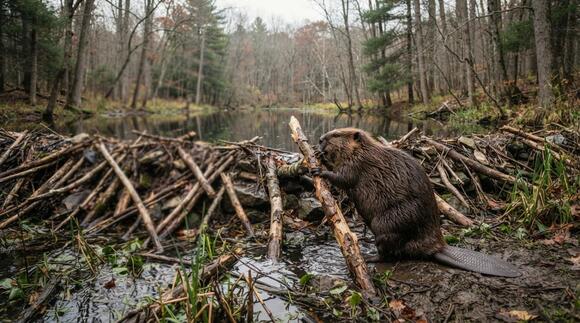
Forget the cute lodge-builders you see today.
Castoroides, the giant beaver, reached eight feet long and weighed up to 220 pounds—about the size of a modern black bear. Its massive orange incisors grew six inches long.
Despite its name and appearance, evidence suggests it may not have built dams at all. Its teeth show wear patterns more consistent with eating aquatic plants than gnawing wood, and its tail was longer and narrower than modern beavers.
Fast Facts
- Length: up to 8 feet from nose to tail
- Weight: 220 pounds maximum
- Habitat: lakes, ponds, and slow rivers
- Diet: primarily aquatic vegetation
Partial skeletons have been found in bog deposits across western Pennsylvania. The Carnegie Museum of Natural History displays a reconstructed skeleton from a Washington County peat bog.
And #9 shows another wetland giant that dwarfed familiar animals…
#9 — Stagmoose Stood Seven Feet at the Shoulder
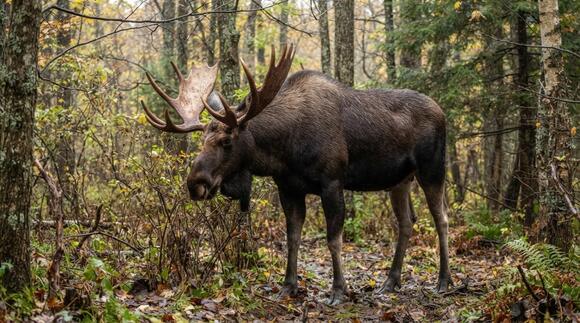
This cervid combined features of both moose and elk.
The stag-moose (Cervalces scotti) carried the largest antlers of any deer species in Pennsylvania’s Ice Age. Its palmate antlers could span over six feet and weighed more than 40 pounds per rack.
Unlike modern moose, stag-moose had longer legs adapted for running in open terrain rather than wading through marshes. They browsed on woody shrubs and low tree branches across Pennsylvania’s mixed woodlands.
Their distinctive skull shape—with a long nasal opening and high-domed forehead—sets them apart from both modern moose and elk. Several partial skulls with attached antlers have emerged from Pennsylvania creek banks after spring floods.
But #8 identifies a predator far more dangerous than any cat…
#8 — Short-Faced Bear Outran Every Other Predator
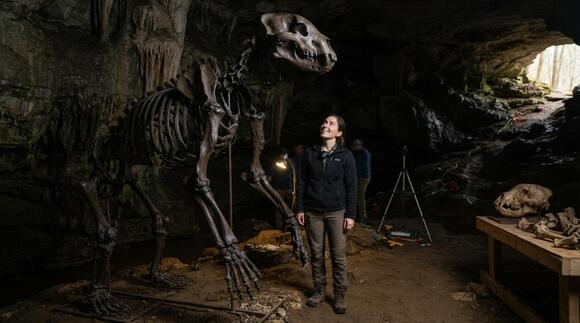
Standing upright, this bear looked you in the eye at twelve feet.
Arctodus simus weighed up to 1,800 pounds but ran on impossibly long legs. Its limb proportions allowed it to reach speeds of 40 miles per hour—fast enough to run down horses.
This wasn’t a lumbering omnivore like modern bears. The short-faced bear’s skull and jaw structure indicate it was likely a specialized carnivore or scavenger, using its size to dominate kills from smaller predators.
Its name comes from its unusually short, broad snout compared to other bears. This facial structure housed powerful jaw muscles designed for crushing bones to access marrow.
Pennsylvania cave deposits contain scattered short-faced bear bones, though complete skeletons are rare. One partial skull from a Centre County cave showed clear bone pathology suggesting an infected jaw injury.
Meanwhile, #7 reveals an even more improbable giant…
#7 — Jefferson’s Ground Sloth Reached Ten Feet Standing
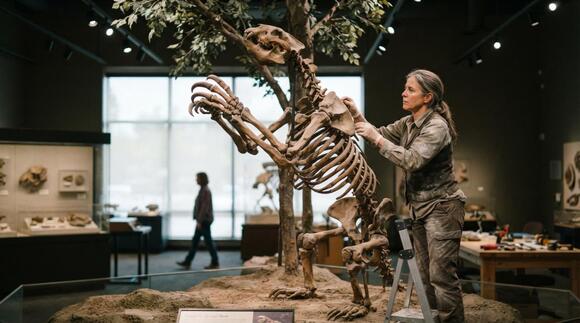
Thomas Jefferson himself described the first fossils of this creature.
Megalonyx jeffersonii stood about ten feet tall when rearing up to reach tree branches. These ground sloths weighed up to 2,200 pounds and possessed four-inch claws on their front limbs.
Despite their fearsome claws, they were herbivores that used those talons to pull down branches and strip leaves. They moved slowly on their knuckles, keeping those claws curved inward and off the ground.
Pennsylvania’s limestone caves have yielded excellent ground sloth remains, particularly in the karst regions of central Pennsylvania. Their fossilized dung deposits, preserved in dry cave passages, reveal they ate coarse vegetation including twigs and bark.
But #6 shows the true giant of Pennsylvania’s Ice Age…
#6 — Columbian Mammoth Towered Over Everything
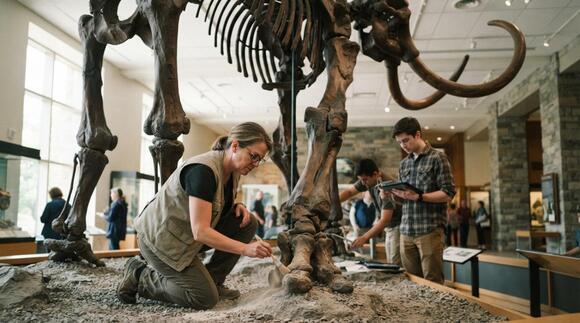
This was the largest mammal walking Pennsylvania during the Ice Age.
Bulls reached 14 feet at the shoulder and weighed up to 10 tons—substantially larger than woolly mammoths. Their tusks curved dramatically, with some specimens showing spirals exceeding 16 feet in length.
Worth Knowing
- Preferred temperate grasslands over tundra
- Single adults consumed 500+ pounds of vegetation daily
- Tusks grew continuously throughout life
- Shoulder height exceeded modern African elephants by 2-3 feet
Columbian mammoths favored Pennsylvania’s river valleys and open parklands rather than dense forests. They grazed on grasses, sedges, and forbes, requiring vast territories to support their enormous caloric needs.
Several nearly complete tusks have been recovered from Pennsylvania gravel pits. One Washington County site yielded a tusk fragment showing clear signs of healing from a break—evidence the animal survived a serious injury.
And #5 identifies a wolf that made modern timber wolves look small…
#5 — Dire Wolf Hunted in Coordinated Packs
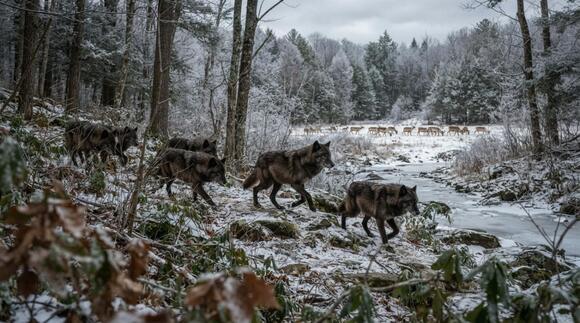
The name sounds mythical, but these were real predators.
Canis dirus stood 30 inches at the shoulder and weighed up to 175 pounds. Its skull was broader and more heavily built than modern wolves, with massive jaw muscles for crushing bone.
These wolves hunted in packs across Pennsylvania’s open woodlands and grasslands, taking down prey through coordinated attacks. Their robust build suggests they specialized in grappling with large, dangerous prey rather than running down smaller animals.
Tooth wear patterns indicate dire wolves regularly consumed bone, possibly scavenging from other predators’ kills or crushing bones to access marrow. This put tremendous stress on their teeth, and fossil specimens often show worn or broken fangs.
Pennsylvania cave deposits contain dire wolf remains mixed with the bones of their prey species. One Bedford County cave yielded teeth from at least six individual dire wolves alongside bison and horse bones.
These weren’t the icy wastelands people imagine—Pennsylvania’s Ice Age supported a dense, diverse megafauna community.
But #4 shows an animal most people wrongly think never lived this far east…
#4 — Western Camel Adapted to Cold Climates
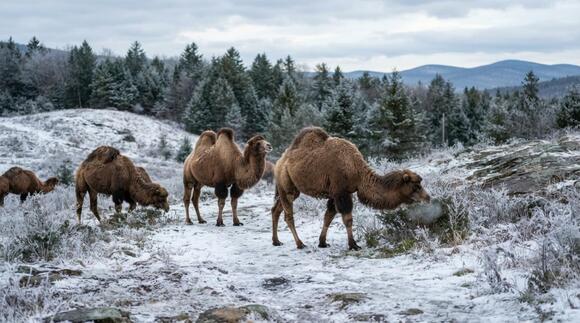
Yes, camels in Pennsylvania—and they thrived here.
Camelops hesternus stood about seven feet tall at the shoulder with long, slender legs. These camels lacked the pronounced humps of modern species but carried their fat reserves distributed across their bodies.
They weren’t desert specialists—Ice Age camels had adapted to temperate and even cold climates. Their fossils appear alongside cold-adapted species like mammoths, suggesting they tolerated Pennsylvania’s harsh Ice Age winters.
Their teeth show they browsed on shrubs and low tree branches rather than grazing on grass. This dietary flexibility allowed them to exploit food sources other large herbivores couldn’t efficiently access.
Fragmentary camel remains have been identified from several Pennsylvania sites, though complete skeletons are rare. The species went extinct roughly 10,000 years ago alongside most other North American megafauna.
And #3 reveals one of the strangest creatures to ever walk Pennsylvania…
#3 — Flat-Headed Peccary Roamed in Large Sounders
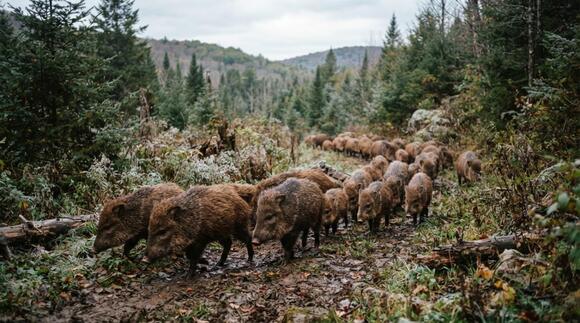
Think of a pig crossed with a small bison.
Platygonus compressus stood about 30 inches at the shoulder but had a barrel-shaped body built for power. Its skull was remarkably flattened from top to bottom—hence the name—with high-crowned teeth for grinding tough vegetation.
These weren’t solitary animals. Fossil evidence from other states shows they traveled in large groups called sounders, sometimes numbering in the dozens, similar to modern peccaries.
Their leg proportions suggest they were built for endurance travel across open terrain rather than forest dwelling. They likely migrated seasonally across Pennsylvania, following food sources and avoiding the worst winter conditions.
Pennsylvania specimens come primarily from cave deposits and creek bank erosion sites. One Cambria County discovery included three partial skulls in close proximity, suggesting at least part of a sounder died together.
But #2 identifies the most heavily armored creature in Ice Age Pennsylvania…
#2 — Giant Armadillo Weighed 450 Pounds
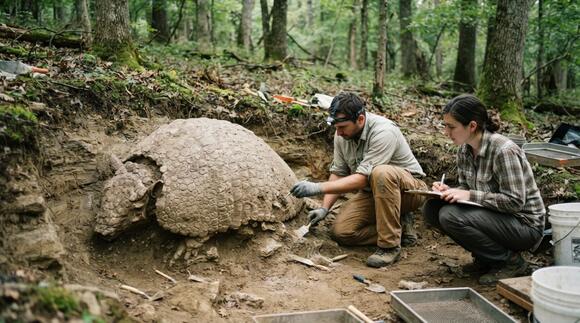
Pennsylvania’s Ice Age hosted an armadillo the size of a small car.
Holmesina septentrionalis stretched six feet long and weighed up to 450 pounds. Its bony armor covered its back, sides, and even the top of its head in overlapping plates.
Unlike modern armadillos, this species couldn’t roll into a ball—it was simply too large. When threatened, it likely relied on its armor and powerful claws to defend itself or dig rapidly into soft ground.
Its fossils appear less frequently in Pennsylvania than in southern states, suggesting this represented the northern edge of its range. Cold-adapted but not cold-preferring, it probably migrated south during the worst glacial advances.
Why It Stands Out
- Northernmost armadillo species ever documented
- Only Ice Age armadillo to reach Pennsylvania
- Armor plates sometimes found isolated in creek beds
- Went extinct roughly 11,000 years ago
One partial carapace section was identified in a York County fossil collection, though its precise discovery location was poorly documented. The distinctive sculptured armor plates make identification relatively straightforward even from fragments.
And finally, #1 shows why Pennsylvania’s megafauna mystery remains unsolved…
#1 — Woolly Mammoth Defined Pennsylvania’s Ice Age
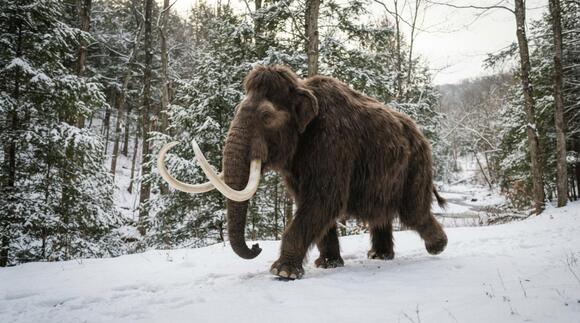
This is the icon of the Ice Age in Pennsylvania.
Standing 11 feet at the shoulder, woolly mammoths carried curved tusks up to 15 feet long. Their shaggy coats included guard hairs three feet long and dense underfur designed to insulate against bitter cold.
These weren’t random visitors—woolly mammoths were year-round Pennsylvania residents during glacial maxima. They grazed on tundra grasses, sedges, and willows, using their tusks to sweep snow aside and reach frozen vegetation beneath.
Their distinctive molars show extreme adaptation for grinding coarse, gritty vegetation. Each tooth had multiple ridges of enamel that wore down gradually, and mammoths went through six sets of molars during their 60-year lifespans.
Pennsylvania has produced numerous mammoth finds, from isolated teeth to partial skeletons. The most complete specimen came from a farm in Indiana County in 1963, where construction unearthed much of a skeleton including the skull and both tusks.
What killed them off remains debated—climate change, human hunting, disease, or some combination. But their disappearance about 10,000 years ago marks the end of Pennsylvania’s megafauna age.
The Bottom Line
Pennsylvania’s Ice Age wasn’t a frozen wasteland—it was a dynamic ecosystem supporting creatures that would look alien in today’s landscape. From ten-ton mammoths to horse-sized beavers, these giants left their mark in fossil beds across the state.
The key takeaway: Pennsylvania sat at a crucial ecological boundary where northern and southern species overlapped, creating unusual diversity for its latitude. That’s why fossils here include both cold-adapted woolly mammoths and more temperate species like camels and giant armadillos.
Most of these giants vanished within a few thousand years, leaving only bones to prove they existed at all.
Which of these Ice Age giants surprises you most to learn lived in Pennsylvania, and have you ever found fossil remains in your area?
 Add to Preferred Sources
