undefined
Posts
undefined
Followers
Hummingbirds Spotted in Mid Georgia: Migration Moving North
If you're a hummingbird lover, this is your time of year. Your favorite flitters are now arriving in Georgia.
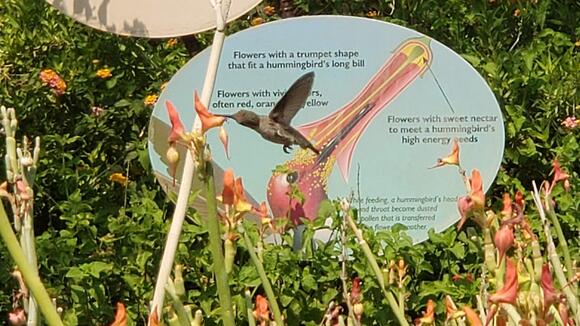
The tiny birds are on their way north in their spring migration. They should be reaching the northern half of Georgia from mid-March and into April, based on historical patterns.
Traveling from their winter homes in Mexico, Central America, and other places in the Caribbean, the migrating birds already have been spotted in Florida and South Georgia, according to reports on hummingbirdcentral.com.
The highest concentration of hummingbird spottings so far in 2025 in Georgia have occured south of a line from Savannah on the east coast to Perry in West Georgia. The northern-most sightings in Georgia reported to the site as of March 13 have occured in Bolingbroke, Sparta and Zebulon, GA. The first arrivers likely will be reaching Atlanta, Cobb County and North Georgia later in March and continuing into April, based on historical patterns.
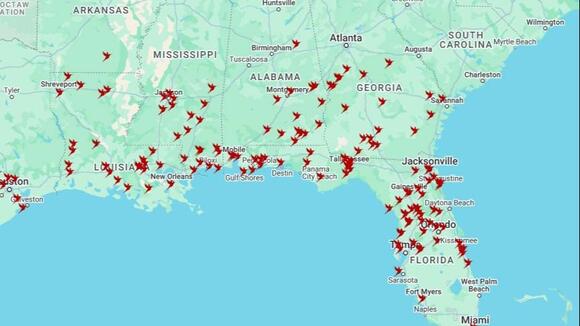
On both spring and fall migrations, several websites like Hummingbirdcentral.com offer interactive maps where birdwatchers can register their sightings and help track the hummingbird migration schedule.
To spot migrating hummingbirds, don't look up for sky-darkening flocks or neat V-style formations of the tiny birds traveling together. Hummingbirds are loners and fly individually. So the best chance of spotting them is as they fly around a garden looking for food. Some local botanical gardens like Smith-Gilbert Gardens in Kennesaw, Gibbs Gardens in Ballground and Atlanta Botanical Gardens feature special hummingbird areas where they concentrate nectar-producing flowers and other bushes that attract the tiny birds.
When you spot the first hummingbird of the season, you also can submit your sighting to help track the hummingbird migration. Individuals are encouraged to submit winter or unusual species sightings to the Georgia Department of Natural Resources.
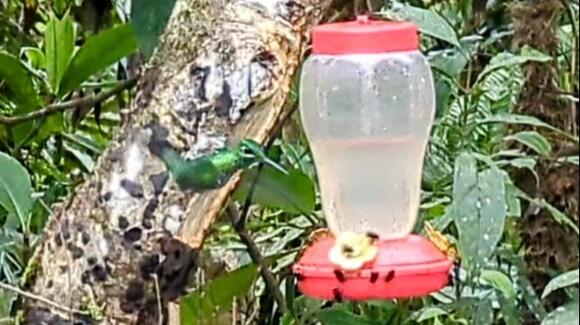
In the spring hummingbird migration to their North American nesting areas, hummingbirds take a leisurely approach to their journey. Typically, they will travel approximately 20 miles per day, then stop for resting and frequent feeding periods. With the highest metabolism of any species, they feed at hundreds of flowers and up to six times or more per hour, according to Hummingbirdsplus.org.
Those stops are essential as hummingbirds generally consume at least half of their weight and as much as double or triple their weight in nectar each day. They also add some protein to their diets by eating some insects and spiders. (For lots of other cool hummingbird facts -- like hummingbirds don't "hum" at all, but rather create a humming sound due to the fast beating of their wings -- visit hummingbirdsplus.org)
A few hummingbirds remain in Georgia year-round, mostly in coastal and Southern areas of the state, according to the Georgia Department of Natural Resources. However, the majority migrate, traveling along a path from winter home lands in Mexico, Central America and the Caribbean to spring and summer nesting grounds along the Eastern US seacoast.
 Add to Preferred Sources


