undefined
Posts
undefined
Followers
7 Mistakes People Make Checking Their Oil
By Park-Shin Jung,
5 hours ago
Engine oil plays a critical role in keeping a vehicle’s engine lubricated, cool, and protected against excessive wear. However, checking its level is not always as simple as pulling out the dipstick and looking at the oil.
Small mistakes, such as checking on an incline, using the wrong procedure, or adding too much oil, can produce misleading readings and potentially cause mechanical problems. Many drivers also overlook warning signs that indicate oil-related issues.
Understanding the correct inspection process helps prevent avoidable engine damage and expensive repairs. Here are seven common mistakes people make when checking their engine oil.
1. Checking the Oil While the Vehicle Is Parked on an Incline
One of the most common mistakes drivers make is checking engine oil while their vehicle is parked on a sloping driveway, uneven road, or inclined parking space.
Although the difference might appear insignificant, the vehicle’s angle can affect how oil settles inside the oil pan. Since the dipstick measures the oil level at a specific location, an uneven reading surface can produce an inaccurate result.
Engine oil collects in the oil pan when the engine is switched off. On level ground, the oil settles relatively evenly, allowing the dipstick to provide a representative measurement. However, when a vehicle is tilted, the oil moves toward the lower side of the pan.
Depending on the dipstick’s position and the direction of the incline, the reading may appear higher or lower than the actual operating level.
This can lead to two different problems. A driver might add oil unnecessarily because the dipstick appears to show a low level. Alternatively, someone may believe the engine has sufficient oil when the actual quantity is below the recommended range. Repeatedly making decisions based on inaccurate readings can eventually contribute to lubrication problems.
The correct approach is straightforward. Park the vehicle on a firm, level surface, switch off the engine, and follow the manufacturer’s recommended waiting period before checking the dipstick. Avoid relying on a reading taken while the vehicle is positioned on a steep driveway.
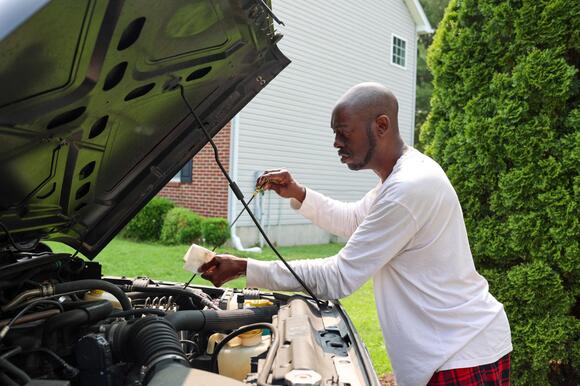
AAA recommends checking engine oil with the vehicle parked on level ground. Toyota also explains that an inclined surface can affect oil readings because the lubricant collects unevenly inside the oil pan.
A few extra minutes spent finding a level parking location can prevent unnecessary top-ups and help drivers make better maintenance decisions.
2. Checking the Oil Immediately After Switching Off the Engine
Another mistake is pulling out the dipstick immediately after switching off the engine. During operation, the oil pump circulates lubricant through different engine components, including bearings, cylinder walls, and other moving parts.
When the engine stops, some of that oil gradually drains back into the oil pan. Checking too quickly can therefore produce a reading that does not accurately represent the settled oil level.
However, drivers should remember that the correct waiting time and engine temperature can vary depending on the vehicle. Some manufacturers recommend bringing the engine up to its normal operating temperature, switching it off, and waiting a few minutes before checking the oil level.
 Add to Preferred Sources
