undefined
Posts
undefined
Followers
Ancient Weapons Found Far from Any Battlefield
By Agustin Catania,
2025-12-26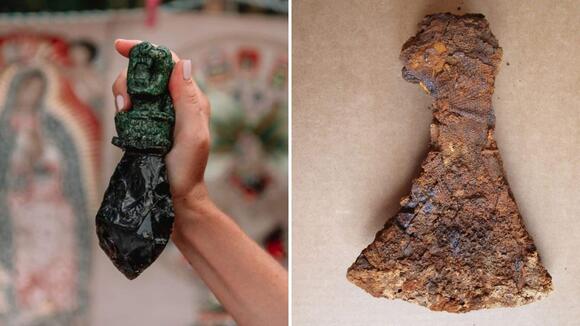
History tells us where wars were fought, where empires rose, and where armies clashed. Yet every so often, an object emerges from the ground that refuses to follow those maps. Weapons designed for combat appear in places with no record of conflict, no nearby fortifications, and no logical explanation. These discoveries suggest forgotten journeys, lost trade routes, diplomatic exchanges, or stories erased by time.
Each blade or spear hints at human movement far more complex than textbooks suggest. If you think ancient worlds were isolated and predictable, these weapons tell a very different story.
Keep reading and follow the trails history forgot to document.
#1: Roman armor fragments in Sudan
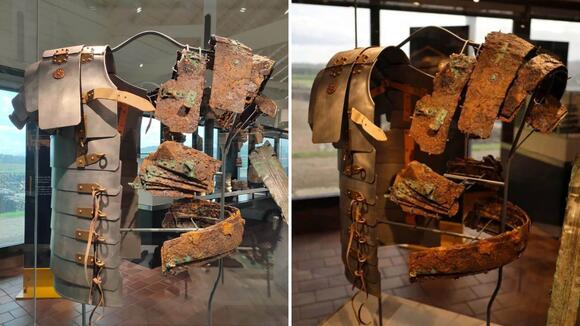
Roman armor fragments uncovered in Sudan extend Rome’s shadow southward. No Roman campaigns reached that deep into Africa. The fragments may reflect trade with Nubian kingdoms. Roman military equipment carried prestige. Local elites may have acquired it intentionally. The armor shows ceremonial wear rather than combat damage. It symbolizes influence without occupation. Rome’s reach extended through objects, not legions.
#2: Phoenician daggers in Portugal
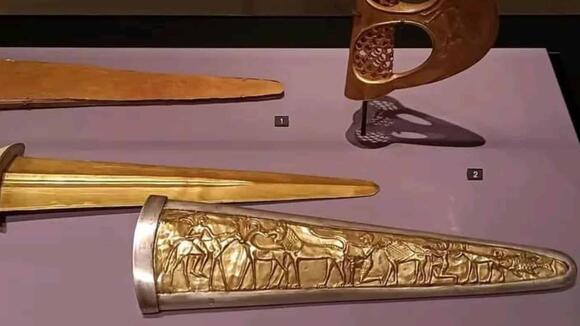
Phoenician daggers found in Portugal align with seafaring trade routes. Phoenicians established coastal trading posts. However, the find location lacks known settlements. The daggers may represent exploratory contact. They could have been traded inland. Phoenician metalwork was highly valued. Weapons doubled as trade goods. Their presence maps forgotten exchanges.
#3: Hittite sword in Bulgaria
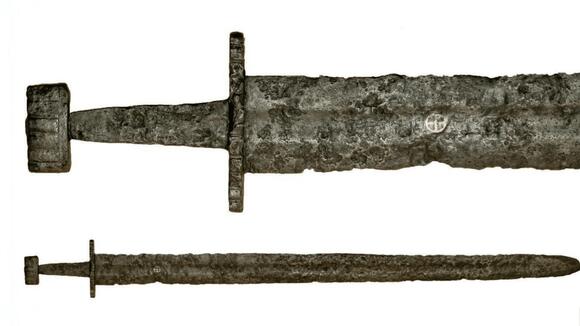
A Hittite sword discovered in Bulgaria lies far from Anatolian centers. The Hittite Empire rarely extended that far west. The sword’s design confirms imperial origin. It may reflect alliance networks or mercenaries. The object shows careful preservation. Its presence suggests political influence beyond borders. Weapons traveled with people, not armies alone. The Hittite world was wider than assumed.
#4: Etruscan weapons in North Africa
Etruscan weapons found in North Africa hint at forgotten maritime routes. The Etruscans were skilled traders and sailors. No Etruscan battles occurred in the region. The weapons may have been exchanged with local elites. Their presence suggests diplomatic or commercial contact. Weapons often functioned as prestige items. This find expands Etruscan reach. The Mediterranean was deeply interconnected.
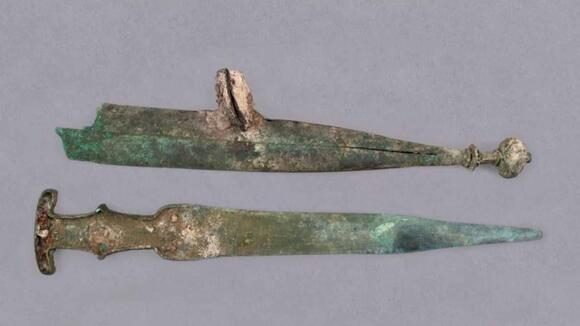
#5: Greek hoplite spear in France
A Greek hoplite spear found in France defies classical assumptions. Greek colonies existed in southern France, but this find lies beyond them. The spear style matches mainland Greece. It may have arrived via trade or migration. Greek warriors often served abroad. The weapon’s condition implies symbolic value. It reflects Greek influence spreading quietly. Warfare was not the only vector of culture.
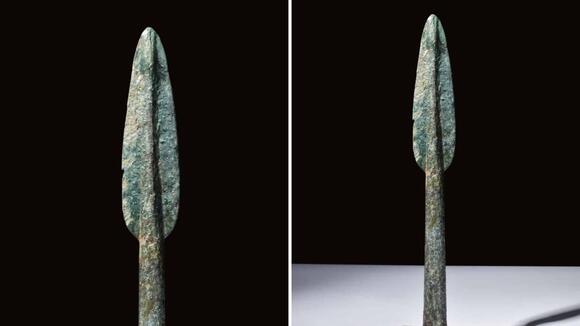
#6: Viking axe in Spain
A Viking axe uncovered in Spain lies far from Norse settlements. While Vikings raided Iberia, this find sits inland. The axe shows signs of use but no nearby battle. It may belong to a lone traveler. Vikings served as mercenaries across Europe. The axe could reflect integration rather than conflict. It suggests personal journeys beyond raids. Viking movement was complex and varied.
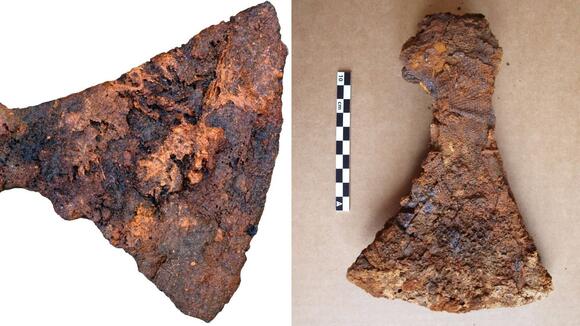
#7: Chinese bronze swords in Siberia
Chinese bronze swords discovered in Siberia challenge regional isolation myths. The swords match early Chinese dynastic designs. Siberia lacked Chinese military presence. The weapons may reflect trade with nomadic groups. Bronze objects carried prestige value. Their survival suggests careful handling. These swords mark cultural exchange at civilization’s edges. Even frozen regions were connected.
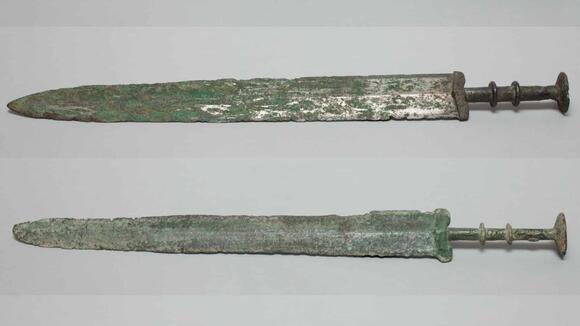
#8: Aztec obsidian blades in the Caribbean
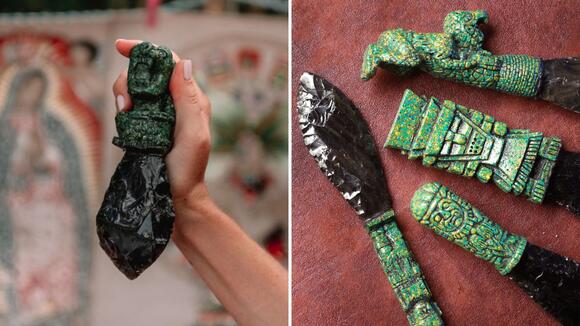
Aztec obsidian blades found in the Caribbean suggest unexpected reach. Obsidian sourcing links directly to Mesoamerica. No Aztec military expeditions reached the islands. The blades likely arrived via trade networks. Caribbean societies valued exotic materials. The weapons may have been ceremonial. Their sharpness remained intact. They testify to pre-Columbian connectivity across seas.
#9: Roman pilum in Scotland
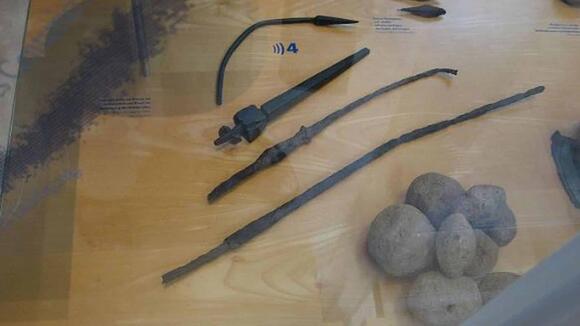
A Roman pilum found in Scotland appears beyond established Roman forts. The pilum was a standard legionary weapon. No battle records exist for the discovery site. It may have been lost during patrols or diplomacy. Romans interacted with local tribes extensively. The weapon could have been traded or captured. Its isolation raises questions about Roman presence. Borders were not as rigid as maps imply.
#10: Mongol sabers in Eastern Europe
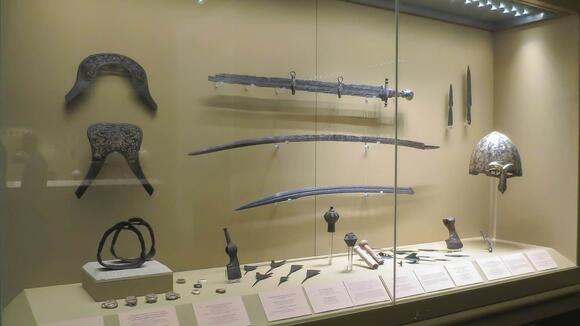
Mongol sabers discovered in Eastern Europe reflect the empire’s vast reach. However, some finds lie outside known invasion paths. These sabers may belong to scouts or envoys. The Mongol movement was not always violent. The weapons show wear consistent with travel. Their presence suggests fluid frontier zones. Even distant regions felt Mongol influence. The empire left traces beyond battles.
#11: Spartan helmet in Germany
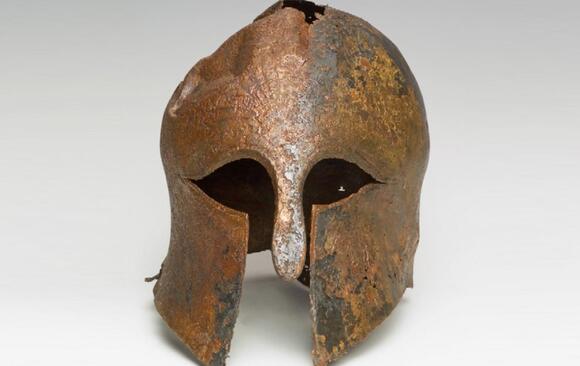
A Spartan-style helmet found in Germany appears impossibly out of place. Sparta had no campaigns that far north. The helmet may have been traded or collected. It could represent mercenary service abroad. Greek warriors sometimes fought far from home. The helmet’s presence suggests reputation traveled ahead of armies. It may have been prized as an exotic object. Spartan identity extended beyond geography.
#12: Mycenaean blade in Turkey
A Mycenaean blade discovered in Turkey suggests Bronze Age maritime reach. Mycenaeans were skilled seafarers. The blade’s style is unmistakably Greek. No Mycenaean colony existed at the site. It may have arrived through trade or travel. The weapon shows no battle damage. It implies personal movement rather than invasion. The Aegean world was deeply interconnected.
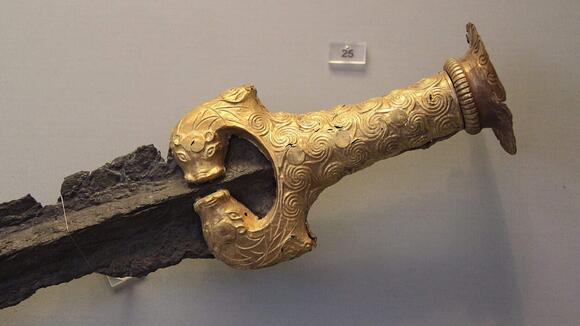
#13: Assyrian Stone Star in Egypt
An Assyrian Stone Star was found in Egypt, far from Assyrian battlefields. That kind of stone symbolizes authority more than combat. Egypt and Assyria interacted diplomatically and militarily. However, the find location lacks signs of conflict. The Star Stone may have been a gift or tribute. Its craftsmanship reflects elite ownership. Such objects reinforced power relationships. The weapon functioned as political language.
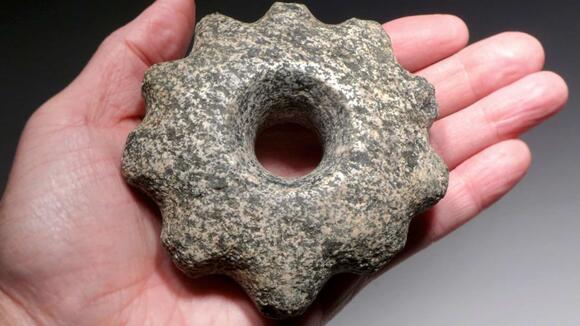
#14: Celtic sword in Italy
A Celtic sword uncovered in Italy complicates Roman-era narratives. While Celts did migrate south, this find lies outside known conflict zones. The sword shows careful preservation. It may have belonged to a settler rather than a warrior. Cultural blending was common in ancient Italy. Weapons often served as identity markers. The sword reflects coexistence as much as conquest. It highlights the fluidity of ancient Europe.
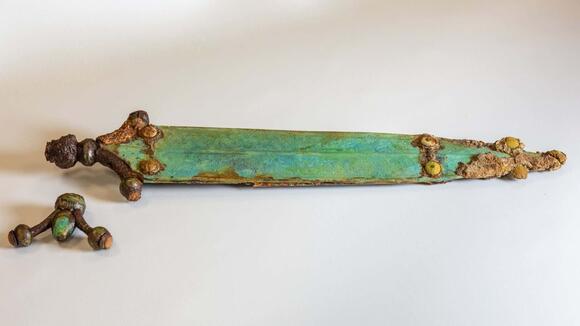
#15: Scythian arrowheads in China
Scythian arrowheads found in China reveal ancient steppe connections. Scythians are associated with Central Asia, not East Asia. The arrowheads match nomadic horse-archer designs. No large Scythian battles occurred in the region. Their presence suggests migration or mercenary service. Trade between nomadic groups may explain the spread. These weapons trace movement across vast landscapes. Borders meant little to ancient nomads.
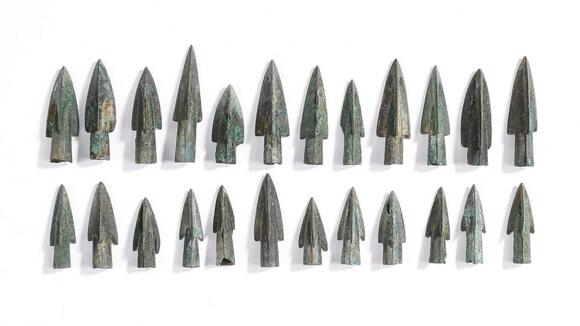
#16: Bronze Age axe in an Irish peat bog
A Bronze Age axe preserved in an Irish peat bog raises unsettling questions. The axe shows minimal signs of use. Peat bogs often preserve ritual offerings. No battlefield existed nearby. The deliberate placement suggests ceremonial intent. Weapons may have been sacrificed rather than wielded. The axe connects violence and belief systems. Its survival owes to waterlogged burial. It reminds us weapons carried symbolic power.
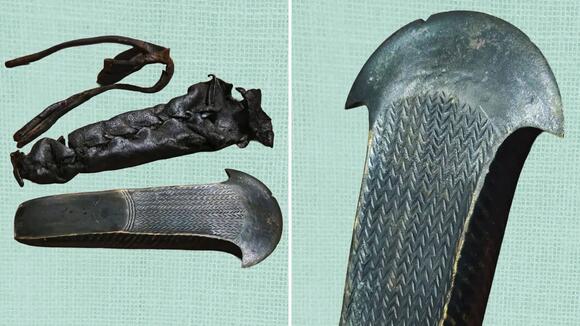
#17: Persian spearhead in Greece
A Persian spearhead discovered deep in Greece appears far from known invasion routes. Its design matches Achaemenid military standards. No recorded battle occurred at the discovery site. The spearhead may have been taken as a trophy. Alternatively, it could reflect mercenary movement. The Persian and Greek worlds were more intertwined than assumed. The object blurs enemy lines. It hints at personal stories lost to time.
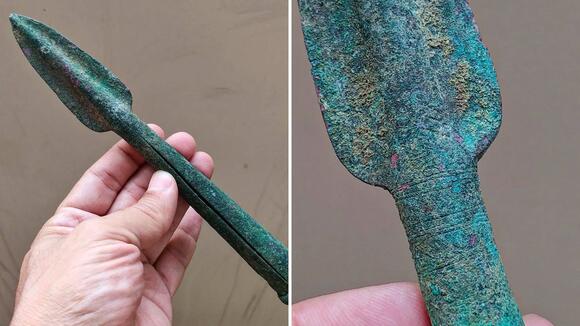
#18: Egyptian dagger in Anatolia
An Egyptian-style dagger uncovered in Anatolia defies regional expectations. Its materials and decorative patterns align with Nile craftsmanship. Anatolia was far beyond Egypt’s military reach at the time. The dagger shows no signs of combat damage. It may have been a diplomatic gift or trade item. Its burial context suggests high-status ownership. The find highlights elite exchange networks. Weapons sometimes traveled as symbols, not tools of war.
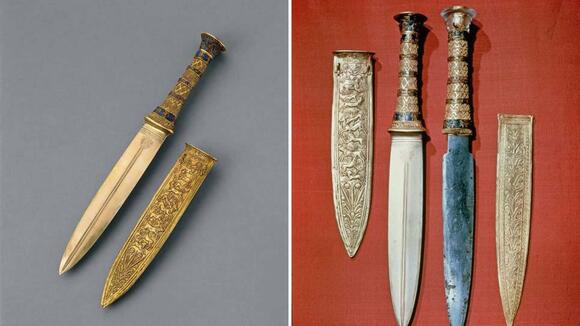
#19: Viking sword in Maine
A Viking-era sword found in Maine shocked archaeologists and historians alike. The weapon matches Norse metallurgy and design precisely. No confirmed Viking battles took place in the region. Its presence supports theories of Norse exploration beyond Newfoundland. The sword may have belonged to a traveler or trader. It could also represent contact with indigenous groups. The lack of settlement ruins deepens the mystery. This blade suggests exploration without conquest.
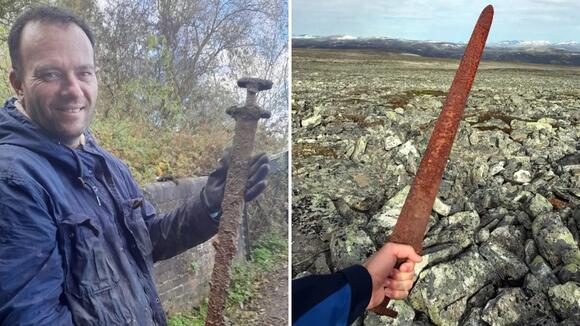
#20: Roman gladius in Japan
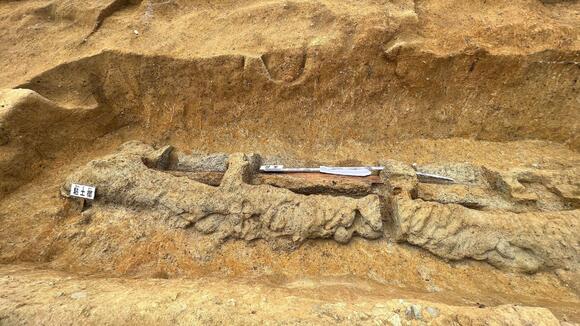
A Roman gladius discovered in Japan challenges everything we assume about ancient contact. The weapon matches Roman military design rather than local craftsmanship. Japan had no known Roman presence or conflict with Rome. The blade suggests indirect trade routes stretching across Asia. It may have traveled through Silk Road exchanges rather than soldiers. Its condition implies ceremonial preservation, not battlefield loss.
 Add to Preferred Sources

