undefined
Posts
undefined
Followers
Realistic? Conservationists call for international reforms to protect salmon
By Kendra Chamberlain,
10 days agoAs the 40-year-old Pacific Salmon Treaty is debated, some want to upend the delicate balance it maintains
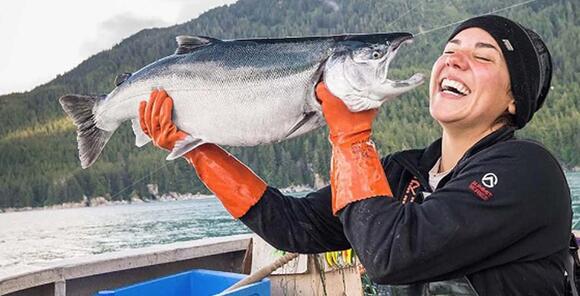
Slippery subject: Not everyone is happy about Alaska’s commercial fish harvest. Photo: Alaska Longline Fishermen’s Association
By Kendra Chamberlain. November 12, 2026. Salmon give little thought to political borders. Many that spawn in the rivers of Washington, Oregon and Idaho spend their formative years mingling with other stocks of salmon in the cold waters of the Pacific Ocean between British Columbia and Alaska before returning to the rivers and streams where they were born to reproduce and die.
During their oceangoing years, these “transboundary salmon” are vulnerable to what’s called interception, essentially being caught by recreational and commercial fishers outside the political territory of their birth.
Fishing operations in Alaska and Canada historically harvested huge amounts of Pacific salmon that originated in the rivers of Washington, Oregon and Idaho. These harvests have continued even as salmon populations have dwindled—this despite millions of dollars spent in habitat restoration and hatcheries in an attempt at recovering the vulnerable species.
Now, salmon advocates under the name Let Our Salmon Come Home (LOSCH) are calling for an overhaul of ocean fishery management rules enshrined in the Pacific Salmon Treaty between the United States and Canada. The treaty governs how many salmon are harvested each year in the ocean.
LOSCH calls itself “an international grassroots movement and advocacy campaign uniting the conservation efforts of people, organizations, and businesses from California to Alaska.” It’s maintained by Wild Fish Conservancy Northwest, a nonprofit conservation organization based in Duvall, Wash., just north of Seattle.
Portions of the Pacific Salmon Treaty are being renegotiated by the Pacific Salmon Commission, the decision-making body associated with the treaty. Three rounds of commission meetings kicked off in October in Sequim, Wash. Subsequent sessions will be held in Vancouver, B.C. from Jan. 11-15, 2027 and from Feb. 8-12, 2027.
LOSCH has a simple message: allow salmon that are in the ocean make it back to their natal waterways in Washington, Oregon and Idaho before being caught.
“The Pacific Salmon Treaty was put in place to address this issue of interceptions and all of the inequities and overfishing that was occurring as a result of this massive ocean interception problem,” Adrian Tuohy, fish biologist and campaign director for Let Our Salmon Come Home, told Columbia Insight.
Tuohy believes the treaty is outdated.
The treaty, however, is a cumbersome, complicated document hashed out by multiple stakeholders including Indigenous Tribes and First Nations whose delegates serve in an advisory capacity.
Prevailing in an attempt to reform it will require robust science and political dexterity in equal measures.
400 voices, one treaty
Ocean-based salmon fishing in Canada and the United States has historically been competitive and sometimes hostile.
The two countries worked for decades to address the issue of interceptions and overfishing before entering into the Pacific Salmon Treaty in 1985, which established, among other protocols, a management framework for ocean fisheries.
While Tuohy acknowledges that the treaty initially helped address overfishing and interception rates, he said it’s no longer meeting these goals, as salmon populations, such as chinook (king), coho and sockeye, continue to dwindle.
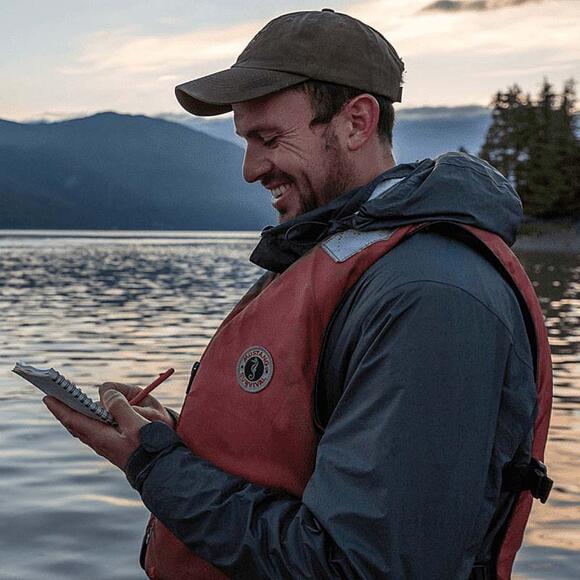
Adrian Tuohy. Photo: Wild Fish Conservancy Northwest
“[The treaty] is really missing the mark. It’s not reducing interceptions. It’s not providing for equitable fisheries. It’s not preventing overfishing,” said Tuohy.
According to LOSCH, the vast majority of chinook originating in Washington and Oregon that make it to adulthood are caught in the ocean before coming home.
“Affecting the Washington Coast, Pacific Salmon Treaty fisheries of Alaska and Canada have been authorized to kill more than 60 percent of all adult Chinook returning to rivers of Grays Harbor, the Hoh, Quillayute and the Queets,” says the LOSCH website. “Out-of-state fisheries managed under the Pacific Salmon Treaty have long accounted for more than 70 percent of total harvest for Washington Coast Chinook, and in recent years, these fisheries have harvested eight times more Chinook than all local commercial, Tribal, and recreational fisheries combined. While the inequities have grown … the number of Chinook on the spawning grounds has routinely fallen short of management targets.”
That argument, in essence, stakes out a position that a transboundary salmon that begins its life in a Washington (or Oregon) hatchery or stream, then swims down the Columbia River into the Pacific Ocean, mostly belongs to those states and should not be intercepted by a sport or commercial fisher in British Columbia or Alaska.
Tuohy and others are calling for the commission to shift fisheries management closer to the rivers and streams where the salmon originate and ultimately might return to spawn.
“That is the only way that we can manage salmon fisheries sustainably and ensure that we’re catching fish from a specific watershed, so that we can harvest populations selectively, manage populations sustainably to achieve escapement targets,” said Tuohy.
LOSCH is calling on both the American and Canadian governments to support fishers and fishing communities that rely on transboundary fisheries to transition to what it believes is a more sustainable system.
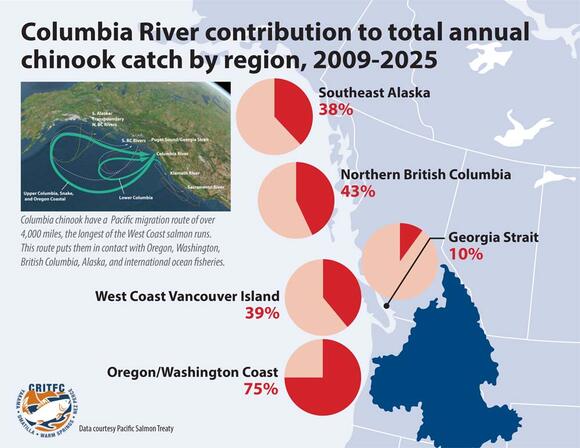
Infographic: CRITFC
The idea has critics, particularly among those connected to salmon harvests in British Columbia and Southeast Alaska, where many Columbia River salmon are caught.
Rich Davis, a veteran commercial fisherman based in Sitka, Alaska, says arguments such as those offered by Tuohy oversimplify an extremely complex issue.
“Their perspective is very simplistic. You’ve got about 400 individuals involved in that treaty negotiation process. Our fisheries have been under the microscope for so long that we’ve got the catch fairly well proportioned out,” said Davis, chairman of the United Fishermen of Alaska’s environmental and habitat committee and a former Pacific Salmon Commission representative. “Over-harvesting or maximum sustained yield of king salmon or any stock of concern results in measures that are automatically invoked when numbers aren’t abundant enough in the river system. Two or three years ago nobody was fishing for king salmon in Alaska [due to low numbers of fish], including recreational fishermen.”
Commercial and sport fishers often remind critics that they are highly incentivized themselves to follow prescriptive measures designed to ensure sustainable fish stocks.
Southern resident orcas
Tuohy says reducing ocean harvesting of salmon would be a boon to another endangered species: southern resident orcas in Washington’s Salish Sea.
“The southern residents are starving to death, and it’s this treaty that maintains the status quo that just leaves too few chinook out there for the southern residents to survive and recover,” said Tuohy.
He estimates that pushing ocean salmon fisheries closer to the coasts could yield up to 25% more salmon prey for the southern resident orcas.
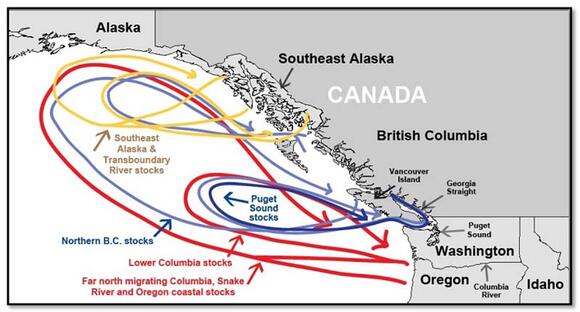
Chinook salmon migratory routes in Pacific Ocean. Map: NOAA Fisheries
But critics say blaming fisheries alone for diminished chinook for southern resident orcas is naïve and inaccurate.
“The southern resident orcas are their [treaty critics] poster child,” said Davis, who has been commercial fishing in Southeast Alaska since the 1970s. “It’s not just fishing affecting them. You’ve got other factors, from non-point source pollution [leading to degraded water quality] to diminished food sources that were once abundant to over-abundance of marine traffic propellers that cloud their waters. You’ve got competition to the waterway from surface use by humans, everything from cargo ships to military vessels to recreational boaters.
“There’s a lot going on. Those mammals have been dealt a bad hand of cards down there. You can’t say they eat only king salmon, but that’s their first argument and they lost that argument in court.”
Davis was referring to a 2024 federal appeals court decision that reversed a lower court decision that would have effectively shuttered an Alaska salmon fishery, based on the contention that commercial fishing of wild chinook endangers southern resident orca that depend on them for food.
“Science hasn’t borne out that’s all they eat exclusively, or they would’ve gone extinct long ago,” Davis told Columbia Insight. “There’s a ton of king salmon in Puget Sound but they’re small. There are all kinds of factors working against those southern resident orcas. Their gene pool is small, the privacy they used to have doesn’t exist. They’re worried about killer whales? Well, in Washington they harvested more of them for zoos than any place on the planet. It would mess up anybody’s family if you take all the child-bearing women away.”
In the 1960s and ’70s, some 270 orcas were captured—some multiple times—in the Salish Sea and sent to exhibitors around the nation and the world, according to a 2018 Seattle Times story. Captors targeted young whales, which were the least costly to transport.
“Despite it all, the southern residents battled their way back to a population of 98 by 2005, only to be hammered once again by an assault of overfishing, development, pollution, habitat degradation and now climate change,” wrote the Times.
The southern resident population was estimated at 76 in October 2026.
Public input limited
Portions of the Pacific Salmon Treaty are renegotiated every 10 years, and the commission is in the midst of one of these negotiations.
Activists carrying banners and signs promoting Let Our Salmon Come Home rallied outside the October commission meetings in Sequim.
Commission meetings allocate just a 30-minute period for public comment.
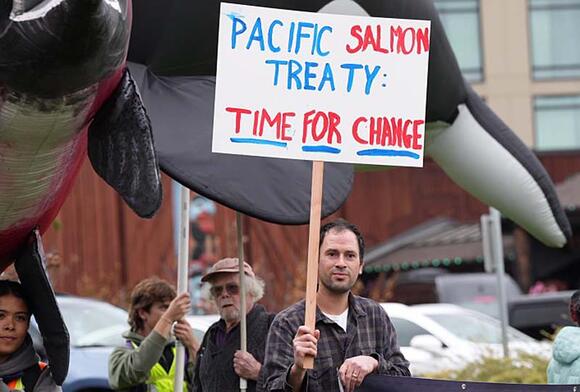
Let Our Salmon Come Home made its position plain at October’s Pacific Salmon Treaty negotiations in Sequim, Wash. Photo: Conrad Gowell/Wild Fish Conservancy Northwest
John Field, executive secretary of the Pacific Salmon Commission, confirmed to Columbia Insight that the commission doesn’t conduct listening sessions or accept written comments from the public.
But Field said the commission is made up of eight experts from each country, offering a spectrum of expertise and viewpoints on treaty issues.
“The hope is that the commissioners, with their broad footprint in salmon communities, plus these public comment periods, will give the commission an opportunity to hear viewpoints from each side of the border and across communities that are impacted,” said Field.
Tuohy criticized the negotiation process as opaque.
“There is such a lack of transparency,” said Tuohy. “The public has been totally left in the dark about what’s going on here. People don’t realize that the vast majority of their chinook are being harvested in these distant ocean fisheries, mostly in Alaska and British Columbia. All this information has been hidden in the backs of reports for years.”
Fishing communities across British Columbia and Alaska tend to bristle at such criticisms from their southern neighbors. They say they’re not hiding anything.
“Until the Pacific Fishery Management Council was established (in 1976) there was a free-for-all on all the fish populations off the Oregon and Washington coasts,” said Davis. “Alaska was way ahead of them, working from sustained yield principles that are still at work today. Oregon and Washington were not working under sustained yield management.”
Others point to the development of industry and, more recently, the proliferation of residential housing around salmon rivers and streams in Oregon and Washington that further stress salmon populations.
Tuohy is optimistic that the LOSCH campaign, which he says has brought more public participation to commission meetings than in the years past, will encourage both treaty parties to address the issue of interceptions and overharvesting more seriously.
“This is the most consequential opportunity to turn things around for salmon recovery, for orcas, for all of our communities, to restore equitable fisheries [and] uphold tribal treaty rights. If we all raise our voices together, we’re going to see change,” said Tuohy.
Davis agreed that everyone wants to see strong salmon populations, but noted again that the more one understands the issue, the more complicated it becomes.
He raises yet another problem for salmon—predation by a variety of species, including seals and sea lions that congregate at the mouth of the Columbia River to prey on migrant salmon smolt.
“Those colonies of Caspian terns are another predator at the mouth of that river,” said Davis. “The problem is there’s a ton of animals on this planet who love that fish as much as you and I do.”
Additional reporting by Chuck Thompson.
The post Realistic? Conservationists call for international reforms to protect salmon appeared first on Columbia Insight.
 Add to Preferred Sources


