undefined
Posts
undefined
Followers
Will Charlotte's bond money help your neighborhood? We tried to find out
By Desiree Mathurin,
13 days ago
The city of Charlotte has $425 million in general obligation bonds to fund housing, transportation and neighborhood infrastructure projects, thanks to voters approving the measures Nov. 3.
It’s the largest bond request the city has ever made.
So, what is the money being spent on?
Some of the funding is earmarked and identified on the city’s website, but other allocations are described vaguely. And when asked for specific project lists or targeted neighborhoods, the city pointed towards its website and did not provide further context.
And by state law, the city doesn’t have to list specific locations of projects.
Councilmember Dimple Ajmera said the vagueness stems from a need for flexibility.
“Some projects are identified today while others will be selected through a process based on community needs and available opportunities,” Ajmera said.
But without a specified list of projects, how can Charlotteans keep track?
Charlotte’s 2026 bond referendums
City bonds are long-term loans, sometimes 10-year periods, where the debt and the interest are paid back through sales and property taxes, along with other local funding sources. They are the primary way municipalities pay for large-scale projects.
Typically, Charlotte requests these bonds every two years and voters historically approve them.
Last week, Charlotte constituents approved three bond measures totaling $425 million with $242 million in interest:
- $280 million for transportation projects, including $100 million for large-scale multimodal projects and $120 million for systemwide projects, such as street resurfacing, bridge repairs and pedestrian safety improvements.
- $125 million for affordable housing projects. The bonds will fund the city’s Housing Trust Fund, which supports home repairs, down payment assistance and new affordable housing.
- $20 million for the neighborhood bond, which will go toward supporting public infrastructure projects near future private development.
When asked whether the city has specific neighborhoods or projects in mind for the bond money, city officials pointed The Charlotte Observer to its “Planned Projects for the 2026 Bonds” website.
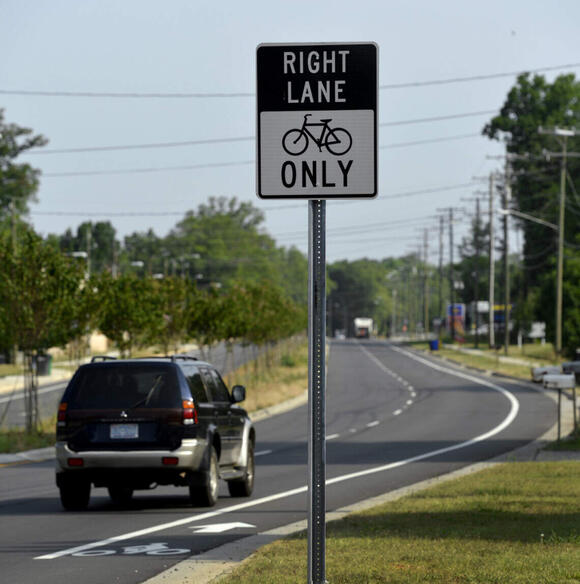
There, only some projects are listed by name.
For example, $100 million is going toward the city’s “Big Moves 2030” program. The program includes seven multimodal projects across the city that were already designed in anticipation money coming from the PAVE Act or the one-cent sales tax increase for infrastructure improvements.
The Big Moves program includes:
- Phase II of the Bryant Farms Road Extension, which will extend Bryant Farms Road from Rea Road to Ardrey Kell Road.
- The Eastway Drive and Shamrock Drive Intersection improvement, will create Charlotte’s first quadrant road. Instead of drivers making a U-turn or a left-hand turn at the five-point intersection of Eastway, Shamrock and Frontenac Ave., a new road will be constructed to connect Eastway and Shamrock near Hilliard Drive.
- The Brown-Grier Road Complete Street project will see additional lanes, medians and bicycle facilities along Brown-Grier between Steele Creek Road and Whitehall Park Drive
Another bond project with a semi-specified location is the $60 million geared toward the city’s Strategic Investment Areas program.
The city identified 22 strategic investment areas in 2024 to benefit from focused mobility upgrades. Those projects include new sidewalks, street lighting, and pedestrian and bike signal upgrades.
That year, voters approved a $55 million bond for the program, which was to be piloted in two areas: Far East–Harrisburg Road and Arrowood.
But the bond this year doesn’t specify which areas the city will focus on.
Clarity on Charlotte bond projects
According to state statute §159-54, a bond order should state “briefly and generally and without specification of location the purpose for which the bonds are to be issued.” The city has done that on its bond website and its 2027 fiscal year budget. With the transportation bond, there are listed allocations. To repair and replace bridges, the city will spend $5 million. Another $50 million will go toward sidewalk improvements. And the list goes on.
But again, no location or project is specified.
The city budget lists the locations for these projects as to be determined. City staff did not say how these projects are chosen.
But again, Ajmera said the city can’t determine some of these projects immediately. She used the sidewalk bond as an example. Typically, gaps in Charlotte’s sidewalk system are filled by developers. If they are building out a shopping center or an apartment community, sidewalks may be a part of their project parameters.
If so, Charlotte doesn’t have to spend the bond money toward a sidewalk in that area. But the city wouldn’t know unless a project is presented to them, Ajmera said.
With the identified transportation projects, such as the Robinson Church Road Widening projects, city staff know private developers won’t work on those type of infrastructure projects, Ajmera added.
But ultimately, the allocations are still vague. The city hasn’t provided a list of proposed projects for any of the broader allocations. There is $50 million slated for sidewalks, which helps funds city initiatives such as the Sidewalk and Pedestrian Safety Program, but the city hasn’t selected or made clear which sidewalks the 2026 bond will repair. Additionally, it’s unclear how Charlotte determines how much money it needs to fix those sidewalks or repair bridges.
Neighborhood and affordable housing bonds
There are two more types of bonds constituents will need to wait and see what private developers are working on: the neighborhood bond and the affordable housing bond.
Typically, the neighborhood bond funds infrastructure projects in established and growing areas of the city.
The bond this year notes that $20 million will go toward promoting public-private partnerships. The city will use the bond money to fix public infrastructure near development sites.
An example of that type of partnership can be seen in the Brookhill Village redevelopment. In October, city council allocated $4.1 million to Brookhill Village developer Griffin Brothers to extend and beautify roadways in the South End neighborhood enclave.
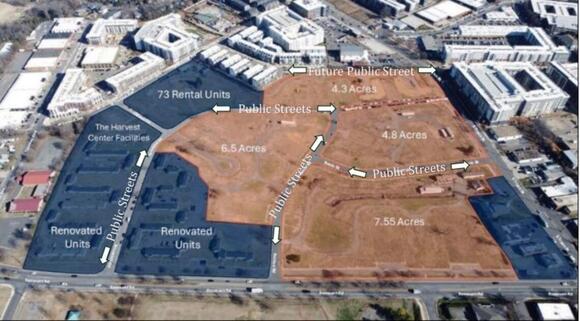
The affordable housing bond funds the city’s Housing Trust Fund, which is distributed based on who applies, how their application is scored and ultimately, approval from city council.
This year’s Housing Trust Fund will be split into rental housing construction, homeownership projects, affordable housing preservation, housing rehabilitation, supportive housing and shelters and innovative pilot programs.
Transparency in Charlotte’s bond projects
Although Ajmera notes some of the bond funding can’t be immediately allocated, she believes transparency in bond spending can be increased.
Especially through the city’s dashboards.
The Housing Trust Fund program has a dashboard.
On the city’s data website, a “housing bond tracker” is available for the 2024 affordable housing bond. It doesn’t list specific projects, but it is where Charlotteans can keep track of what’s been spent.
The strategic investment areas program also has a dashboard.
Of the $55 million voters approved two years ago, the city has spent $28.3 million. There are 36 active projects and 21 completed projects, including tree planting along Arrowood and Hebron Street and new sidewalks along Harrisburg Road and Robinson Church Road.
The city has a “Capital Projects” dashboard where residents can see what’s happening in their neighborhood. The dashboard lists how much the projects cost, start dates, expected completion dates. But it doesn’t say where the funding came from.
Some city council members are advocating for a bond dashboard that would show residents when a bond was approved and how the money was spent, Ajmera said.
“Transparency does not end when the bonds pass,” Ajmera said. "My expectation is that residents continue to have access to that clear information as decisions are made.” /
 Add to Preferred Sources