undefined
Posts
undefined
Followers
‘We are a mess.' CMS board creates committee to examine its own problems
By Nora O’Neill,
4 days ago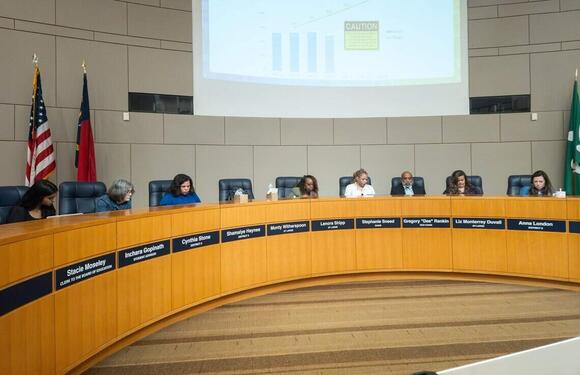
After weeks of turmoil, controversies and occasional infighting, the Charlotte-Mecklenburg Schools board Tuesday agreed on at least one thing: It needs to take a hard look at itself.
The board voted unanimously to establish an ad hoc committee tasked with evaluating its governance practices and recommending reforms, nearly seven weeks after the contentious firing of Superintendent Crystal Hill. The move follows repeated calls from board members and the public to address concerns about accountability, transparency and their ability to work together.
At the September meeting where Hill was fired and board member Stephanie Sneed stepped down from her post as board chair, board member Monty Witherspoon called the board “dysfunctional” and said it had “spiraled into chaos.”
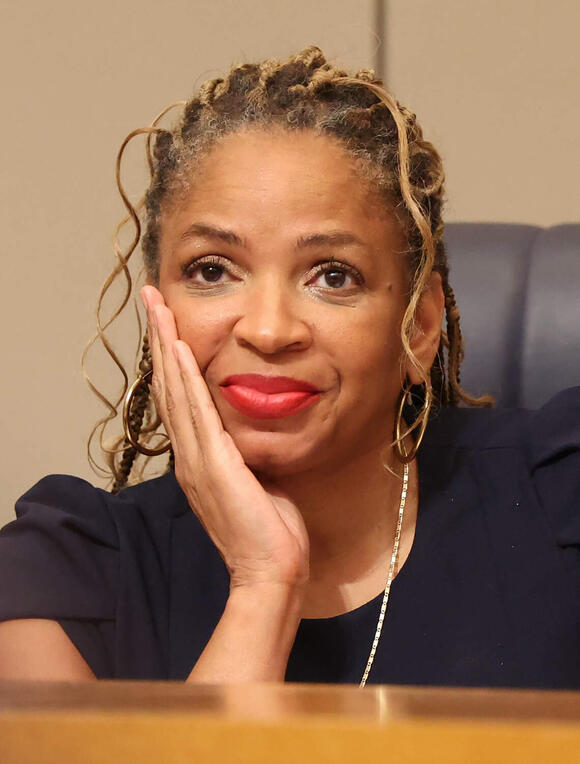
Board member Haynes, who spearheaded the proposal, acknowledged the board’s struggles in urging her colleagues to support the committee.
“A few weeks ago, one of us said it plainly: ‘We are a mess,’” Haynes said. “We’ve sounded the alarm. Now are we prepared to change?”
The newly established Board Strategy, Governance, and Operations Committee will develop recommendations for improving board operations, strengthening governance practices and creating a strategic plan for the board itself.
Its responsibilities include evaluating the board’s existing Student Outcomes Focused Governance framework, surveying members about their concerns and priorities, and exploring ways to improve coordination between the board and district leadership.
The committee will consist of three or four board members appointed by board Chair Dee Rankin, who will serve as a nonvoting member. Under its charter, the committee is scheduled to dissolve by Jan. 27, unless the board votes to extend its work.
The proposal follows weeks of public calls from board members to address problems within their own ranks.
In September, following Hill’s contentious firing in a 5-4 vote, Witherspoon argued that the district’s problems extended beyond its superintendent.
“CMS doesn’t have a superintendent problem. We have a governance issue,” Witherspoon told The Charlotte Observer at the time. “What you saw the other night was clearly a governance failure.”
Days later, as the board moved to establish a committee to oversee its search for Hill’s replacement, board member Charlitta Hatch questioned whether the board should address its own shortcomings before bringing in another superintendent.
Hatch said the board needed to examine its governance and accountability practices before moving forward with the search.
Tuesday’s vote establishes a separate committee dedicated to that work, though its charter does not explicitly call for an examination of Hill’s firing, the disputed consulting contracts or other controversies surrounding district leadership.
The proposal drew unanimous support Tuesday, but board members initially disagreed over whether another committee was the best approach.
Board member Cynthia Stone questioned whether the committee should instead involve the entire board, without adding meetings and responsibilities to an already demanding schedule.
Board member Lenora Shipp expressed similar concerns, questioning whether members could meaningfully complete the work while juggling other priorities, including the superintendent search.
Hatch pushed back against concerns about the workload, arguing that examining the board’s governance and accountability was among its more important responsibilities. She said the committee would provide a dedicated place for that work, rather than allowing discussions about to end without action.
Rankin also defended the proposal, saying the committee could demonstrate to the public members are working to rebuild trust and improve their practices. Addressing concerns about the additional time commitment, Rankin said, “That’s what I signed up for.”
Haynes said the board’s struggles extended to its existing committee structure, where members sometimes disagree about expectations, responsibilities and how to move recommendations forward. She said that improving governance was not optional and that the board needed to establish shared expectations for how its members work together.
The committee, Haynes said, would give members a structure for identifying problems and recommending specific changes. Its charter requires opportunities for input from the entire board, with final decisions remaining in the hands of all nine members.
Despite the reservations expressed during the discussion, every board member ultimately supported the charter. Some audience members applauded the vote.
“We’re asking our next superintendent to be accountable for how this district runs,” Haynes said. “The public has every right to ask us to be accountable for how this board runs, and we can start tonight.”
 Add to Preferred Sources
