undefined
Posts
undefined
Followers
These Charlotte Democrats have majority for first time. How will they use power?
By Mary Ramsey,
12 days ago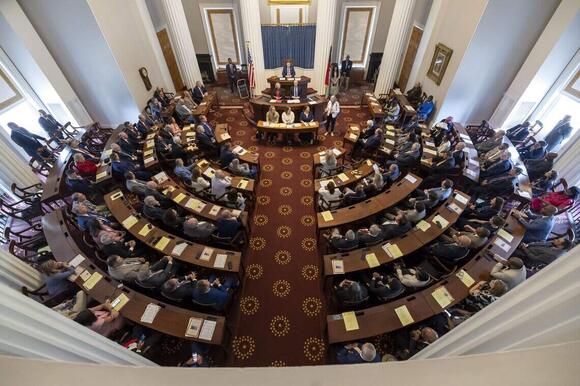
Democratic Mecklenburg legislators say they’re eager to execute on long-awaited priorities after their party captured a majority in the North Carolina House for the first time in 16 years.
House Democrats are expected to have a near-supermajority in the new legislative session after flipping seats across the state in Tuesday’s election. Republicans appear to have narrowly held onto their majority in the state Senate, if potential recounts and the final canvass don’t change outcomes. But Democrats picked up several seats there, too.
In Mecklenburg County, state Sen. Vickie Sawyer will be the only Republican left in the legislative delegation after former Matthews town Commissioner Ken McCool defeated GOP state Rep. Tricia Cotham.
State Rep. Mary Belk easily secured a sixth term in the House, where she represents south Charlotte’s District 88. Despite her long tenure, this will be her first time in the majority.
Belk told The Charlotte Observer she had an inkling it could be a good year for Democrats given frustration among voters with the status quo and indicators of high voter turnout. But she “had no idea it was going to be this much.”
“Very rarely do we get to move things forward and have them heard, and we’re going to be able to do that now,” said Belk, the House Democratic Joint Caucus Chair.
She’s hopeful the new majority in the House and a more evenly divided Senate will make it possible to finally enact her breast cancer imaging parity bill. The legislation, which is aimed at helping people afford breast cancer detection services, has passed the House multiple times but never made it through the Senate.
“They shouldn’t skip care because of the cost,” Belk said.
Belk predicted Democrats are likely to focus on a winning issue for the party on the campaign trail: affordability.
“I’d like to work on bills, and I’d like to work on policy, that focuses on everyday costs, including making housing more affordable and keeping energy affordable and reliable,” she said.
Belk is also focused on her role as senior Democrat on the House’s Regulatory Reform Committee.
“We touch on a lot of aspects within people’s everyday lives, and we can make a difference in them,” she said.
Fellow Mecklenburg state Rep. Terry Brown, the House Chief Democratic Whip, said his party’s new majority is an “opportunity to deliver a lot of priorities that we’ve introduced in the past.” This will also be his first time in the majority.
“Every member of the caucus will be able to put forward some of the bills that were good ideas, but maybe they weren’t heard by the previous majority, or new ideas they have,” he told the Observer.
Brown said he’s particularly excited to be part of a caucus with a mix of experienced legislators and new faces, as well as representatives from urban, rural and suburban areas.
He mentioned paid family leave, a minimum wage increase, data privacy and AI safety and mental health support as legislative priorities that are top of mind for him heading into the new session.
Democrats have a mandate to address the issues that drove people to vote for change and that affect daily life, Brown said.
“The whole focus, the whole goal of next year is, what can we do in state government to make people’s lives better?” he said.
McCool, who flipped Cotham’s southeast Mecklenburg district, campaigned on a platform centered on affordability, public school funding, improving public safety and government accountability.
“I’m headed to Raleigh to lower costs, pay our teachers what they deserve, and finally put an end to the corrupt politics that have held North Carolina back,” he said on social media after his win.
State Sen. Woodson Bradley, who represents a similar, competitive chunk of southeast Mecklenburg, secured a second term Tuesday in part on campaigning to advance the high-profile divorce reform bill she introduced in her first term. The legislation, which would cut down the state’s mandatory separation period and eliminate the separation period for domestic violence survivors, has been promoted by popular social media influencers Jen Hamilton and Kylie Kelce.
“Somebody has to walk back into that building in January and file it again. If I lose tomorrow, nobody does,” Bradley wrote on social media the day before the election.
Both Belk and Brown said they’re hopeful the slim margins in the state Senate will lead to more bipartisanship and compromise in the legislative process.
“It’s not going to be an overnight fix. You know, we understand the constraints of state government. We understand the constraints of a potentially divided House and Senate, but I think we have some opportunities,” Brown said.
State leaders have shared a similar message since Election Day.
Democratic Gov. Josh Stein told reporters “work together” summed up the message voters sent officials and what he wants to do in the next legislative session, the Raleigh News & Observer reported.
He said he wants to see a focus in state government on affordability, public safety and supporting Western North Carolina’s ongoing recovery from Helene.
“These are not simple issues. There’s not one piece of legislation that’s going to fix what needs to be fixed in North Carolina,” Stein told reporters on Wednesday.
Democratic Minority Leader Robert Reives — who is running to be the next House speaker and who fellow Democrats are already calling speaker-elect — struck a tone of bipartisanship while celebrating his party’s wins.
“We are not Democrats. We are not Republicans. We are not unaffiliated. We are the citizens of North Carolina, and we deserve the best that we can get,” he said on election night.
 Add to Preferred Sources


