undefined
Posts
undefined
Followers
Year of the Riverbank Dabbler
By Orlan LoveCorrespondent,
29 days ago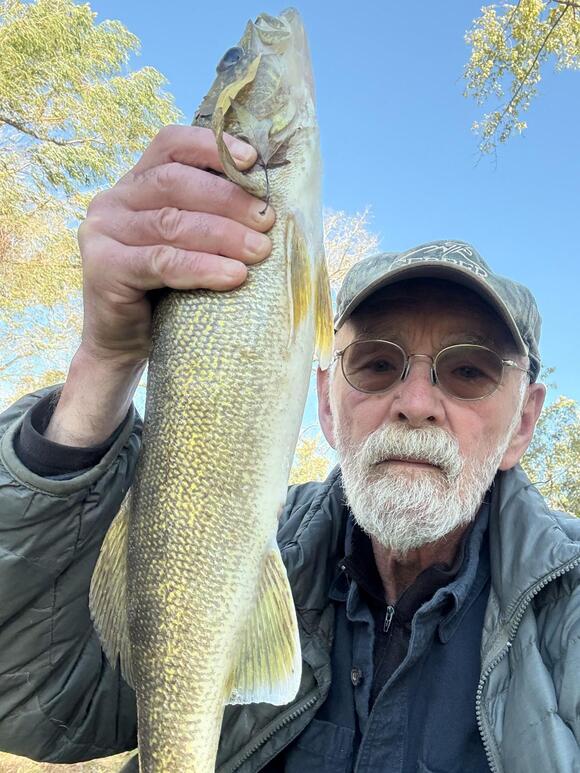
Some years are more memorable than others.
Most of us, for example, will recall 2001 as the year of the Sept. 11 terrorist attack on the United States and 2020 as the year the Coronavirus got loose.
Cedar Rapids residents, especially, will also recall 2020 as the year many of them learned the meaning of the word “derecho,” when 140 mph winds damaged homes and destroyed more than 70 percent of the city’s tree canopy.
For me, the memorable years have been defined by rainfall — both excessive and scarce — and how the year’s precipitation (or lack of it) has affected my fishing.
I don’t recall even trying to fish in 1993, the wettest calendar year in Iowa history with a statewide average of 48 inches and more rain than that in the watersheds of the Des Moines and Raccoon rivers, whose combined flow breached the Des Moines Water Works levee, depriving 250,000 Iowans of drinking water for 19 days.
Fifteen years later, a flood of shorter duration, but of near biblical proportions, inundated the floodplains of most Iowa rivers and, especially the Cedar in Cedar Rapids, where the river crested at 31.12 feet, more than 11 feet higher than the previous record set in 1929. On that memorable day, June 13, 2008, 8.64 trillion gallons of dirty, debris-filled water coursed through Cedar Rapids.
Even so, the weather turned dry in August with a statewide average rainfall of just 1.98 inches — 2.2 inches below normal — and the rivers fell far and fast enough to permit Gazette photographer Jim Slosiarek and me to spend 10 days observing the post-flood Cedar from the seats of kayaks and canoes. We even took time out of our busy schedule to catch some fish.
On the flip side, as a wading angler plying the waters of the Wapsipinicon, I have never enjoyed greater success than in years preceded in my memory by the word “drought”: 1988 (14th driest, fourth hottest), 2012 (fifth driest, 14th hottest) and 2023 (22nd driest, 10th hottest).
The consequent low, slow flows concentrate game fish in the few remaining pools deep enough to conceal them, and the barely noticeable current makes for easy wading and precise lure presentation.
Most years in Iowa are somewhere in between with wet springs and early summers (when the waders stay on the shelf) followed by dry late summers and falls (when the waders get wet every day).
But this year was different: Periodic big rains throughout the summer and fall kept Iowa’s interior rivers consistently high, swift and muddy, even now as the south-traveling sun portends the approach of winter.
What’s a frustrated wading angler to do? With the river consistently too high and swift for wading, my fishing (if you can call it that) has been confined to brief visits to several spots accessible from the riverbank.
Such spots are characterized by obstructions that deflect the flow, creating eddies and current seams in which fish can comfortably ambush their prey and in which anglers can effectively present their lures.
Unlike actual fishing, which entails a search to discover both the location of the fish and a lure presentation that will deceive them into striking, the technique I call riverbank dabbling omits the search. You just have to fish where you can.
It has not been as fruitless as I had anticipated. During brief periods of adequate water clarity I have caught enough crappies and walleyes for a few meals, and I have tangled with enough bass and northern pike to keep my adrenaline stores from building up to dangerous levels.
Still, on the threshold of my 78th birthday, I can’t help wondering if, on the eventual return of lower, slower flows, I will be up to the rigors of wading. And if all future years , no matter how wet or dry, will be remembered like 2026 as “the year of the riverbank dabbler.”
 Add to Preferred Sources
