undefined
Posts
undefined
Followers
Former Cedar Rapids Symphony director, conductor Richard Williams dies at 87
By Elijah DeciousThe,
2026-10-07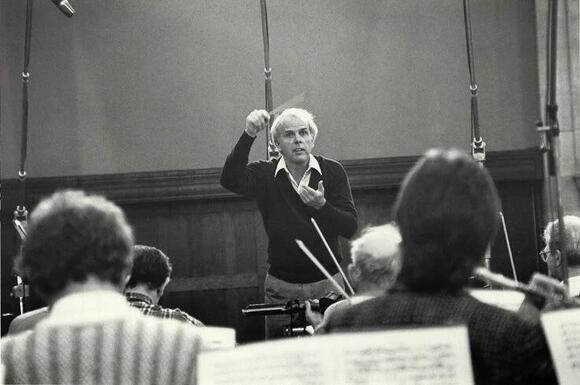
SANTA ROSA, Calif. — Maestro Richard Williams, one of the most transformational directors of Orchestra Iowa in its 104-year history, died of intestinal cancer at his home in Santa Rosa, California, on Sept. 14. He was 87.
Though his tenure was the shortest of all directors in Orchestra Iowa’s history, Williams led what was then called the Cedar Rapids Symphony through a remarkable transition from a community group to a professional metropolitan orchestra, positioning it for success decades after he departed.
From 1970 to 1980, Cedar Rapids was but one stop in Williams’ illustrious career conducting orchestras around the world. Raised in Compton, California, he had almost no formal music training until he switched from a pre-medicine major in engineering to music theory and conducting at Long Beach State College. His first exposure to a live symphony orchestra was at 20 years old.
“Like many children, I played piano when I was 5 years old but gave it up when I was 10,” he told the Des Moines Register.
During his first year in Cedar Rapids, he turned a predominantly volunteer orchestra of about 50 members into a professional group of 86 through recruitment and auditions. About half the original group was dismissed on the basis of playing ability alone, and all new members were paid relative to their position in the orchestra.
“We are in the business of making music, and we are definitely not an educational institution,” he told The Register in 1972.
Cedar Rapids resident Kathy L. Hall, principal bassoon player and later executive director of the orchestra, was hired by him in 1980.
“I played for Rich for just one season before he moved on to the Virginia Symphony, but I remember him as the charismatic and supportive maestro who gave me a good start. More than a decade later, when I was executive director of the Cedar Rapids Symphony, I came to understand better the leadership that Maestro Williams had shown off the podium,” she said. “The significant expansion in artistic programming that he championed increased the orchestra’s reach into the community.”
In a 1972 profile of his work, The Register called the time a “musical renaissance” in Cedar Rapids as the symphony grew its concert schedule dramatically. In just a couple years, it went from seven concerts attended by about 4,000 people to 19 concerts and 30 in-school concerts with a total attendance of 25,000.
Meanwhile, the symphony’s budget grew from $38,000 to $90,000 as seasons sold out.
During his time in Iowa, articles illustrate the caliber of musicians he helped attract in Cedar Rapids, such as Vince Guaraldi. Williams was credited with the idea for Guaraldi’s iconic “Charlie Brown Suite” for the “Peanuts” TV series, which the jazz pianist and composer played in Cedar Rapids.
“I remember he was from California. We were all fairly impressed with that, thinking this might bring some things to Cedar Rapids that we just hadn't had access to,” said Rachel Mills, a ticket and audience development manager from 1976 to 1983 who later served on the orchestra’s endowment board. “He was very good at recruiting talented musicians, and they stayed with the orchestra even after he was gone.”
Later, he played a critical role ushering the orchestra as it moved into the Paramount Theatre in 1976. Altogether, the changes transformed the community group into a respected institution that became a “force” in Cedar Rapids.
“They began to play more demanding work. We began to have more sophisticated audiences,” Mills said. “We weren't playing things they already knew. This was new music.”
As the group became more professional, it tapered off its shared funding agreement with Coe College — a popular arrangement for community orchestras at that time. In addition to starting brass and string quartets, Williams helped shape lasting community relationships and programming with other institutions, such as schools across Cedar Rapids.
“ (Paramount Theatre) was quite a change from Coe College. It felt like a true performing arts place, and it has been ever since,” said Karla Forest, who served on the symphony’s board of directors and as manager of the symphony from 1976 to 1986. “He was just the right person at the right time.”
After serving in Cedar Rapids, Williams spent five years as music director and conductor of The Virginia Symphony in Norfolk. Throughout his career, he made many trips to Europe to conduct or record with some of the world’s best orchestras including The Czech Philharmonic, The London Symphony Orchestra, The London Philharmonic, The Royal Concertgebouw Orchestra in Amsterdam and The Leipzig Gewandhaus Orchestra in Germany.
In Asia, he conducted in Turkey, and often traveled to Taiwan to conduct the Taipei Symphony Orchestra. In South America, his career touched those in El Salvador on a goodwill trip for the U.S. government. In Kenya, he produced and conducted an opera for Margaret Wanjiru Gakuo Kenyatta, the wife of the country’s fourth president, Uhuru Kenyatta.
His musical life came to a close 17 years ago with the onset of familial cerebellar ataxia, a rare neurological disorder that affects muscles in the arms, legs and tongue and can cause difficulties with fine motor skills and speech.
One of his sons, Kent Williams of Iowa City, said he will remember his father most for the joy that he exuded, no matter what he was doing — from wine making and playing tennis to cooking and hosting dinner parties.
“Richard had a joie de vivre that he expressed through parties and frequent gourmet dinners with friends,” Kent said. “He taught all of us kids to strive for excellence in whatever we did.”
Richard Williams is survived by his wife, Carole Williams, brother Charles Williams, seven children and stepchildren, nine grandchildren and three great-grandchildren.
“The maestro, free of the body that betrayed him, is most likely enjoying the opportunity to conduct again,” his obituary concludes, “though now he raises his baton over a truly heavenly orchestra.”
 Add to Preferred Sources
