undefined
Posts
undefined
Followers
St. Luke’s new hybrid operating room offers flexibility, improved tech
By Fern Alling,
2026-07-08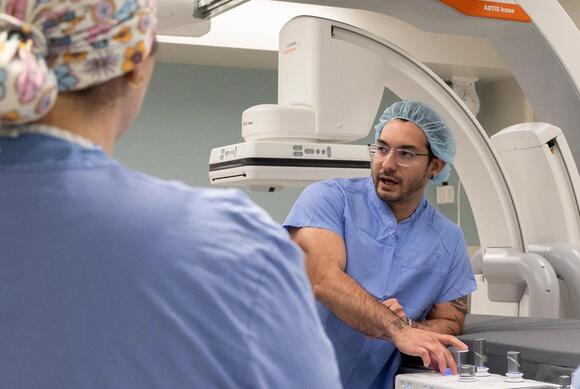
CEDAR RAPIDS — It looks like something out of a science fiction show. With the exception of the pale blue walls and black computer monitors, everything in the room is white and clean. A table that can be raised, lowered and tilted is surrounded by screens and translucent panels of lead glass that descend from white arms attached to the ceiling.
The arc of a C-shaped imaging system waits at the head of the table, quietly unfurling into a perfect circle as physicians test the equipment. Even its control panel looks futuristic, rows of buttons with softly pulsing white lights and silver joysticks used to maneuver the system around the bed.
It’s not the Starship Enterprise, though. It’s UnityPoint Health-St. Luke’s Hospital’s new hybrid operating room, a space that combines the advanced imaging of a catheter lab with an operating room’s sterility.
The final phase of a $25 million, three-part heart and vascular center expansion at the hospital, it’s helping St. Luke’s meet the increasing demand for minimally invasive heart procedures.
An upgrade
This isn’t St. Luke’s first hybrid operating room — that opened in fall 2016 and annually hosts 225 procedures, such as heart valve replacements, carotid artery repairs that unclog blood vessels going to the brain and abdominal aortic aneurysm repairs, preventive operations that keep an abdominal blood vessel from bursting.
But the new operating room features updated, flexible equipment that produces better images with less radiation.
Mark Butschi, invasive cardiology manager at St. Luke’s, said the teams that worked in the old lab are excited to move into the new one. It’s around 800 square feet as opposed to the older lab’s 650 square feet, and will better accommodate the five to eight professionals and the equipment they need during procedures.
The network of arms that hold monitors and other equipment, as well as the flexibility of the bed and imaging system, also mean everything the team needs is in the room and easy to move out of the way if necessary.
“Sometimes we would have equipment sitting up in the halls, and that’s never something we wanted to have happen,” Butschi said. “The staff, they want it. They’ve been waiting patiently.”
Part of what makes the hybrid operating room special is its air system. It’s kept at a cool 66 degrees and the air is recirculated and replaced 25 to 30 times an hour instead of 15 times as in a typical OR, Butschi said.
It’s a feature that the hospital’s cardiac catheter labs — where doctors use specialized imaging to diagnose heart problems and perform minimally invasive procedures — don’t have. The air isn’t sterile enough in the catheter labs to make a surgical incision if something goes wrong.
“You have a complication and now I have to try to get that person through all these halls to get them down to an OR room,” Butschi said. “Here, you can do it all in one room.”
Some operations, like a heart valve replacement, don’t necessarily require a surgical incision, but are more likely to if a patient is at higher risk for complications. Other procedures, like the carotid artery and abdominal aortic aneurysm repairs, require both an operating room’s sterility and the real-time imaging the hybrid operating room provides.
Meeting demand
Justin McDonald, director of cardiovascular at St. Luke’s, said the heart and vascular center upgrades were needed to meet the increasing demand for minimally invasive heart procedures, operations that can be performed without opening a patient’s chest for faster recovery times.
“We’ve seen advancements in the types of procedures that can be performed. Maybe a patient was medically managed before, they didn’t have as many options available to them,” McDonald said. “We can provide procedures that are, again, complex but minimally invasive in nature, and get them feeling better and get them back to their normal activity.”
The first phase of the hospital’s heart and vascular center expansion added two electrophysiology labs in 2023, more than doubling the hospital’s capacity to treat patients with heart rhythm problems.
The second phase in 2025 added a vascular and interventional radiology department with two labs that perform procedures like aneurysm repairs, reversing blocked arteries and taking biopsies.
McDonald said patients were booking procedures in the electrophysiology labs months in advance, which was part of what prompted the expansion.
While Butschi said demand is holding steady for the hybrid operating room at 12 to 15 scheduled procedures a month, it was important to upgrade because it’s a valuable resource for other hospitals in the UnityPoint Health network.
“Not every hospital has the capability of doing some of these procedures,” Butschi said. “We want to be a referral center saying, ‘Hey, we do these, send your UnityPoint Health patients to this site so you can get your procedures performed.’”
 Add to Preferred Sources