undefined
Posts
undefined
Followers
Controlled burn clears 18 acres at Conowingo
By Jane Bellmyer,
2 days ago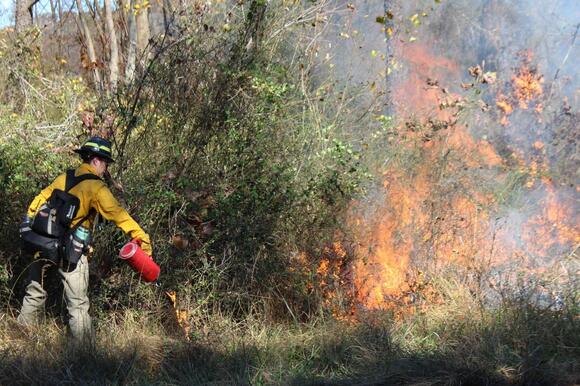
CONOWINGO — Fifteen people representing the Maryland Forest Service and The Nature Conservancy worked together Tuesday to conduct a controlled burn of 18 acres of land known as The Serpentine Barrens along Old Conowingo Road.
Chase McLean was the Fire Boss for this operation.
“Based on the immediate fire effects, it appears that we were able to meet our ecological objectives for the burn, although the real results won’t show until next growing season,” McLean said. “Everyone remained safe and we did not have any incidents during the operation. Fire plays a vital role in the Serpentine Barrens ecosystem, and this burn will help us to enhance and maintain the health and resilience of this unique site.”
Deborah Landau, director of ecological restoration for The Nature Conservancy, was also happy with the results.
“The burn was 18 acres, took about four hours, and was a complete success,” Landau said. “We were able to reduce the (partially decaying organic material) layer, knock back the greenbrier, and increase the opening between the two barrens.”
In the bamboo family of grasses, greenbriar is a thorny, vining plant that can choke out other species if not controlled.
Before the controlled burn began, the people in bright yellow shirts, heavy boots and cargo pants gathered around for a review of what to expect.
“This is a really, really unique site,” McLean said.
Along with the presence of serpentine — a combination of minerals that come together and form one soft rock called serpentinite — there are several unique wildlife species such as prairie dropseed, long-haired barrens chickweed, fameflower and glade spurge.
Using drip torches and a drone dropping something called “dragon eggs,” the crew carefully burned away the overgrowth on the TNC-owned property along Old Conowingo Road across from the entrance to Girl Scout Camp Shadow Brook.
The drip torch is a canister similar to a butane torch carrying a mix of diesel fuel and gasoline that crew members use to ignite the blaze.
“Dragon eggs are small, spherical devices that hit the ground and creates a small area of fire,” said Matthew Kane with TNC said of the golf-ball sized devices.
“We’ve monitored it all day today,” Landau said of the Tuesday operation, adding, “and everything looks great.”
 Add to Preferred Sources
