undefined
Posts
undefined
Followers
Mayor Mamdani announces transition plan for horse carriage workers
By Aziza Shuler,
6 days ago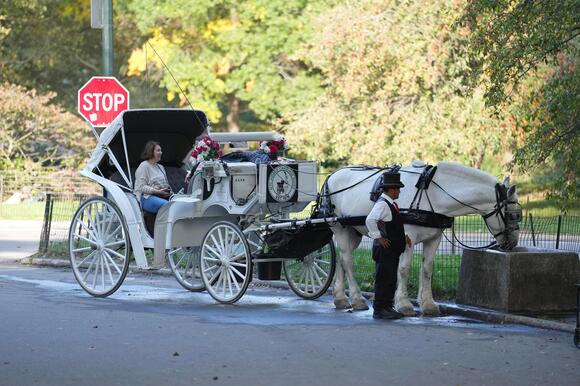
New York City Mayor Zohran Mamdani announced a new plan Tuesday for horse-drawn carriage workers as the city moves toward phasing out the industry.
In October, the City Council passed Romanch's Law, which would ban horses by 2028. The mayor has yet to sign it into law.
Part of the bill includes creating a transition plan for the roughly 200 workers and owners by 2027.
"As New York City moves to bring the horse-drawn carriage industry to a close, we have a responsibility to the workers who have built careers in this industry. This administration will not leave them behind," Mamdani said. "Our transition plan will provide financial support and pathways to new careers through training, career guidance and education. We will support workers every step of the way."
The plan states that the city will buy back carriage owners' medallions.
For drivers and stable hands, there will be job training, tuition assistance and career programs through LaGuardia Community College. A new Horse Carriage Worker Industry Program would be established to help open the door to careers in healthcare, technology and skilled trades.
"LaGuardia will work with each carriage driver and stablehand to ensure they get the workforce training they need to transition to new careers with family sustaining wages," said Kenneth Adams, president of the college. "With more than 60 programs to choose from, including skilled trades, IT, healthcare, and even veterinary technology, carriage drivers will be able to design personalized education and training programs to meet their needs and interests."
According to the plan, Mamdani is also looking into whether electric carriages and pedal-assist bikes could be viable alternatives in Central Park.
The Central Park Conservancy said a better solution is a year-round pedicab fleet.
"Adding heavy electric vehicles to Central Park that cater almost exclusively to tourists would come at the expense of the regular New Yorkers who run, walk, bike and stroll through it -- and who worked for decades to get cars out of the park," a statement read.
But it's still unclear how much financial help the workers would receive, which has been a major concern for the Transport Workers Union.
The union has vowed to challenge the ban in court.
"The core problem remains. The City Council passed a horrifically flawed and unconstitutional anti-worker bill that abolishes an entire industry -- without any funding, mandates, or guarantees. All of these planned initiatives could quickly be abandoned in a fiscal crisis as the city scrambles to fund all of its other responsibilities and priorities. That would leave hundreds of horse-carriage workers, owners, and family members on the curb with nothing at all," John Samuelsen, the union's president, said in a statement.
The full transition plan is due in April 2027, giving workers more than a year before the industry shuts down in June 2028.
Romanch's Law is named after 18-year-old Romanch Mahajan, a tourist from India who was killed after a horse became startled and threw him from a carriage in Central Park.
The law also requires the horses to be humanely rehomed.
 Add to Preferred Sources
