undefined
Posts
undefined
Followers
Why Do Southerners Call A Skunk A Polecat?
I always thought that referring to a skunk as a "polecat" was just a southern thing - or maybe another one of those quirky terms that you only hear from "country folks." My dad was born and raised in rural Lincoln County, Tennessee - can't get much more country than that- and he never called a skunk a skunk. He always called it a polecat. I found out recently that the term polecat is actually not just southern or country - but goes way back to the very early European settlers of our country. It's a case of mistaken identity and two completely different animals that look and stink alike. Here's the story...
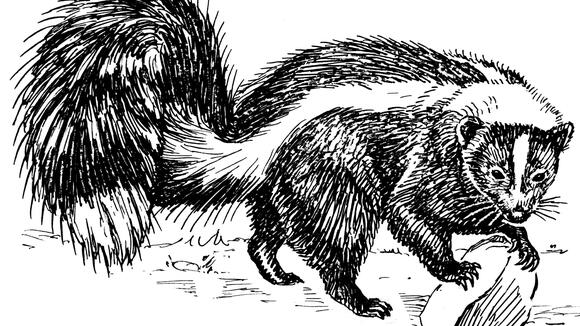
Will the Real Polecat Please Step Forward?
The animal that we know of today as a skunk in the United States - the small mammal with the big smell - doesn't exist in Europe. They do, however, have a similar animal across the big pond that is able to produce a big stink and that's where the mistaken identity comes into play. When the first European settlers came to North America, their encounters with the skunk of North America reminded them of a familiar animal back home: the European polecat. The polecat and skunk are close to the same size, each nocturnal, both can have distinctive bands of different colored fur, and both can emit a horrible odor. So, naturally, the first European settlers equated the North American skunk with the more familiar European animal and began calling the skunk a polecat.
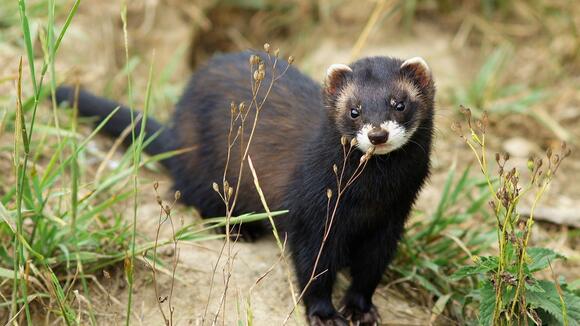
European Polecat
The European polecat is in the mustelid family and is the sole ancestor of the domesticated ferret. They are usually dark brown with a lighter underbelly and have a light colored mask across the face. Some have stripes that extend down their backs or sides similar to skunks, too. They emit a bad smelling liquid in order to mark their territory. They are native to all areas of Europe all the way to Asia and parts of north Africa. It's easy to see...or should I say, "smell"...how the European polecat was easily assumed to be related to the newly found North American skunk by early European settlers. Thus the name "polecat" stunk...I mean, stuck.
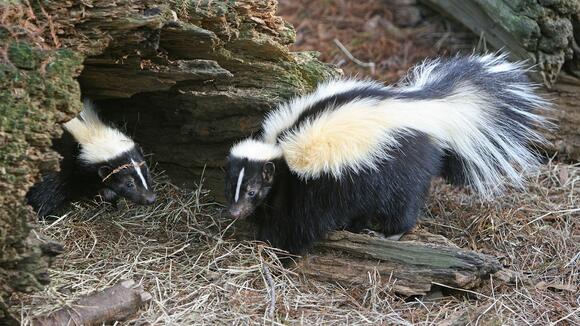
North American Skunk
The North American skunk is from the Mephitidae family. They are most closely related to the European Stink Badger. Their relation to the European polecat is very distant - although they are both in the weasel family. Besides the most familiar color of solid black with a distinctive white stripe, skunks can also come in variations of brown, cream or a ginger color. Their stink comes from a liquid produced by their anal glands and they can spray that liquid toward a predator or threat up to 15 feet. Trust me, this is some foul smelling liquid and VERY hard to wash off. One of my dogs took a direct spray to his chest one night and it took me days of bathing him in every anti-skunk concoction I could find to make it bearable to be around him. The actual term, "skunk," dates back to the early 1600s and is believed to come from the Native American Algonquin language. Nobody told this to the first Europeans, however - they still called it a polecat.
A Skunk by Any Other Name....
So, there's how the skunk came to be known as a polecat. Different names, same animal - at least in North America. What do you call them: skunks or polecats? Have you even ever heard the term polecat? Leave a note in the comments!
Click "follow" to see my future articles about the Tennessee Valley, my home state of Alabama, and my hometown in the Shoals, Alabama. I write about nature, current laws and events, places to go and see, and delve into the weird and paranormal from time to time. To see my past articles, click on my photo and scroll down. If you have a topic you'd like to see me write about, email me at: april.newsbreak@gmail.com
As always, thanks for reading! Please share!
 Add to Preferred Sources

