undefined
Posts
undefined
Followers
Inside Stillwater FFA’s winning formula for agriscience success
By AGDAILY Contributors,
10 hours ago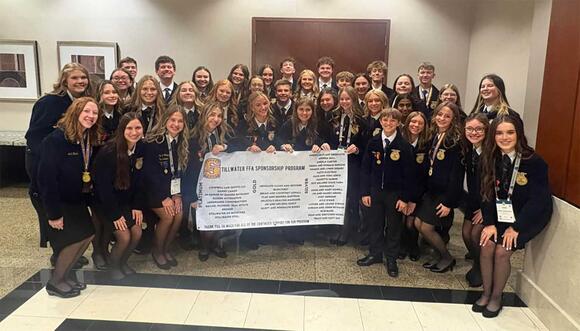
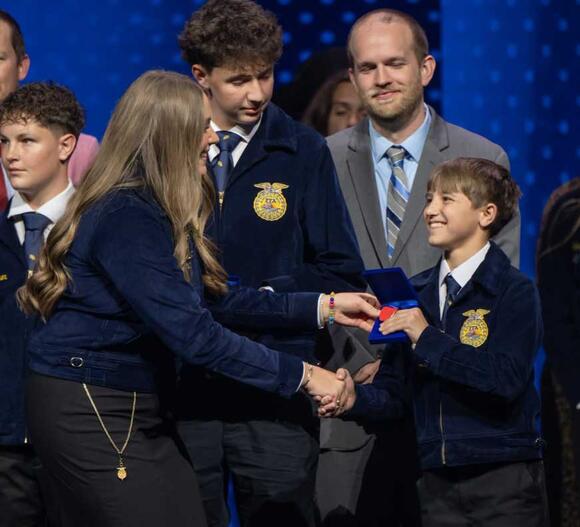
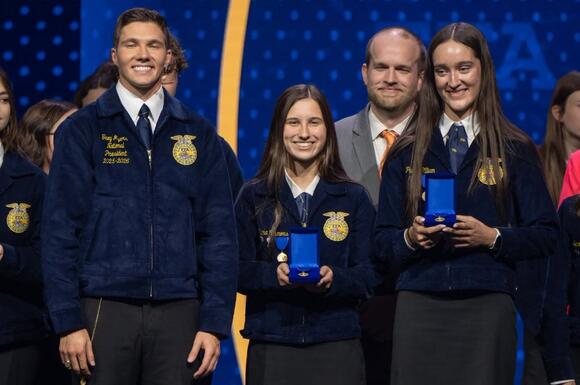
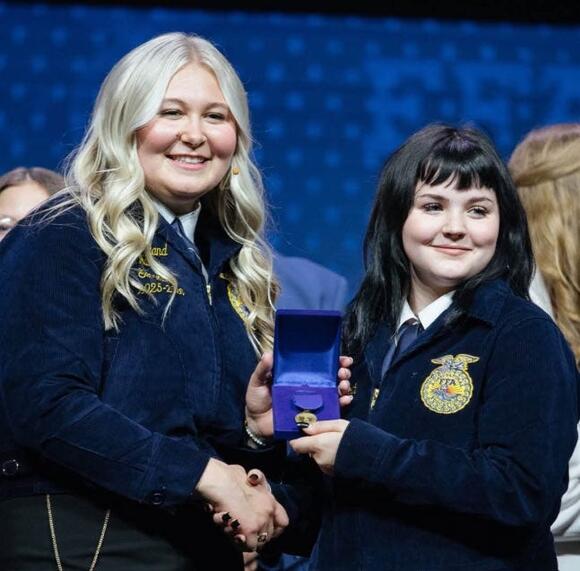
Over the past decade, the Stillwater FFA chapter in Oklahoma has established a strong presence on the National FFA Agriscience Fair stage, earning over 30 national championships, including six first-place finishes at the 2026 convention — twice as many as any other chapter.
“We’re very blessed with how hard our students have worked to get to this point,” said Stillwater FFA Advisor Robby Branscum. “I can remember the very first year we did this, 11 years ago, we only took three projects to state, and all those projects won. Now, we probably have 50-plus projects currently in the works for the upcoming state competition.”
The National FFA Agriscience Fair program gives students opportunities to conduct agricultural research through laboratory experimentation, data collection, engineering, and data analysis, applying scientific principles to real-world problems. Students present their projects in competitions at the state and national levels, with categories and divisions based on research topics and whether they work independently or with a partner.
According to Branscum, while each project begins with a student’s passion for a particular topic or research area, curiosity and a drive for discovery are behind the most successful projects.
“You really need inquisitive minds,” Branscum said. “We always talk to students about how a lot of times we think of an idea because we’re out on the farm and we’re like, ‘Hey, I wonder how this works.’ But we’ve got to take that further as a researcher, dig into the literature, see what other people have done and set that foundation. We don’t want to reinvent the wheel for the 30th time.”
Stillwater members begin their Agriscience Fair projects over the summer, attending workdays in June to choose a topic and develop a research plan using a template provided by National FFA. Following the scientific method, students make observations, study previous research through a literature review and document their materials and methods before conducting their experiments. Once they have collected their data, members learn to use complex statistical analysis tools to interpret their findings.
“There’s not many eighth and ninth graders who can come in and tell someone what a T-test or an ANOVA test is, but through this Agriscience Fair, these students can,” Branscum said.
Based on their results, students draw conclusions about how their research findings could affect the agriculture industry and their communities, as well as identify opportunities for further research. Throughout the process, students also develop a written report in APA style, complete with citations and a literature review. For the competition, they prepare a poster presentation and interview with judges, who evaluate not only the quality of their research but also their ability to communicate their findings.
Branscum said the public speaking and communication skills students develop through the competition are often overlooked, despite their value well beyond the classroom.
“Great findings are worthless if we can’t share them with someone,” Branscum said. “There was a girl who won nationals twice, and I remember her as an eighth-grader telling me, ‘I would have never signed up for this if I’d known it was public speaking, but I’m in too far now.’ So, the public speaking skills that students gain through this are so valuable.”
While the program is designed to expose students to career opportunities in agricultural science and research, Branscum said the critical thinking and problem-solving skills they learn through Agriscience Fair will serve them well no matter what career path they choose.
“Even if they’re not going into agriculture, those critical thinking and problem-solving skills and finding better ways to do things is what we always say” are important, Branscum said. “We want students to always be questioning and not just be content with how things are currently done.”
Branscum attributed Stillwater FFA’s success to several factors, including mentorship from nearby Oklahoma State University’s College of Agriculture. No matter what area students are interested in exploring, the university can usually connect them with an expert who can help guide their research.
“If it’s an area that, as an FFA advisor, I really don’t know anything about, I bet I can get a phone number, get an email, and find someone here at Oklahoma State University who is an expert in that area and able to guide students and support them,” Branscum said. “It’s definitely a big advantage for us.”
Local resources, including grants, have also expanded opportunities by helping students access more advanced equipment and tools. This year, the program received a $4,000 grant from the Stillwater Public Education Foundation.
“Being able to realize as an educator there are so many funding resources if you look where you can, that can make your research more complex,” Branscum said.
Ultimately, Branscum said one of the most significant contributors to the chapter’s achievements has been building a tradition of Agriscience Fair participation. Younger students witness older members succeed and become inspired to start their own projects, continuing the tradition as the program grows.
“I think it’s really important for FFA advisors to realize that in anything that we’re trying to build or anything that we’re competing in, it takes time to build that tradition,” Branscum said. “For us, we’re on year 11 of this, and most programs have not been doing the Agriscience Fair for that long. It is a relatively newer contest that’s really blown up and grown in the last few years.”
Kate Walker is a communications professional from Watkinsville, Georgia, with a passion for writing and all things agriculture.
The post Inside Stillwater FFA’s winning formula for agriscience success appeared first on AGDAILY.
 Add to Preferred Sources