undefined
Posts
undefined
Followers
‘A huge leap forward’: Trail leaders react to Grand Traverse County millage win
By Nicholas Simon,
15 days ago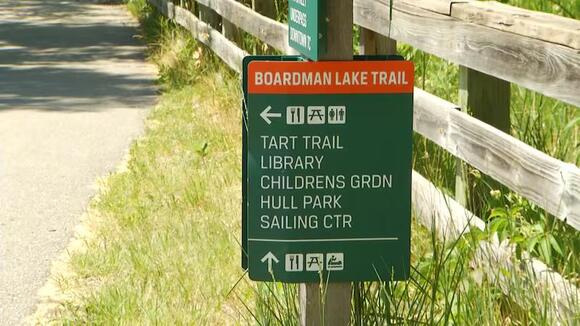
The six-year, 0.3-mill levy passed 58% to 42% and is expected to raise about $2.6 million a year, but the county still has to decide which trail projects get funded
GRAND TRAVERSE COUNTY- voters approved a new countywide trails millage Tuesday, 29,485 to 21,047, a 58% to 42% margin, according to unofficial results.
The 0.3-mill levy runs for six years, from 2026 through 2031, and is estimated to raise $2,635,012 in its first year if levied in full.
The trails question was the only new millage on the countywide ballot.
“I think household budgets were on everybody’s mind during this election,” said Megan Motil, treasurer of the Friends of Grand Traverse Trails, the ballot question committee that asked the county to put the measure before voters. “And I think the passing of the millage for trails just shows us how much people value trails as part of their everyday life, their quality of life and the benefits they get from them.”
Motil said the trail system has never had a dedicated, recurring source of public money.
TART Trails raises money privately, and projects have also drawn on competitive state grants and contributions from local governments.
“I think of trails as public infrastructure, just like roads or bridges or schools or libraries,” Motil said. “And I think we’ve been relying on a nonprofit organization to fund public infrastructure in a way that may not be stable or sustainable for us long term as a community.”
“I think the millage was successful because for 30 years the public has been asking for and investing in non-motorized trails,” said Julie Clark, CEO of TART Trails. “We know that they’re heavily used by our residents.”
Clark said surveys show most trail users are local residents. Both supporters pushed back on criticism that the millage mainly serves tourists, and Motil called it “by locals, for locals.”
Under the proposal, the money can go toward trail construction, planning and engineering, maintenance, capital replacement, property and right-of-way acquisition, and program administration.
Motil said the county will set criteria for which trails qualify. She said the millage was designed for routes that connect people, not for sidewalks or short loop trails.
“It’s really designed more for trails that are connecting people across the community to schools or services or shopping or places where they work,” Motil said.
Clark said the money is meant for the larger regional connector trails the county supports, rather than trails inside township parks or on conservancy land.
Steady maintenance funding lets municipalities and the county plan major replacements ahead of time and line up trail work with other projects, such as a sewer line going in, she said.
“Think about the TART Trail as it heads east towards Acme. There are boardwalks there that will need to be replaced,” Clark said.
TART Trails will keep raising private money, Clark said, and the public dollars can now serve as a local match for grants such as the DNR Trust Fund. She said local public funding also tells federal, state and private funders that the community is committed.
No projects have been picked yet, and Clark said the county will spend the next few months building the program and its criteria.
She named two projects already waiting: the Three Mile Trail extension, which ties into a new Safe Routes trail system in East Bay Township, and an art trail Interlochen has talked about for decades. Motil also mentioned work on the Five Mile trail and early conversations in Blair Township and Kingsley.
Clark said she anticipates the program will sit within county administration. The county commission will hold final authority over spending, and the money will be audited every year.
She expects the county to lay out next steps after it finishes its budget in December, possibly starting that month and likely within the first two months of 2027.
With the vote over, the Friends of Grand Traverse Trails will dissolve, Motil said. Local governments and their partners will plan, design, develop, and maintain the trails.
“Trails aren’t just about feeling good,” Clark said. “They’re about making yourself healthier, making our communities stronger, and to have a dedicated millage for the first time ever. That’s a huge leap forward.”
 Add to Preferred Sources